
MP High Court: Compassionate Appointment Rejection Set Aside, Advise Families
Summary
- The Madhya Pradesh High Court's Gwalior bench set aside the rejection of a compassionate appointment claim, emphasizing that departments must prioritize compassion over technicalities.
- The case involved Divya Kushwah, whose application was rejected for delay, despite her brother's initial timely application being returned due to a qualification issue.
- The court ruled that it is the duty of competent officers to advise families on eligible dependents if an initial nominee is found unqualified, rather than closing the case on technical grounds.
- The decision underscores that an initial timely application by a family should be considered a continuous effort, not subject to rigid re-application deadlines for subsequent nominees.
- This ruling establishes a precedent for service law India compassionate appointment, requiring authorities to show flexibility and guidance to families seeking such appointments.
Background of the Case
The court emphasized that it is incumbent upon competent officers to actively advise families on eligible dependents, rather than closing cases on technical grounds.
The Madhya Pradesh High Court's Gwalior bench recently intervened in a compassionate appointment dispute, setting aside the rejection of a claim that had been dismissed on grounds of delay. The case involved Divya Kushwah, whose father, the family's sole breadwinner, passed away on February 4, 2015, while employed by the Madhya Pradesh Madhya Kshetra Vidyut Vitran Company Limited in Gwalior. Following his demise, Divya's elder brother submitted an application for compassionate appointment on July 17, 2015, well within the six-month period stipulated by the relevant policy.
However, the department returned his application in January 2016, requesting rectifications and a fresh submission. The brother could not pursue the claim further as he lacked the mandatory ITI Diploma required for the position. With the family's collective agreement, Divya Kushwah then filed her own application on October 4, 2021. This subsequent application was rejected by the department in December 2021, citing a delay under Clause 3.3 of the 2018 Policy, which mandates a six-month limitation period from the employee's death. Despite her representation, which referenced the Supreme Court's ruling in *State of M.P. v. Ashish Awasthi*, the General Manager affirmed the rejection in June 2023. A writ petition challenging this decision was subsequently dismissed by a Single Judge in September 2025, prompting Divya Kushwah to file the present appeal.
Legal Arguments Presented
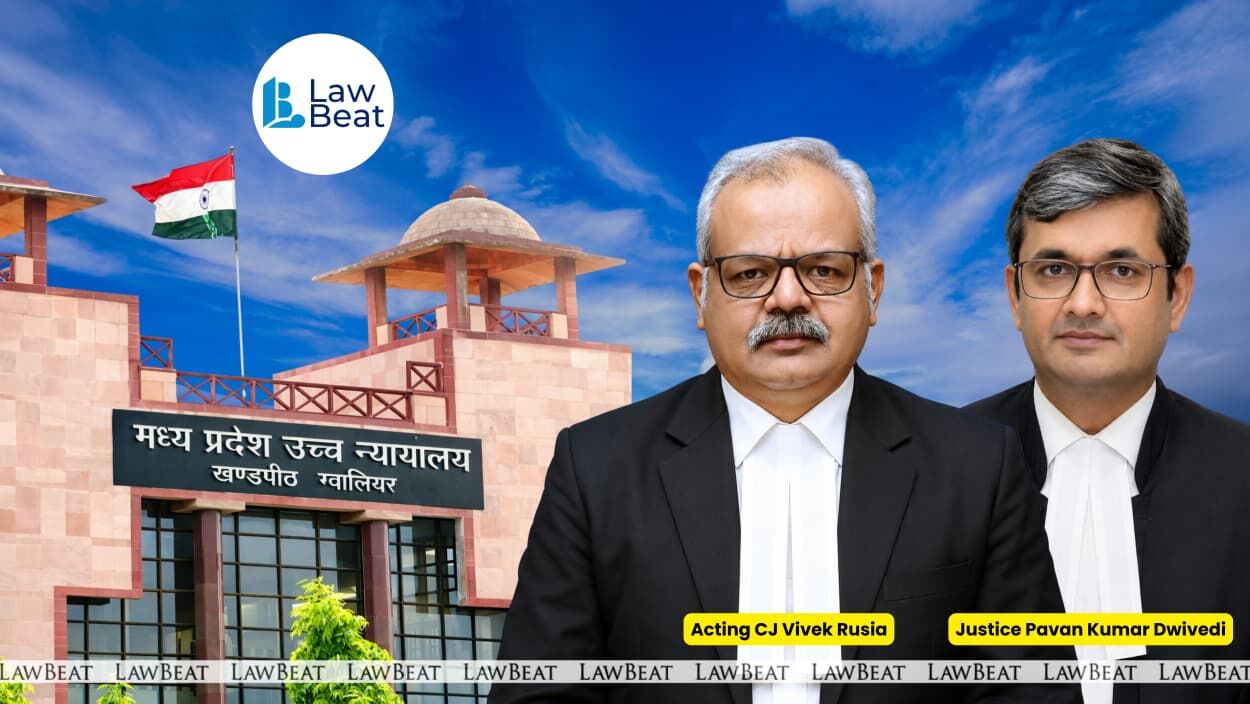
During the appeal before the division bench of Acting Chief Justice Vivek Rusia and Justice Pavan Kumar Dwivedi, Advocate Upendra Yadav, representing Divya Kushwah, argued that the family had already initiated a timely claim through her brother's application, which was filed within six months of the employee's death. He contended that her subsequent application should not be considered an entirely new and delayed submission, especially since her brother's attempt failed solely due to a qualification issue. Yadav asserted that the company bore a responsibility to invite the family to nominate another eligible dependent instead of terminating the process on a mere technicality.
Conversely, Advocate Smrati Sharma, representing the respondents, maintained that the application was correctly rejected due to being filed beyond the prescribed limitation period. She cited the Supreme Court's decision in *Umesh Kumar Nagpal v. State of Haryana*, which established that compassionate appointment schemes are designed to address immediate financial distress and do not confer a vested right that can be exercised indefinitely. The core of the legal dispute thus centered on the interpretation of timeliness and the department's obligations when an initial application by a family member is deemed unsuitable.
High Court's Directive on Compassion
Upon reviewing the facts, the Madhya Pradesh High Court's Gwalior bench acknowledged several undisputed points: the deceased was the sole earning member, the elder son's application was rejected only for lack of a qualification, and Divya Kushwah's application, filed with family consent, was then rejected solely on limitation. The court underscored that the fundamental purpose of a compassionate appointment scheme is to provide a livelihood to one dependent of the deceased employee. In a significant pronouncement, the bench stated that if a dependent is found unqualified, it becomes incumbent upon the competent officer to contact the family and advise them to submit an application through another eligible dependent, rather than closing the case on technical grounds.
The court further emphasized that authorities must exhibit genuine compassion and sensitivity, rather than adopting a rigid and technical stance when dealing with such applications. It clarified that families are not expected to submit multiple applications simultaneously, but rather that any suitable nominee should be considered. The bench also referenced the Bombay High Court's Full Bench ruling in *Kalpana Wd/o. Vilas Taram v. State of Maharashtra*, which supports the principle of substituting one dependent for another in such circumstances. Consequently, the court set aside the rejection of the compassionate appointment claim, directing a re-evaluation based on these principles.
Implications for Service Law and Policy
This ruling from the MP High Court significantly impacts the administration of compassionate appointment rules, particularly within the context of service law India compassionate appointment. It establishes a clear expectation that departments handling such claims have an affirmative duty to advise families on eligible dependents, moving beyond a purely procedural approach. The decision directly addresses the issue of compassionate appointment technical rejection grounds, asserting that an initial, timely application by a family member, such as the Divya Kushwah compassionate appointment case, should be viewed as the family's continuous attempt to secure support, rather than a series of isolated, time-bound submissions.
By emphasizing that authorities must show 'actual compassion and sensitivity,' the court mandates a more empathetic application of Madhya Pradesh compassionate appointment rules. This precedent means that public sector entities can no longer simply reject claims based on limitation if an initial application was timely, especially when the family's first nominee was disqualified on technical grounds. The judgment reinforces the principle that the spirit of the compassionate appointment scheme, which aims to alleviate immediate financial hardship, should take precedence over overly rigid interpretations of procedural deadlines, thereby ensuring that families are properly guided through the process.
Practical Implications
This ruling establishes that departments handling compassionate appointment claims have an affirmative duty to advise families on eligible dependents, rather than rejecting claims solely on technical grounds like limitation if an initial application was timely. Lawyers representing families should cite this precedent to challenge rigid rejections, while compliance officers in public sector entities must ensure their policies and staff training reflect this obligation to provide guidance and flexibility.
Source
Source: Original reporting via Live Law
How does this affect you?
Get an AI analysis of this article grounded in your jurisdictions, practice areas, and any policy documents you've uploaded to Wansom.
Wansom is AI and can make mistakes.