
MP High Court: Caste Scrutiny Committee Vigilance Cannot Disregard Reports
Summary
- The Madhya Pradesh High Court quashed the cancellation of police officer Amrat Lal Meena's Scheduled Tribe certificate.
- The Court ruled that the Caste Scrutiny Committee cannot override its own vigilance cell's favorable reports without a specific finding of fraud.
- Two independent vigilance reports had confirmed Meena's claim, but the Committee dismissed them and re-cancelled his certificate.
- The High Court emphasized that the Committee had no jurisdiction to act as an appellate authority over its own investigative findings in such circumstances.
- The ruling cited Madhuri Patil guidelines, which mandate that favorable vigilance reports bar further action unless fraud is proven.
High Court Overturns Certificate Cancellation
Without such a finding, the Committee possessed no jurisdiction to act as an appellate authority over its own Vigilance Cell's findings.
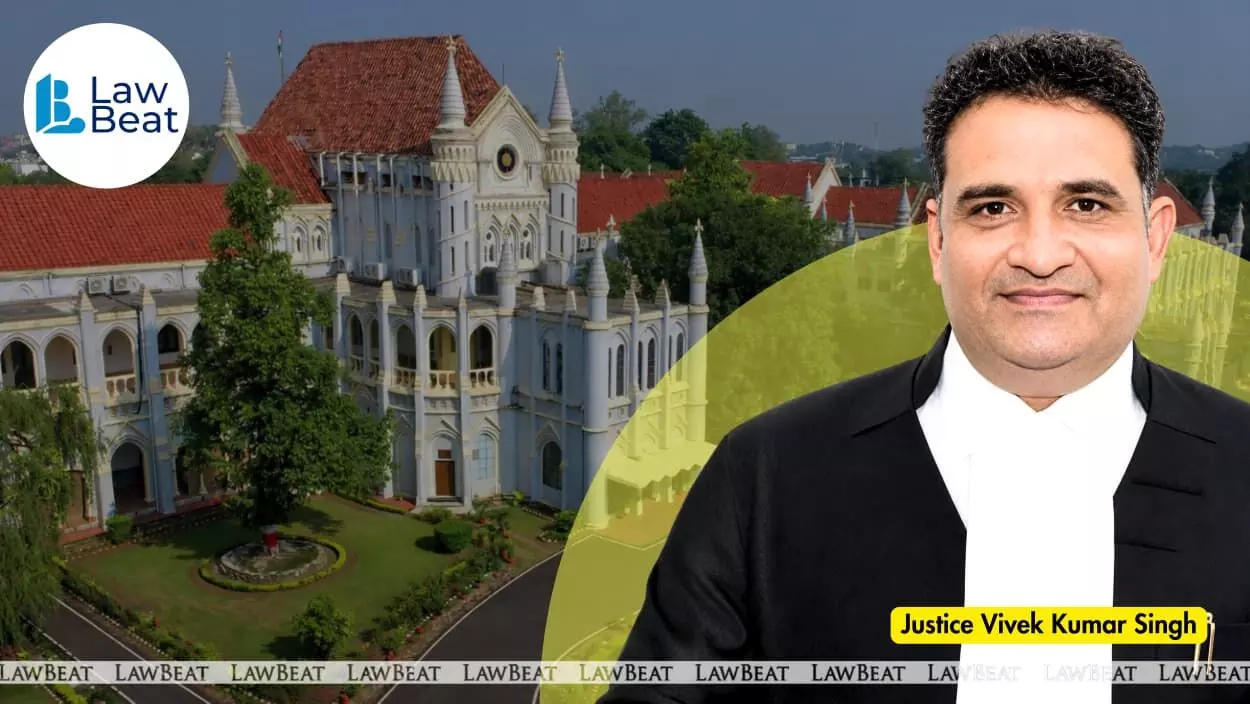
The Madhya Pradesh High Court recently nullified the cancellation of a police officer's Scheduled Tribe (ST) certificate, asserting that the state's Caste Scrutiny Committee lacked the authority to disregard two favorable vigilance reports without a specific finding of fraud. Justice Vivek Kumar Singh, presiding in Jabalpur, granted the writ petition filed by Amrat Lal Meena, effectively restoring his 'Meena' Scheduled Tribe certificate, which was originally issued on October 29, 1991, by the Tehsildar of Lateri in Vidisha district.
The core of the dispute involved a historical geographical anomaly. Before the 1956 reorganization of states, the Sironj Sub-Division, encompassing Sironj and Lateri tehsils, was part of Rajasthan, where the Meena community is recognized as a Scheduled Tribe. Following its integration into Vidisha, Madhya Pradesh, the community retained its ST notification exclusively within that sub-division, while elsewhere in Madhya Pradesh, Meenas are classified as Other Backward Classes. Further complicating matters, a 2002 amendment, effective January 8, 2003, removed the Sironj Meenas from the Scheduled Tribe list.
Meena, who secured the 25th rank in the 1995 State Services Examination for Deputy Superintendent of Police, faced a nearly two-year delay in his appointment due to verification, eventually joining on February 27, 1999. Complaints challenging his certificate first emerged in 2007, leading to a CID inquiry that concluded in 2010. Subsequent complaints prompted the Committee to cancel his certificate in 2016, but a coordinate bench quashed that order in September 2024, mandating a new, independent scrutiny. The Committee then directed the Superintendents of Police in Vidisha and Guna to conduct on-the-spot investigations. Both reports, dated October 14, 2025, and November 12, 2025, supported Meena's claim. Despite these findings, the Committee dismissed the reports, citing their reliance on oral evidence, and proceeded to cancel the certificate once more, an action now overturned by the High Court.
Legal Precedent and Procedural Mandates
Meena's legal team, led by Senior Advocate Manoj Kumar Sharma alongside advocates Quazi Fakhruddin and Vaishnavi Rao, argued that the Supreme Court's established Madhuri Patil guidelines, coupled with a 1997 State circular, explicitly prohibit further action once a vigilance report is favorable, unless evidence of fraud in obtaining that report is presented. Conversely, Deputy Advocate General Swapnil Ganguly and Civil Judge Junior Division Shweta Yadav, representing the State, contended that the vigilance reports were deficient, having overlooked crucial school records and pre-1950 revenue documents.
Separately, Senior Advocate M.P.S. Raghuvanshi, appearing via video conferencing with advocate Pramod Singh Tomar, attempted to intervene in the proceedings. However, the Court rejected all three intervention applications, clarifying that the applicants were not directly impacted and therefore lacked legal standing, emphasizing that a complainant's role is typically that of a witness, not an adversarial litigant, a principle supported by precedents like Ravi Yashwant Bhoir and Ayaaubkhan Noorkhan Pathan.
In its substantive review, the High Court clarified that its role was not to re-evaluate evidence as an appellate court, but rather to ascertain whether the Caste Scrutiny Committee adhered to mandatory procedural requirements. The Court determined that the Committee had indeed failed in this regard, specifically noting the complete absence of any indication or 'whisper of a finding' that either of the vigilance reports had been fraudulently obtained or procured. This procedural lapse was central to the Court's decision.
Limits on Committee's Authority
The High Court delivered a critical ruling on the scope of the Caste Scrutiny Committee's powers, unequivocally stating that without a finding of fraud, the Committee possessed no jurisdiction to act as an appellate authority over its own Vigilance Cell's findings. This decision reinforces the principle that the Committee cannot arbitrarily overturn favorable investigative outcomes from its own vigilance wing.
The Court also dismissed the Committee's criticisms regarding the vigilance reports' alleged lack of old records and reliance on oral evidence. It highlighted that the vigilance teams had meticulously inspected Meena’s clan deity shrine and documented testimony from villagers. Furthermore, the Court pointed out that the State’s own Collectorate had destroyed older revenue records in 2005, making it impossible for the vigilance reports to rely on documents that no longer existed. The Court underscored this point with the maxim, “The law does not compel a citizen to perform the impossible.”
The bench also expressed strong disapproval of the Committee's inconsistent approach, noting that after initially resolving to disregard earlier inquiries, it subsequently 'took about turn' when confronted with new, favorable vigilance reports. This ruling sets a significant precedent, emphasizing the procedural limitations on the Caste Scrutiny Committee's power to act as an appellate authority over its own investigative findings, particularly in the absence of clear evidence of fraud.
Practical Implications
Lawyers representing clients in Scheduled Tribe certificate disputes in Madhya Pradesh should be aware that the Caste Scrutiny Committee cannot overturn its own vigilance cell's favorable reports without a specific finding of fraud. This ruling provides a strong precedent to challenge committee decisions that disregard positive vigilance outcomes, emphasizing the procedural limitations on the committee's power to act as an appellate authority over its own investigative findings.
Source
How does this affect you?
Get an AI analysis of this article grounded in your jurisdictions, practice areas, and any policy documents you've uploaded to Wansom.
Finish Reading the Full Story and the Expert Analysis.
Wansom is AI and can make mistakes.