
Supreme Court Section 7 IBC Threshold: Clarifies Prima Facie Default Standard
Summary
- The Supreme Court has clarified that the threshold for admitting an insolvency petition under Section 7 of the IBC is a summary, prima facie assessment.
- Adjudicating authorities must determine if a default occurred based on documentary evidence and a preponderance of probabilities, not exact debt reconciliation.
- Disputes over the precise amount of outstanding debt or a corporate debtor's profitability do not prevent the initiation of the Corporate Insolvency Resolution Process.
- Evidence from an information utility creates a strong presumption of default, which can only be overcome by clear and compelling material.
- This ruling emphasizes timely intervention based on default, rather than waiting for terminal insolvency, as the jurisdictional trigger for IBC proceedings.
Supreme Court Clarifies Admission Threshold
The Supreme Court has unequivocally stated that the evidentiary bar for establishing default under Section 7 of the Insolvency and Bankruptcy Code at the initial admission phase is a summary, prima facie one, relying on a preponderance of probabilities from the documentary record.
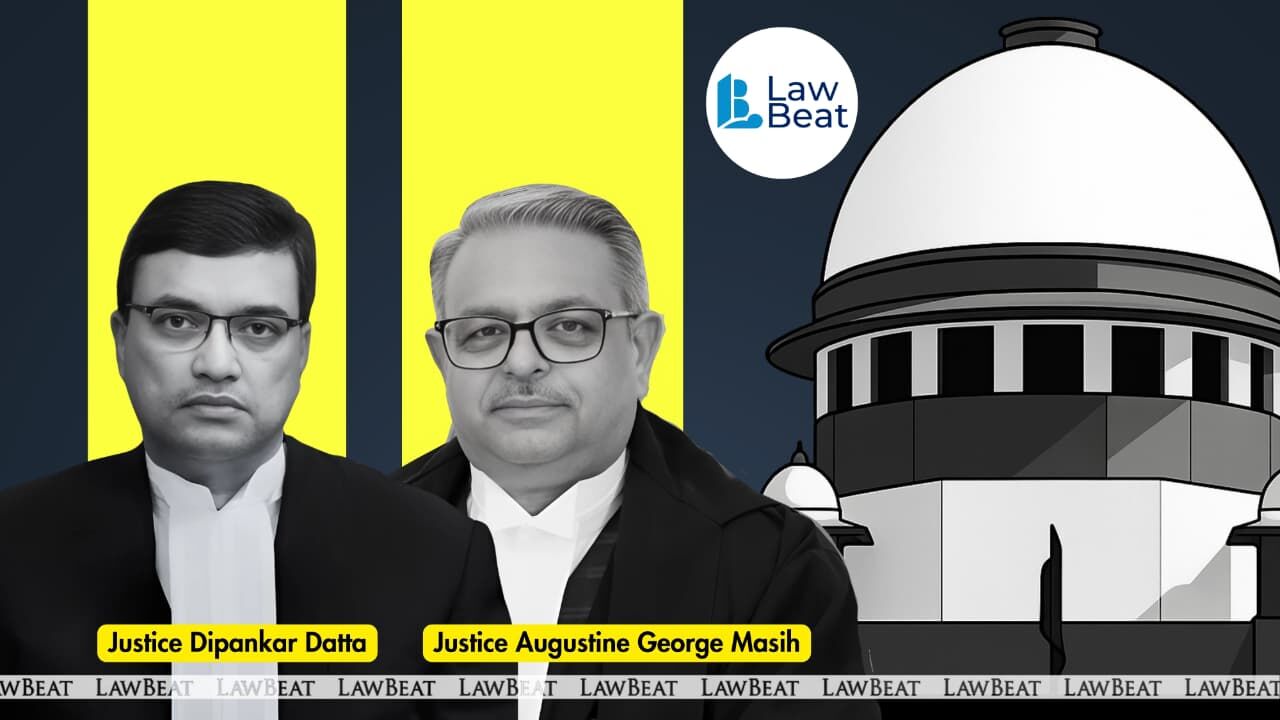
The Supreme Court has unequivocally stated that the evidentiary bar for establishing default under Section 7 of the Insolvency and Bankruptcy Code at the initial admission phase is a summary, prima facie one, relying on a preponderance of probabilities from the documentary record. This significant clarification from a bench comprising Justices Dipankar Datta and Augustine George Masih emphasizes that the adjudicating authority's role is to ascertain whether a default has occurred, rather than to conduct an exhaustive reconciliation of the precise debt amount outstanding. This ruling sets a clear `Supreme Court Section 7 IBC threshold` for insolvency proceedings.
This decision underscores that the `prima facie default IBC India` standard is paramount. The court highlighted that while the quantum of debt might fluctuate over time, the occurrence of a default itself represents a fixed historical event. Consequently, any dispute concerning the exact sum payable does not, by itself, invalidate the existence of a default or prevent the admission of a Section 7 petition, provided the statutory minimum threshold stipulated under Section 4 of the Code is satisfied.
Evidentiary Standard for CIRP Admission
The Supreme Court further elaborated on the `CIRP admission evidentiary standard` applicable in proceedings initiated under `Insolvency and Bankruptcy Code Section 7`. It clarified that the evidentiary requirement for confirming a default is based on a preponderance of probabilities, derived from the documentary evidence presented, and does not necessitate a detailed forensic accounting review. The adjudicating authority's function at this preliminary stage is strictly limited to verifying the presence of a financial debt and a corresponding default.
The Court also established a tiered hierarchy for `NCLT Section 7 default evidence`. At the highest tier, a record of default issued by an information utility is considered sufficient to create a presumption of default. This presumption can only be rebutted by presenting clear, compelling, credible, and cogent material. The second tier encompasses other forms of documentary proof, such as loan agreements, account statements, and balance confirmations, which, when considered collectively, can adequately establish a default under the summary standard applicable to Section 7 applications.
Profitability Irrelevant to Default
A crucial aspect of the Supreme Court's ruling is its rejection of the argument that a company's profitability or its Earnings Before Interest, Taxes, Depreciation, and Amortisation (EBITDA) can serve as a defense against the admission of an insolvency petition. The Court explicitly stated that a corporate debtor's financial health, as indicated by profitability, is neither legally pertinent to the existence of a default nor a reliable economic measure of its capacity to service its debts.
This stance reinforces the fundamental principle of the Insolvency and Bankruptcy Code, which prioritizes timely intervention in cases of default over waiting for a state of terminal insolvency. The Code uses 'default,' as defined under Section 3(12), as the jurisdictional trigger for initiating insolvency proceedings, rather than relying on commercial or balance-sheet insolvency. Thus, a company's financial viability does not preclude the initiation of the Corporate Insolvency Resolution Process if a default is established.
Context of the Appeals
These significant observations were made by the Supreme Court while it was hearing appeals lodged by Deepak Raheja and another party. The appeals challenged a consolidated judgment issued by the National Company Law Appellate Tribunal (NCLAT), Principal Bench, New Delhi, on August 19, 2025. The NCLAT's decision had affirmed two separate orders from the National Company Law Tribunal (NCLT), Mumbai Bench, both dated July 8, 2025.
These NCLT orders had previously admitted petitions filed under Section 7 of the IBC, thereby initiating the Corporate Insolvency Resolution Process against GSTAAD Hotels Pvt Ltd and Neo Capricorn Plaza Pvt Ltd, respectively. The Supreme Court also noted that its jurisdiction under Section 62 of the Code is specifically limited to addressing questions of law that arise from an order.
Practical Implications
Lawyers advising financial creditors in India should note that the Supreme Court has clarified a summary, prima facie evidentiary standard for Section 7 IBC admissions, emphasizing documentary proof of default over precise debt reconciliation. Corporate debtors' counsel should understand that profitability or disputes over exact debt amounts will not prevent CIRP if a default is established on a preponderance of probabilities.
Source
How does this affect you?
Get an AI analysis of this article grounded in your jurisdictions, practice areas, and any policy documents you've uploaded to Wansom.
Finish Reading the Full Story and the Expert Analysis.
Wansom is AI and can make mistakes.