
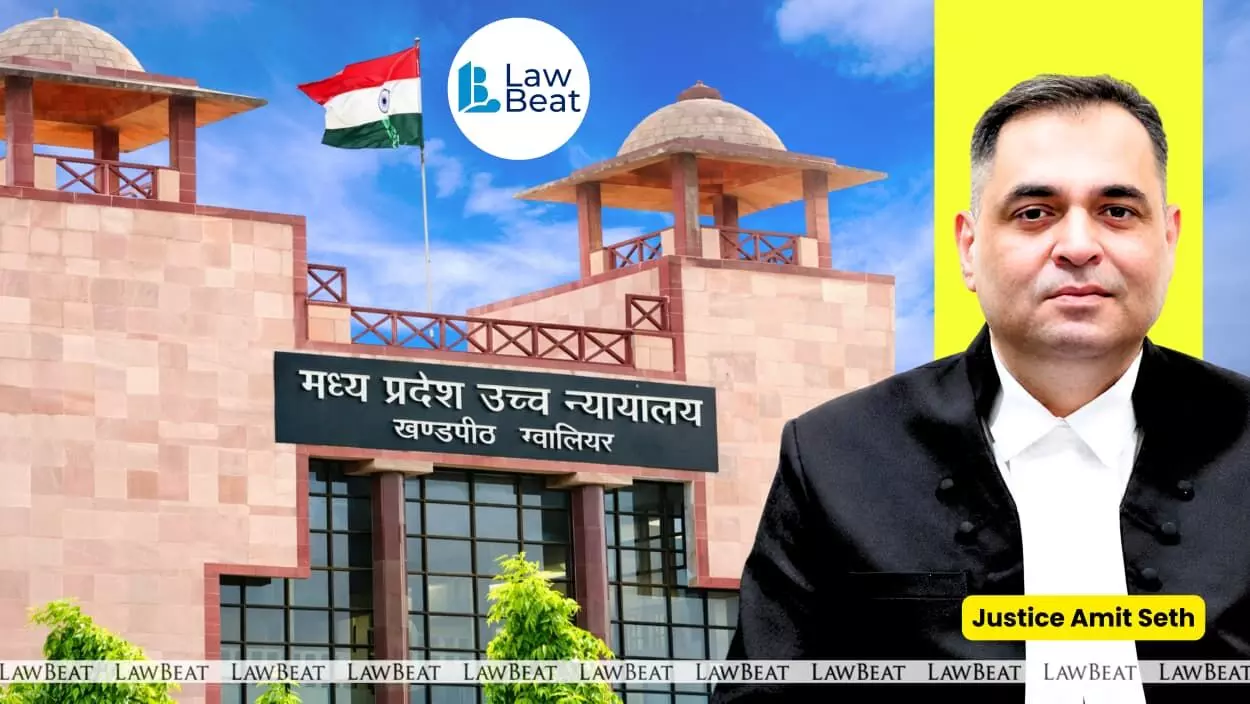
MP High Court: Aadhaar Not Conclusive Age Proof in Accident Claims
Summary
- The MP High Court at Gwalior ruled that an Aadhaar card is not conclusive proof of age in motor accident claims.
- Justice Amit Seth's decision prioritized the medical assessment from a postmortem report, establishing the deceased's age as 13 years over the Aadhaar card's indication of 14 years, 7 months, and 9 days.
- The court, acting on an appeal under Section 173 of the Motor Vehicles Act, 1988, adjusted the compensation multiplier from 18 to 15.
- The final compensation awarded to the parents for their minor son's death was enhanced from Rs 5,45,000 to Rs 8,25,500.
- This judgment highlights the necessity of presenting reliable medical evidence for age determination in compensation cases, rather than solely relying on identity documents.
Case Background and Initial Dispute
The Madhya Pradesh High Court at Gwalior recently clarified that an Aadhaar card serves primarily as an identity document and cannot be considered conclusive proof of age, particularly in motor accident claims.
The Madhya Pradesh High Court at Gwalior recently addressed a motor accident claim, clarifying the evidentiary weight of an Aadhaar card for age determination. The case involved an appeal filed by the parents of Harendra Singh Baghel, a minor boy who tragically died in a road accident on December 24, 2019. The Motor Accident Claims Tribunal in Bhind had initially awarded Rs 5,45,000 with 6% interest on September 14, 2022, but the parents, Rajesh Singh and another, sought enhanced compensation, approaching the High Court under Section 173 of the Motor Vehicles Act, 1988.
While negligence and liability for the accident were not contested, the central disagreement revolved around the deceased boy's age and the appropriate multiplier for calculating compensation. Advocate Dharmendra Rishishwar, representing the parents, argued for a notional income based on the minimum wage for an unskilled worker (Rs 7,950 per month) and defended the Tribunal's use of a multiplier of 18, citing previous Supreme Court and High Court rulings. Conversely, Advocate Bal Krishna Agrawal, representing the insurance company, contended that the Tribunal had erroneously relied on the Aadhaar card, which indicated the boy was 14 years, 7 months, and 9 days old. The insurer argued that the postmortem report (Ex.P10) more accurately recorded the boy's age as 13 years and that a multiplier of 15 should apply for victims up to 15 years of age. The owner and driver of the vehicle did not appear in court despite being served.
Court's Ruling on Age and Multiplier
Justice Amit Seth, presiding over the case, delivered a significant observation regarding the use of an Aadhaar card as age evidence in motor accident claims. The court concurred with the insurance company's argument, stating that an Aadhaar card is primarily an identity document and does not serve as conclusive proof of age. Instead, the court found the postmortem report to be a more reliable basis for determining the deceased's age, given its foundation in medical assessment. Consequently, the boy's age was officially set at 13 years, aligning with the medical findings.
Regarding the multiplier, the court meticulously reviewed Supreme Court precedents, including Divya v. National Insurance Company Limited and Meena Devi v. Nunu Chand Mahto, which referenced the three-judge bench decision in Reshma Kumari. These rulings establish that for victims up to 15 years of age, a multiplier of 15 is appropriate. The court noted that child labor laws define a person under 14 as a 'child,' justifying a lower multiplier for this demographic. Therefore, the High Court determined that the correct multiplier to be applied in this instance was 15, not the 18 that the Claims Tribunal had initially used.
Revised Compensation and Legal Implications
Following the adjustments to the deceased's age and the applicable multiplier, the court recalculated the compensation. Utilizing the monthly income of Rs 7,950, as per the Madhya Pradesh State Legal Services Authority guidelines, the annual income was determined to be Rs 95,400. After a 50% deduction for personal expenses, the annual loss of dependency amounted to Rs 47,700. Applying the revised multiplier of 15, the total loss of dependency was calculated at Rs 7,15,500. The court also added several heads of compensation that the Tribunal had not awarded: Rs 80,000 for loss of parental consortium (Rs 40,000 to each parent), Rs 15,000 for funeral expenses, and Rs 15,000 for loss of estate. These additions brought the total enhanced compensation to Rs 8,25,500, marking an increase of Rs 2,80,500 from the original award.
The insurance company had also requested that interest on any enhanced amount only accrue from the date the parents paid additional court fees, following an increase in the appeal's valuation. However, the court rejected this contention, noting that the Rs 2,80,500 enhancement fell within the original valuation of Rs 3 lakh. This ruling by the MP High Court on Aadhaar age proof underscores that while an Aadhaar card serves as a primary identity document, it is not considered conclusive age proof in motor accident claims, emphasizing the critical importance of robust medical evidence, such as a postmortem report, for accurate age determination in such legal proceedings.
Practical Implications
Lawyers handling motor accident claims in India must note that an Aadhaar card is not considered conclusive proof of age by the MP High Court; medical evidence, such as a postmortem report, may be preferred. This ruling impacts how age is established for compensation calculations and underscores the need to present robust medical evidence rather than solely relying on identity documents for age verification in such cases.
Source
How does this affect you?
Get an AI analysis of this article grounded in your jurisdictions, practice areas, and any policy documents you've uploaded to Wansom.
Finish Reading the Full Story and the Expert Analysis.
Get the latest legal & regulatory intelligence in India
Wansom is AI and can make mistakes.