
MP High Court: MP HC Veterinary Surgeons Career Progression Benefits Affirmed
Summary
- The Madhya Pradesh High Court dismissed the State's appeal, upholding a single judge's order for equal career progression benefits for veterinary surgeons.
- Veterinary surgeons will now receive Assured Career Progression (ACP) benefits, or "Kramonnati," at 5, 10, 15, and 30 years of service, matching dental surgeons and medical officers.
- Previously, veterinary doctors received these benefits only after 8 years of service, while medical and dental officers received them earlier.
- The court rejected the State's argument of separate service rules, noting that pay scales were already equalized by a 2008 government notification.
- The judgment emphasized that all medical professionals, including veterinarians, are "healers of society" and no distinction should be made in their service benefits.
Landmark Ruling on Career Progression
The court observed that the State itself already extended the same pay scale and other service benefits to veterinary surgeons as it did to their medical and dental counterparts.
The Madhya Pradesh High Court has delivered a significant judgment, dismissing an appeal by the State and affirming a prior single judge's directive. This ruling mandates that veterinary surgeons are entitled to the same Assured Career Progression (ACP) benefits, also known as "Kramonnati," as their counterparts in the dental and medical fields. This decision ensures that MP HC veterinary surgeons career progression benefits are aligned with other healthcare professionals, marking a crucial step towards pay parity.
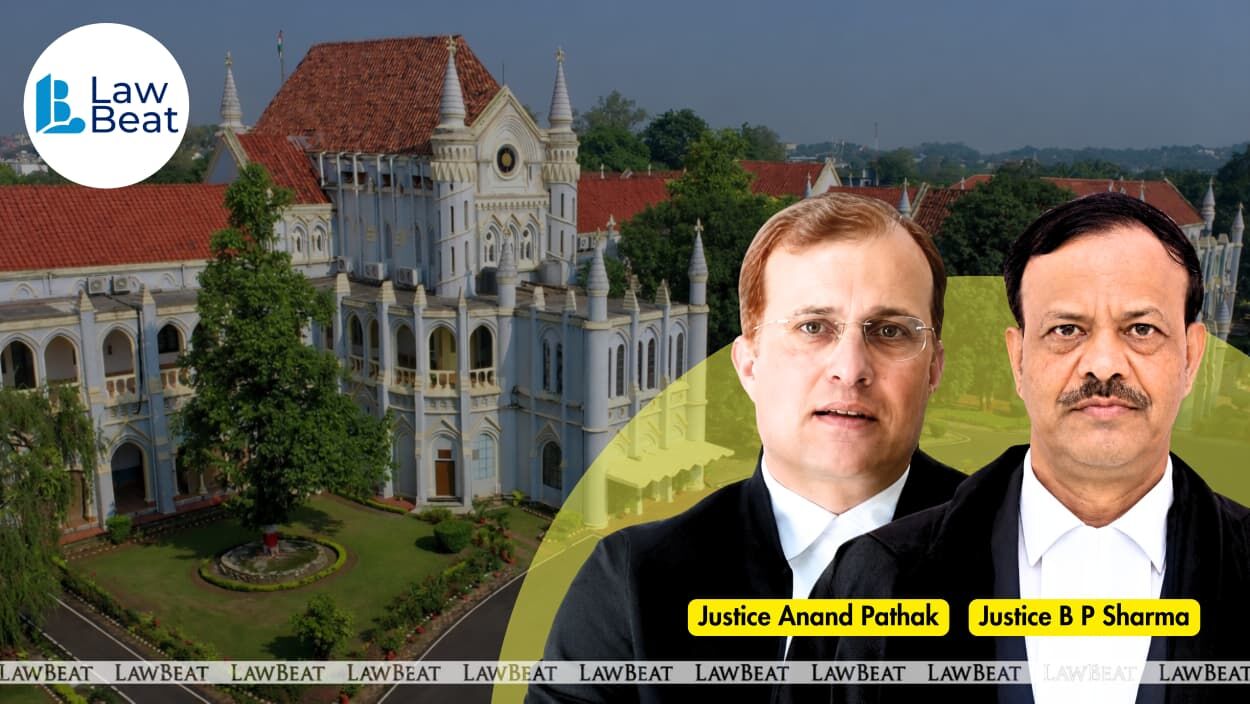
Under the court's order, Veterinary Assistant Surgeons and Veterinary Surgeons will now receive time-scale pay at intervals of 5, 10, 15, and 30 years of service. This aligns their service conditions with those previously enjoyed by Dental Surgeons and Medical Officers. Previously, veterinary doctors had to wait until 8 years of service to receive such benefits, while medical and dental professionals accessed them at earlier stages. The Division Bench, comprising Justice Anand Pathak and Justice B.P. Sharma, upheld the writ court's order dated January 7, 2026, which had instructed the Principal Secretary of the Department of Animal Husbandry and Dairy to implement these revised benefits.
This outcome directly addresses the long-standing disparity in career advancement opportunities for veterinary professionals in the state. The extension of these benefits, including the specific time-scale pay structure, underscores the court's commitment to ensuring equitable service conditions across comparable public service roles, reinforcing the principle of Assured Career Progression for veterinary surgeons in India.
Arguments for and Against Parity
The petitioners, who are Veterinary Assistant Surgeons and Veterinary Surgeons, initially argued that despite performing comparable work, they faced a delay in receiving time-scale benefits compared to Dental Surgeons and Medical Officers. While the latter received benefits at 5, 10, and 15 years, veterinary professionals had to wait until 8 years. This discrepancy formed the basis of their plea for equal treatment.
The State, represented by Addl. A.G. Smt. Janhavi Pandit, contended that veterinary surgeons, falling under the Animal Husbandry and Dairy Department, operated under different service rules than medical and dental officers, who are governed by the Public Health and Family Welfare Department. Therefore, the State argued, they could not claim Madhya Pradesh High Court veterinary pay parity. The State cited the Supreme Court's decision in *State of Gujarat and Others vs. Dr. P.A. Bhatt and Others* to support its position that denying parity did not infringe upon Articles 14 and 16 of the Constitution.
Conversely, Shri Manikant Sharma, representing the State, countered the respondent's arguments by highlighting a 2008 government notification that had already revised and equalized the pay scales for both services. He asserted that once pay parity existed, the State, as a "Model Employer," should not discriminate. Sharma also referenced a Delhi High Court Division Bench ruling in *Dr. Chandra Shekhar Sahukar vs. Union of India*, which had found veterinary surgeons eligible for Dynamic ACP benefits on par with medical and dental officers under the Central Health Services, a decision the Supreme Court had declined to overturn in 2018, dismissing the Union of India's challenge.
Court's Rationale and Distinctions
Before delving into the substantive issue, the court acknowledged and condoned a 13-day delay in the State's appeal filing, accepting the explanation that it was due to the time required for obtaining legal opinion from the Advocate General's office and processing the file through the law department. On the core matter, the court observed that the State itself already extended the same pay scale and other service benefits to veterinary surgeons as it did to their medical and dental counterparts. Consequently, the court found no justification for creating an exception when it came to higher pay scale benefits, such as those under the Kramonnati veterinary doctors MP scheme.
The Bench explicitly noted that the petitioners' claim of equal pay had not been refuted by the State's counsel. Furthermore, the court articulated a broader principle, stating that all three professions—medical, dental, and veterinary—are "healers of society." It emphasized that while one set of doctors heals human beings, veterinarians heal animals, which are "voiceless beings," and therefore, no distinction should be made between them in terms of career progression. This philosophical stance underpinned the court's decision to grant equal Veterinary Assistant Surgeons service benefits.
The court also meticulously distinguished the precedents cited. It held that the *State of Gujarat vs. Dr. P.A. Bhatt* ruling, relied upon by the State, dealt with a different pay scale issue between MBBS and non-MBBS doctors and was thus irrelevant to the question of ACP or Kramonnati at hand. In a notable literary aside, the Bench quoted American humorist Will Rogers, remarking, "Personally I have always felt that the best doctor in the world is the veterinarian. He can't ask his patient what is the matter. He is just got to know."
Precedent for Equal Treatment
This ruling by the Madhya Pradesh High Court establishes a significant precedent for equal career progression benefits for veterinary surgeons, aligning their service conditions with those of medical and dental officers. By dismissing the State's appeal, the court has reinforced the principle of non-discrimination where comparable work and pay scales exist, particularly concerning Assured Career Progression for veterinary surgeons in India. The decision underscores the judiciary's role in ensuring fairness and equity in public employment.
This judgment is particularly relevant for government departments and public sector employees, as it reinforces the principle that once pay parity is established, the State, as a model employer, cannot arbitrarily differentiate in other service benefits. The court's emphasis on all professionals being "healers of society" provides a strong moral and legal basis for ensuring equitable treatment across different healthcare disciplines, setting a benchmark for future considerations of service benefits.
Practical Implications
This ruling establishes a precedent for equal career progression benefits for veterinary surgeons in Madhya Pradesh, aligning their service conditions with medical and dental officers. Lawyers advising government departments or public sector employees on service law and pay parity should note this decision, as it reinforces the principle of non-discrimination where comparable work and pay scales exist, potentially impacting similar claims across different professional groups.
Source
Source: Original reporting via Live Law
How does this affect you?
Get an AI analysis of this article grounded in your jurisdictions, practice areas, and any policy documents you've uploaded to Wansom.
Finish Reading the Full Story and the Expert Analysis.
Get the latest legal & regulatory intelligence in India
Wansom is AI and can make mistakes.