
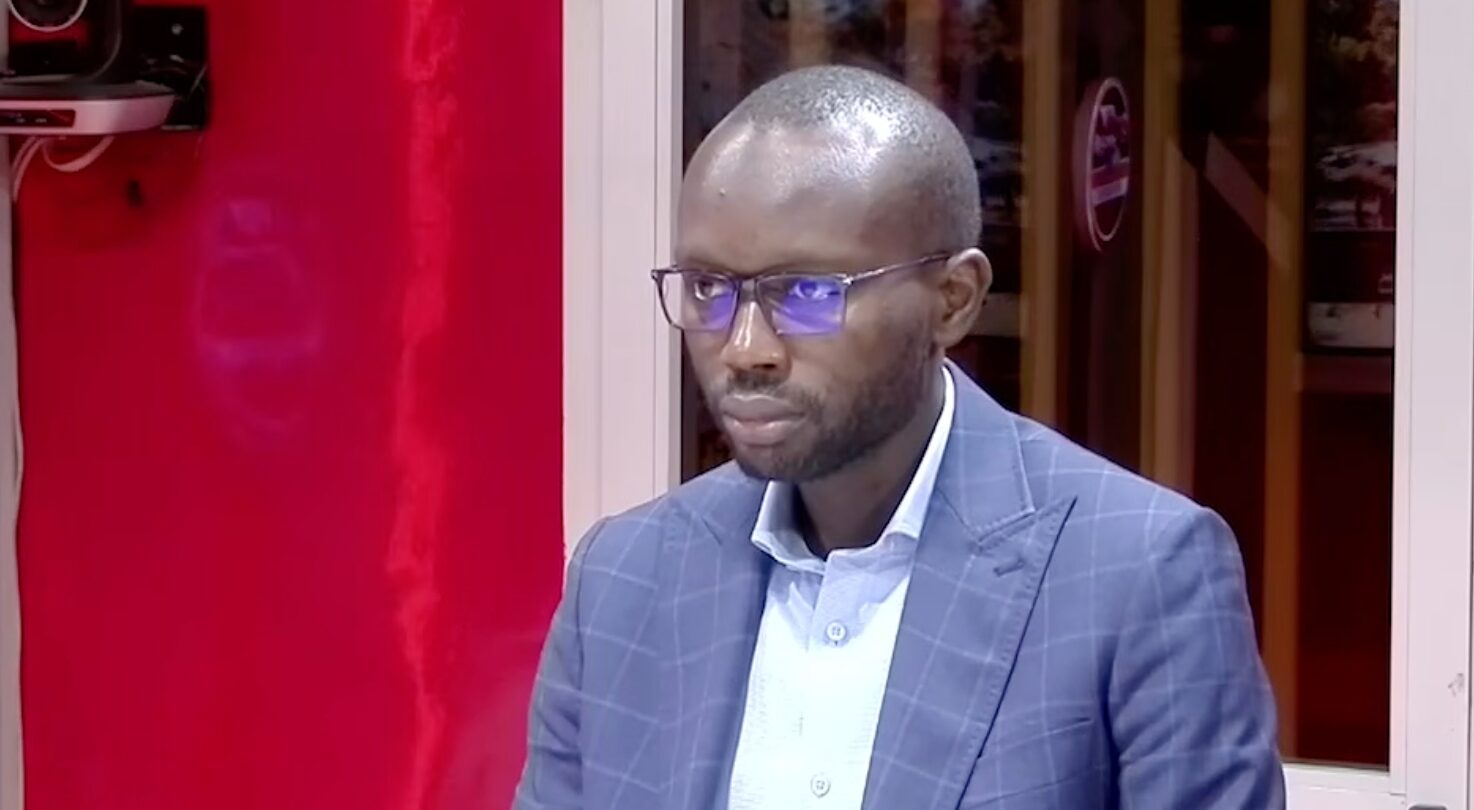
Moustapha Fall: Dissolution Assemblée Sénégal Inevitable
Summary
- Moustapha Fall, a public law researcher, believes the dissolution of Senegal's National Assembly is inevitable due to President Bassirou Diomaye Faye's lack of a parliamentary majority.
- He argues that dissolving the Assemblée would allow voters to resolve the ongoing institutional conflict, which is exacerbated by a disputed rectified finance law.
- Article 87 of the Constitution permits presidential dissolution after two years, requiring new elections within 60 to 90 days.
- A key issue is the lack of a clear judicial body to arbitrate the constitutional dispute over the rectified finance law, as Article 68 is ambiguous.
- Fall warns that the current situation represents a "crisis of regime" stemming from a breakdown in dialogue between governmental branches and advocates for electoral reform.
Escalating Parliamentary Tensions
Fall identifies the absence of a clear judicial arbiter to resolve this interpretative conflict as the core problem.
A prominent legal scholar, Moustapha Fall, a public law researcher at Cheikh Anta Diop University, recently asserted that the dissolution of Senegal's National Assembly is an unavoidable outcome. Speaking on Sud FM's "Objection" program in Dakar on Sunday, November 29, 2026, Fall articulated his view that President Bassirou Diomaye Faye no longer commands a parliamentary majority, a situation he believes will lead to a quinquennat perpetually mired in crisis unless new elections are held.
Fall posits that such a dissolution would not be a mere convenience for the executive but rather a necessary mechanism to allow the electorate to arbitrate the ongoing institutional conflict. This perspective emerges amidst a significant controversy surrounding a presidential decree that enacted a rectified finance law, a measure previously rejected by the deputies. The legal expert highlights this specific dispute as a key indicator of the deep-seated disagreements between the executive and legislative branches, contributing to what he describes as a "crise parlementaire Sénégal."
Constitutional Framework and Judicial Gaps
The potential for a dissolution of the Assemblée is grounded in Article 87 of the Constitution, which grants the head of state the authority to dissolve the Assembly after two years of its legislature. Should this power be exercised, the decree mandating dissolution must also specify the date for new legislative elections, which are constitutionally required to take place between 60 and 90 days thereafter. Moustapha Fall has suggested that these legislative elections could be concurrently organized with local elections to achieve cost efficiencies.
Central to the current impasse is the ambiguity surrounding Article 68 of the Constitution, particularly as it relates to the rectified finance law. The presidential camp maintains that the constitutional provision concerning finance laws inherently encompasses rectified versions. Conversely, the parliamentary majority argues that their adoption of a preliminary question effectively constitutes a formal rejection of the text. Fall underscores that the absence of a clear judicial arbiter to resolve this interpretative conflict is the core problem. He noted that the President could have sought an opinion from the Conseil constitutionnel Sénégal before signing the decree, or the government could have engaged its responsibility on the finance bill, a procedure akin to France's 49.3, which has been utilized in Senegal previously after a change of power. However, Fall also points out that the Constitutional Council does not oversee decrees, and the Supreme Court might classify such a decree as an act of government, thereby placing it beyond its jurisdiction. Consequently, a resolution passed by the Assembly against the decree, while politically significant, lacks legal force, and the decree remains valid until judicially annulled, protecting public officials who implement it.
Implications for Governance and Stability
Moustapha Fall's analysis extends beyond the immediate parliamentary deadlock, portraying the situation as a "crisis of regime" that risks becoming systemic. He attributes these escalating tensions to a fundamental breakdown in dialogue between the branches of government, where legislative proposals are neutralized by blocked votes, and governmental texts face rejection. The academic also addressed the role of the four parliamentary inquiry commissions, which investigate matters such as special funds, national debt, and flood management, affirming their legitimate function as part of the Assembly's oversight mission, while cautioning against their use for political score-settling.
Ultimately, the jurist advocates for a consensual reform of the electoral system, proposing an increase in proportional representation and a framework that necessitates negotiation among political coalitions. This call for reform is set against the backdrop of Senegal's long history of organizing elections, dating back to 1848, highlighting the enduring importance of a robust and fair democratic process for the nation's stability and future governance.
Practical Implications
Lawyers and compliance officers in Senegal should monitor the ongoing parliamentary crisis, particularly the potential for a dissolution of the National Assembly under Article 87 of the Constitution and the legal challenges surrounding the rectified finance law. Understanding the constitutional interpretations and the lack of a clear judicial arbiter in this political dispute is crucial for anticipating legislative stability and legal certainty.
Source
How does this affect you?
Get an AI analysis of this article grounded in your jurisdictions, practice areas, and any policy documents you've uploaded to Wansom.
Finish Reading the Full Story and the Expert Analysis.
Get the latest legal & regulatory intelligence in Senegal
Wansom is AI and can make mistakes.