
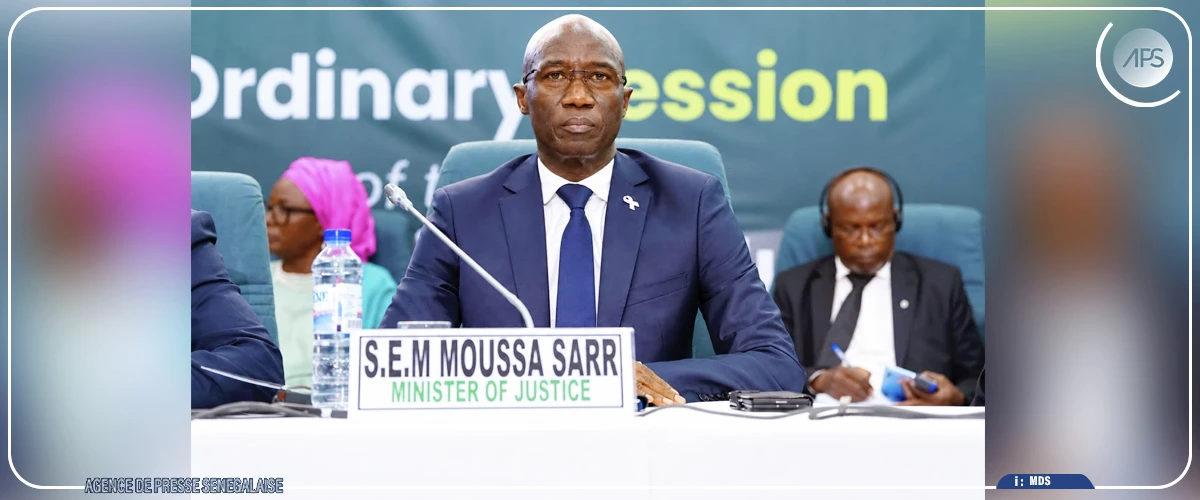
Moussa Sarr: Urges Stronger Application of African Human Rights Decisions
Summary
- Senegal's Minister of Justice, Me Moussa Sarr, advocated for improved application of decisions from African human rights mechanisms.
- The Minister made this appeal on Monday, October 12, during an address in Dakar.
- He stressed that recommendations left without follow-up result in incomplete human rights protection.
- Me Sarr also highlighted that unenforced judgments significantly diminish citizens' trust in the justice system.
- His remarks underscore the critical importance of implementing regional human rights directives.
A Call for Enforcement
He further emphasized that a judicial decision or ruling that goes unenforced significantly diminishes the confidence citizens place in the justice system and its institutions.
On Monday, October 12, Senegal's Minister of Justice and Keeper of the Seals, Me Moussa Sarr, delivered a significant address from Dakar, urging for a more robust and effective application of the rulings and guidance issued by various African mechanisms dedicated to the protection of human rights. This pivotal call underscores a critical need for member states across the continent to uphold their commitments to regional human rights frameworks, ensuring that the principles enshrined in these instruments translate into tangible protections for individuals.
Minister Sarr articulated the profound consequences of inaction, stating unequivocally that when a recommendation remains without follow-through, the intended protection for individuals is left incomplete and unfulfilled. He further emphasized that a judicial decision or ruling that goes unenforced significantly diminishes the confidence citizens place in the justice system and its institutions. His remarks highlight a crucial gap between the formal issuance of human rights directives by regional bodies and their practical, on-the-ground implementation within national jurisdictions.
The Role of African Mechanisms
The mechanisms to which Minister Sarr referred encompass a range of regional bodies specifically established to monitor, promote, and protect human rights across the African continent. These entities, such as the African Court on Human and Peoples' Rights and the African Commission on Human and Peoples' Rights, issue binding decisions, advisory opinions, and recommendations aimed at addressing human rights violations and ensuring compliance with both international and regional human rights instruments. Their effectiveness, however, is largely contingent upon the political will and administrative capacity of state parties to integrate these directives into their national legal and administrative practices.
The pronouncements from these African human rights bodies serve as crucial benchmarks for good governance, accountability, and adherence to fundamental freedoms within member states. They provide essential avenues for redress for victims of human rights abuses and offer authoritative guidance on necessary legislative and policy reforms. The Minister's advocacy for their better application points to a recognition that while the legal and institutional frameworks are in place, their practical impact is often hampered by a lack of consistent and diligent enforcement by national authorities.
Implications for Trust and Justice
Minister Moussa Sarr's statement carries substantial weight, particularly in the broader context of fostering public trust in governmental and judicial institutions across Africa. His assertion that an unexecuted judgment weakens citizen confidence directly links the enforcement of human rights decisions to the legitimacy and credibility of the state itself. For the general population, the ultimate measure of justice often lies not just in the formal pronouncement of a ruling, but critically, in its tangible effect, the subsequent accountability it brings, and the real-world changes it instigates.
This strong emphasis on implementation suggests a potential shift or renewed focus within Senegal's justice ministry on ensuring that regional human rights mandates are not merely acknowledged but actively integrated and enforced within the national legal landscape. Such a commitment could pave the way for stronger human rights protections within the country and potentially set a compelling precedent for other African nations grappling with similar challenges. It signals to legal practitioners, human rights advocates, and the international community that decisions emanating from African mechanisms should be taken seriously and can be leveraged more effectively in domestic legal strategies and advocacy efforts.
Practical Implications
Lawyers in Senegal should note the Minister of Justice's emphasis on enforcing decisions from African human rights mechanisms, which may signal a renewed focus on compliance and create new avenues for leveraging these judgments in domestic legal strategies.
Source
Source: Original reporting via APS
How does this affect you?
Get an AI analysis of this article grounded in your jurisdictions, practice areas, and any policy documents you've uploaded to Wansom.
Finish Reading the Full Story and the Expert Analysis.
Get the latest legal & regulatory intelligence in Senegal
Wansom is AI and can make mistakes.