
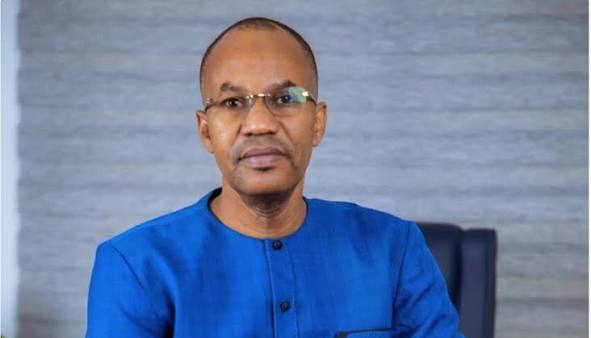
Mamoudou Ibra Kane: Karim Fofana Audition Must Be Honored
Summary
- Mamoudou Ibra Kane commented on the parliamentary audition of Abdou Karim Fofana.
- Kane affirmed the necessity for individuals to respond to parliamentary summons.
- He cautioned against boycotting parliamentary inquiry proceedings, referring to it as the 'empty chair policy'.
- Kane emphasized that the National Assembly's function is distinct from that of the justice system.
- He advocated for parliamentary investigations to encompass additional sensitive issues.
Recent Parliamentary Scrutiny
He underscored that the National Assembly, despite its significant powers, does not function as a judicial body.
The recent audition of Abdou Karim Fofana by a parliamentary inquiry commission in Sénégal has drawn significant commentary, particularly from Mamoudou Ibra Kane. This event underscores the ongoing efforts by the Assemblée Nationale to exercise its oversight functions through formal investigations. The commission's decision to summon Fofana highlights a critical juncture in the country's political landscape, prompting discussions about the scope and legitimacy of such parliamentary actions.
In response to the Mamoudou Ibra Kane audition Karim Fofana development, Mamoudou Ibra Kane articulated a clear stance regarding the obligation of individuals to comply with parliamentary summons. He firmly defended the principle that those called upon by a Sénégal commission enquête parlementaire must respond, emphasizing the importance of participation in these processes. Furthermore, Kane issued a cautionary note against adopting a strategy of non-cooperation, specifically warning against what he termed the 'empty chair policy,' which he views as detrimental to the integrity and effectiveness of parliamentary inquiries.
Legal and Procedural Considerations
While advocating for compliance, Mamoudou Ibra Kane also provided a crucial clarification regarding the nature of parliamentary investigations. He underscored that the National Assembly, despite its significant powers, does not function as a judicial body. This distinction is vital, as it delineates the boundaries between parliamentary oversight and the formal justice system, reminding all parties that the Assemblée Nationale Sénégal operates under a different mandate and set of procedures than a court of law.
This nuanced perspective from Mamoudou Ibra Kane offers an important avis juridique, suggesting that while the right of convocation parlementaire is legitimate, the outcomes and processes of a parliamentary commission are not equivalent to those of a judicial trial. Understanding this difference is critical for individuals and institutions navigating such inquiries, as it shapes expectations regarding evidence, due process, and potential consequences. The powers Assemblée Nationale Sénégal are extensive in oversight, but they do not usurp the role of the judiciary.
Broader Implications and Future Scope
Beyond the specific case of Abdou Karim Fofana, Mamoudou Ibra Kane called for a broader application of parliamentary investigative powers. He suggested that the scope of these inquiries should be expanded to encompass other sensitive dossiers, indicating a desire for more comprehensive oversight across various governmental and public sectors. This proposal reflects a push for greater accountability and transparency within the Senegalese administration.
The debate surrounding the Mamoudou Ibra Kane audition Karim Fofana and Kane's subsequent comments highlight the evolving role of parliamentary commissions in Sénégal. His call for wider investigations, coupled with his emphasis on the non-judicial nature of the Assembly, frames a complex discussion about the balance between robust parliamentary scrutiny and the rule of law. This ongoing dialogue is crucial for defining the legitimate reach of legislative oversight and ensuring its effective yet appropriate application in the nation's governance.
Practical Implications
Lawyers in Senegal should note the ongoing debate regarding the scope and legitimacy of parliamentary inquiry commissions, particularly concerning the obligation to respond to summons. This development highlights the distinction between parliamentary oversight and judicial process, which could impact how clients are advised when facing such inquiries.
Source
How does this affect you?
Get an AI analysis of this article grounded in your jurisdictions, practice areas, and any policy documents you've uploaded to Wansom.
Finish Reading the Full Story and the Expert Analysis.
Get the latest legal & regulatory intelligence in Senegal
Wansom is AI and can make mistakes.