
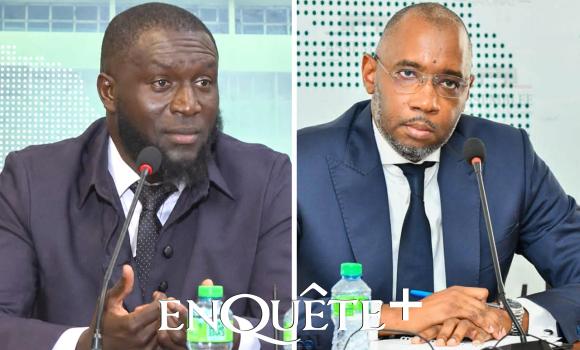
Senegal: Moussa Baldé Audition Refusal for Ordinateur Program
Summary
- Moussa Baldé, the current President of the Departmental Council of Kolda and former minister, declined an October 16 parliamentary audition concerning the "Un étudiant, un ordinateur" program in Senegal.
- This refusal follows a similar non-appearance by Abdoulaye Daouda Diallo, the current President of the Economic, Social and Environmental Council of Senegal, before the same inquiry commission.
- A separate parliamentary investigation is scrutinizing Total Return Swap (TRS) financing, where two officials were questioned on October 13 and 14.
- Moussé Ndoye Sow was interrogated about a 278 milliards FCFA guarantee related to a 1,000 billion FCFA financing in the TRS inquiry.
- The Ministry of Finance defended the TRS operations, citing a net cost of approximately 7.1% compared to higher bond yields.
Parliamentary Scrutiny Intensifies in Senegal
Such refusals by key figures to participate in these proceedings raise significant questions regarding accountability and the efficacy of legislative oversight in Senegal.
Senegal's legislative body is currently engaged in two distinct parliamentary inquiries, casting a spotlight on public spending and financial instruments. One investigation focuses on the "Un étudiant, un ordinateur" program, a government initiative to provide computers to students. Concurrently, a separate commission is scrutinizing the nation's use of Total Return Swap (TRS) financing, examining the intricate details of these financial arrangements. These parallel probes underscore a heightened demand for transparency and accountability in the management of state resources.
A notable development in the "Un étudiant, un ordinateur" program inquiry is the Moussa Baldé audition refus programme ordinateur Sénégal. Moussa Baldé, the current President of the Departmental Council of Kolda and former minister, declined to appear for his scheduled testimony on October 16 before the commission d'enquête. This non-compliance is not an isolated incident; Abdoulaye Daouda Diallo, the current President of the Economic, Social and Environmental Council of Senegal, also previously indicated his unwillingness to respond to a summons from the same parliamentary body. Such refusals by key figures to participate in these proceedings raise significant questions regarding accountability and the efficacy of legislative oversight in Senegal.
Deep Dive into Debt Financing Inquiries
The inquiry into Sénégal Total Return Swap financement has seen more direct engagement from officials. On October 13 and 14, two senior figures were questioned extensively regarding the specifics of these financial operations. The discussions delved into the nature of guarantees provided, the overall cost implications of the transactions, and the precise conditions under which these complex financial instruments were implemented by the state.
During his audition, Moussé Ndoye Sow, who serves as the Director General of Debt and Risk Management, faced detailed questions concerning a substantial guarantee of 278 milliards FCFA. This guarantee was reportedly associated with a much larger announced financing package totaling 1,000 billion FCFA. Deputies pressed Mr. Sow on the repayment schedules, the mechanisms for the restitution of this significant guarantee, and the potential ramifications of an early termination of the agreements. Mr. Sow, appointed on June 17, 2026, clarified that he was not involved in decisions made prior to his tenure, redirecting the parliamentarians to previous officeholders for those specific details. His testimony also touched upon the state's ongoing commitment monitoring and its risk assessment protocols.
Further insights into the administrative underpinnings of the financing were provided by Amadou Sow, the Deputy Director of Debt Financing and former coordinator of the National Public Debt Committee, who was heard on October 14. His questioning centered on the preparatory analyses conducted before the finalization of contracts and the roles played by various institutional bodies responsible for reviewing public commitments. The inquiry specifically highlighted operations involving First Abu Dhabi Bank and Africa Finance Corporation, including a substantial financing component of 650 million euros.
Economic Justifications and Accountability Concerns
The Ministry of Finance has publicly defended the Total Return Swap operations, presenting an economic rationale for their implementation. Officials cited a net cost for these operations of approximately 7.1%. This figure was contrasted with higher yields, ranging from 11% to 12%, observed on some of Senegal's international bond issues maturing in 2025, suggesting a potentially more favorable financial outcome through the TRS instruments.
However, the broader context of these parliamentary inquiries, particularly the Moussa Baldé audition refus programme ordinateur Sénégal and similar non-appearances, underscores a growing tension between executive officials and legislative oversight. The reluctance of high-ranking individuals to testify before a commission d'enquête raises critical questions about governmental transparency and the enforcement powers of parliamentary bodies. For legal and compliance professionals, these ongoing investigations signal an increased scrutiny of public contracts and financial dealings, potentially foreshadowing new regulatory requirements or legal challenges in Senegal's public sector.
Practical Implications
Lawyers and compliance officers should monitor the ongoing parliamentary inquiries into the 'Un étudiant, un ordinateur' program and the Total Return Swap (TRS) financing in Senegal. These investigations highlight increased scrutiny of public contracts and financial instruments, potentially leading to new compliance requirements, legal challenges, or changes in government procurement and debt management practices. The refusal of officials to appear before the commission also raises questions about accountability and the enforcement powers of parliamentary bodies.
Source
Source: Original reporting via EnQuête+
How does this affect you?
Get an AI analysis of this article grounded in your jurisdictions, practice areas, and any policy documents you've uploaded to Wansom.
Finish Reading the Full Story and the Expert Analysis.
Get the latest legal & regulatory intelligence in Senegal
Wansom is AI and can make mistakes.