
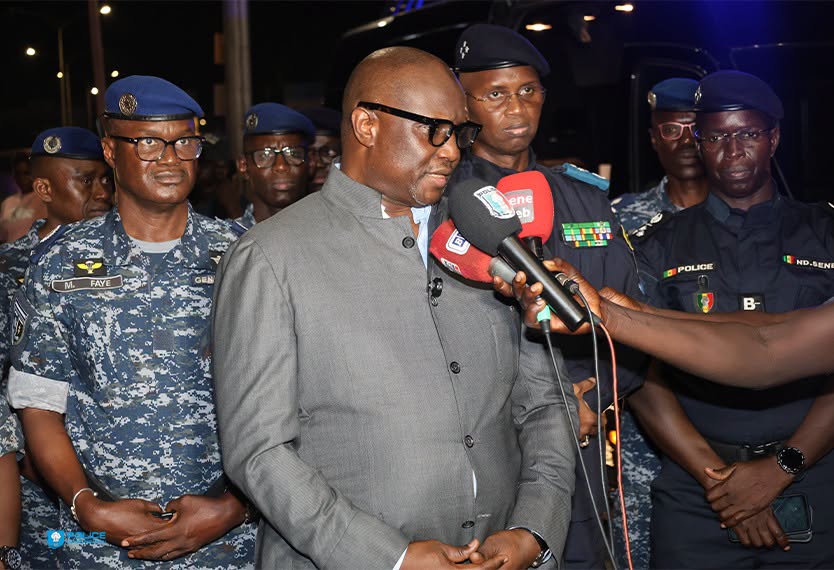
Mouhamadou Makhtar Cissé: Sénégal Cautions Against Xenophobia
Summary
- Mouhamadou Makhtar Cissé, Senegal's Minister of Interior, warned against xenophobic discourse, linking it to economic frustrations.
- He affirmed Senegal's hospitality but stressed that foreign nationals must respect national entry and stay regulations.
- The government plans to digitize procedures for foreign nationals, enhancing administrative oversight and control.
- Minister Cissé also called for stricter enforcement of the Highway Code and addressed issues concerning vehicle safety and compliance.
- He encouraged youth vocational training and acknowledged limitations in public transport infrastructure like the TER and BRT.
Warning Against Xenophobia and Promoting Road Safety
He underscored that while Senegal maintains its commitment to hospitality and openness, foreign nationals are unequivocally expected to adhere to the national regulations governing their entry and duration of stay.
Mouhamadou Makhtar Cissé, the current Minister of Interior and Public Security in Sénégal, recently issued a strong caution against xenophobic discourse targeting foreign nationals. During his appearance on the RTS program "Sans Filtre," the minister highlighted the potential for economic difficulties and widespread poverty to intensify frustrations, which can in turn fuel anti-foreigner sentiment. He stressed the critical importance of never underestimating the impact of such rhetoric on national cohesion and social harmony.
Beyond the issue of xenophobia, Minister Cissé also addressed the pressing concern of road safety across Sénégal. He advocated for more rigorous enforcement of the existing Highway Code, emphasizing the necessity of applying prescribed sanctions to improve compliance. His remarks underscored a dual focus for his ministry: safeguarding social peace by combating xenophobia and enhancing public safety through better road discipline.
Upholding National Rules for Foreign Nationals
While addressing the issue of xenophobia, Minister Mouhamadou Makhtar Cissé reaffirmed Senegal's deep-rooted commitment to hospitality and its open-door policy. However, he underscored that while Senegal maintains its commitment to hospitality and openness, foreign nationals are unequivocally expected to adhere to the national regulations governing their entry and duration of stay. This stance clarifies the balance between welcoming visitors and maintaining sovereign control over national borders and internal order.
Regarding the legal framework for foreign nationals in Sénégal, citizens from Economic Community of West African States (CEDEAO) member countries continue to benefit from facilitated movement provisions outlined in community texts. Conversely, individuals from other nations remain subject to specific visa rules. The Senegalese authorities are actively working to digitize entry and stay procedures for all foreign nationals, with the aim of introducing new documentation that will streamline administrative controls and enhance the monitoring of their presence within the country. This initiative is particularly relevant for lawyers and compliance officers advising clients on immigration and residency matters in Sénégal.
Addressing Systemic Challenges and Future Directions
In the realm of road safety, Minister Cissé detailed several initiatives, including meetings with transport unions and representatives of two-wheeler drivers before major religious events. These engagements aimed to raise awareness about risky behaviors and promote safer practices. He also specifically condemned the operation of vehicles that fail to meet technical inspection requirements, identifying vehicle condition, infrastructure quality, and user behavior as primary contributors to accidents. For "thiak-thiak" motorcycles, a common mode of transport, he proposed mandatory registration, helmet use, and adherence to licensing regulations, advocating for associations to help define appropriate rules for this sector, which provides income for many young people.
This discourse on xenophobia and national identity echoes sentiments previously expressed by other organizations. For instance, in October 2026, Présence Chrétienne advocated for combating xenophobia without conflating this effort with border control, encapsulating their position with the phrase: "expel xenophobia, not the foreigner." Minister Cissé also took the opportunity to encourage young people to pursue technical and vocational training, particularly in fields like construction and electricity, acknowledging that existing public transport options such as the Train Express Régional (TER) and Bus Rapid Transit (BRT) do not yet fully meet the mobility needs of the population.
Practical Implications
Lawyers and compliance officers in Senegal should advise clients on the potential for increased enforcement against xenophobic discourse and ensure company policies align with national regulations regarding foreign nationals' entry and stay, especially given the mention of digitizing procedures and respecting national rules.
Source
How does this affect you?
Get an AI analysis of this article grounded in your jurisdictions, practice areas, and any policy documents you've uploaded to Wansom.
Finish Reading the Full Story and the Expert Analysis.
Get the latest legal & regulatory intelligence in Senegal
Wansom is AI and can make mistakes.