
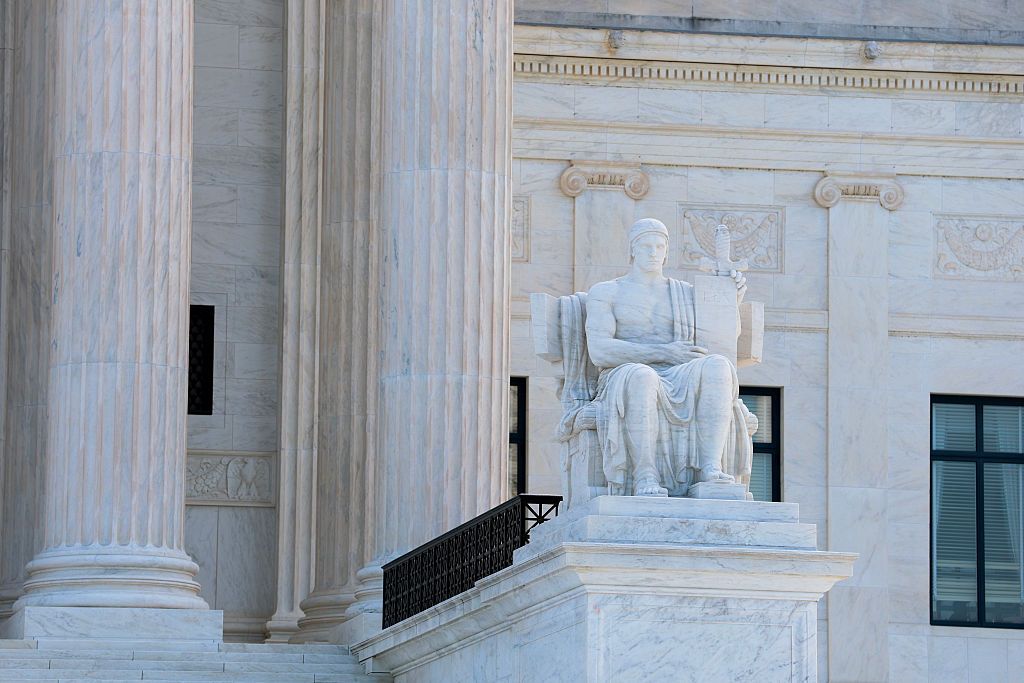
US Supreme Court: Montgomery County Magnet School Admissions Case to Be Heard
Summary
- The Supreme Court granted certiorari on October 19 in Association for Education Fairness v. Montgomery County Board of Education.
- The case challenges changes to middle school magnet program admissions policies in Montgomery County, Maryland.
- The core legal question is whether these "facially neutral" policies violate the equal protection clause of the 14th Amendment.
- The "Pandemic Plan" admissions policy, adopted during the pandemic, is at the center of the dispute.
- This case differs from Students for Fair Admissions v. Harvard because it concerns policies that do not explicitly consider race.
Supreme Court Takes Up Admissions Challenge
Lawyers advising schools and districts must closely monitor the outcome, as it promises to clarify the permissible boundaries for facially neutral admissions policies that aim to foster diversity without running afoul of constitutional mandates.
The U.S. Supreme Court recently announced its decision to hear Association for Education Fairness v. Montgomery County Board of Education, granting certiorari on October 19. This significant development places the spotlight on the admissions criteria for middle school magnet programs within Montgomery County, Maryland. The central question before the high court is whether modifications to these selection processes infringe upon the equal protection clause of the 14th Amendment.
This particular dispute centers on a shift from one set of admissions guidelines to another, both of which are characterized as "facially neutral." During the global pandemic, the school district implemented what was termed the "Pandemic Plan." Under this revised framework, all students are considered for entry into the specialized magnet schools, provided they meet the established prerequisites. The legal challenge seeks to determine if this transition, despite its neutral appearance, results in unconstitutional outcomes.
Navigating Facially Neutral Policies
The legal landscape surrounding magnet school admissions policies has seen several challenges in recent years, with cases involving highly selective public high schools such as Thomas Jefferson High School in northern Virginia, and New York City's Stuyvesant High School and Bronx High School of Science. However, the Association for Education Fairness v. Montgomery County case distinguishes itself by focusing on middle school programs and, crucially, on policies that do not explicitly consider a student's race during the selection process. This "facially neutral" characteristic means that the Supreme Court's landmark ruling in Students for Fair Admissions v. Harvard, which deemed the explicit use of race in admissions unconstitutional, is not directly applicable here.
Instead, this case delves into the more nuanced question of whether a policy, while appearing neutral on its face, can still lead to a discriminatory effect, thereby violating the equal protection clause of the 14th Amendment. The Court will examine the implications of the Montgomery County Board of Education's "Pandemic Plan" and its impact on student selection. This distinction is vital for understanding the scope of the current legal challenge, as it moves beyond overt racial considerations to scrutinize the indirect consequences of admissions criteria.
Implications for Educational Institutions
The Supreme Court's upcoming decision in the Association for Education Fairness v. Montgomery County case carries substantial weight for educational institutions nationwide, particularly concerning Montgomery County magnet school admissions and similar programs. Lawyers advising schools and districts must closely monitor the outcome, as it promises to clarify the permissible boundaries for facially neutral admissions policies that aim to foster diversity without running afoul of constitutional mandates. The ruling will offer critical guidance on how to design and implement admissions criteria to avoid claims of discriminatory effect schools, even when race is not an explicit factor in the selection process.
This case will provide essential clarity on the delicate balance between achieving educational equity and adhering to the equal protection clause 14th Amendment. It will help define what constitutes an impermissible discriminatory effect when policies are not overtly race-conscious. The Court's interpretation will shape future strategies for schools seeking to create diverse student bodies through criteria that, while neutral on paper, may have varying impacts across different demographic groups.
Practical Implications
Lawyers advising educational institutions must closely monitor the Supreme Court's decision in Association for Education Fairness v. Montgomery County Board of Education, as it will clarify the permissible scope of facially neutral admissions policies designed to achieve diversity without violating the Equal Protection Clause. This case will provide critical guidance on how to structure admissions criteria to avoid claims of discriminatory effect, even when race is not an explicit factor.
Source
How does this affect you?
Get an AI analysis of this article grounded in your jurisdictions, practice areas, and any policy documents you've uploaded to Wansom.
Finish Reading the Full Story and the Expert Analysis.
Get the latest legal & regulatory intelligence in United States
Wansom is AI and can make mistakes.