
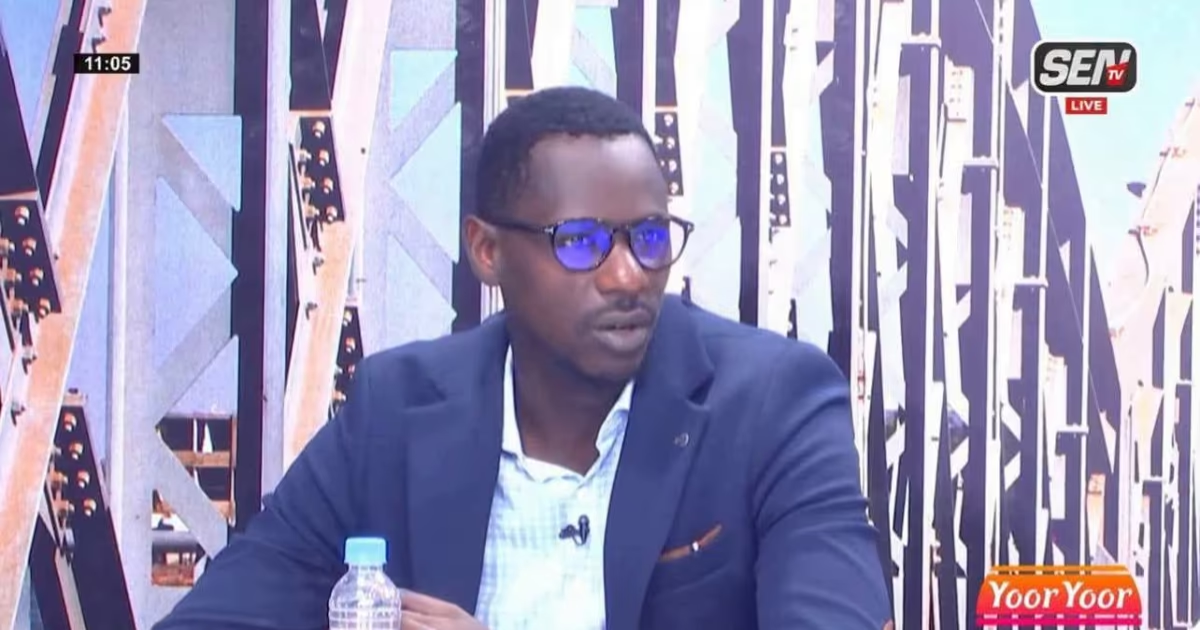
Momo Cissé: Admits Fausses Nouvelles About Nourah Ba
Summary
- Chronicler Momo Cissé admitted to relaying unverified information regarding Nourah Ba and alleged police misconduct.
- He accused a plainclothes officer of provoking Nourah Ba, leading to her arrest, based on rumors from third parties.
- Cissé was not present at the incident and failed to verify claims such as alleged police violence or medical issues.
- After 17 hours in custody at the DSC, he was granted liberté provisoire Momo Cissé by the Dakar court.
- Momo Cissé remains prosecuted for diffusion de fausses nouvelles Sénégal and is scheduled to appear before the tribunal flagrants délits Dakar.
Unverified Accusations Against Law Enforcement
The core of the legal proceedings centers on these unverified accusations made directly against a member of law enforcement, which Momo Cissé himself acknowledged relaying without proper verification.
Chronicler Momo Cissé has acknowledged disseminating information he had not verified concerning Nourah Ba and alleged police misconduct. This admission came after investigators presented him with recordings of his own statements. His claims specifically targeted a plainclothes police officer, whom Cissé identified as a member of the Special Cybersecurity Division (DSC), accusing the officer of provoking Nourah Ba through insults, which purportedly led to an altercation, her subsequent arrest, and transfer to cybersecurity facilities.
Mamadou Cissé, as he is also known, clarified that he was not present during Nourah Ba's apprehension. He further stated that he lacked any official mission order or accreditation to cover the incident. His reporting, he explained, was based entirely on rumors conveyed by third parties and a woman who presented herself as a cousin of Nourah Ba, whose identity and credibility Cissé admitted he did not verify.
The Chronicler's Admissions and Explanations
During his interrogation, Momo Cissé confessed to not knowing that law enforcement officers had initially intervened to safeguard Nourah Ba from an agitated crowd. He also failed to request any medical certificates to substantiate his allegations of police violence or a purported surgical intervention. When confronted with the absence of documents or recordings supporting his claims about a mattress and a prohibition on urination, the chronicler conceded that he had not verified this information.
Cissé admitted to repeating a statement that challenged the prosecutor's right to self-referral in the case, yet he denied any intention to discredit either the judiciary or the police. He characterized his public interventions as expressions of opinion and analysis. Furthermore, Momo Cissé asserted that he does not personally know Nourah Ba and had not received any solicitations, payments, or mandates from any pressure groups or foreign entities. He declined to permit the examination of his iPhone 12 Pro Max, explaining that he had left the device at home because it was uncharged. He attributed his actions to being misled by individuals supporting Nourah Ba and speaking under emotional duress, expressing a willingness to issue public apologies on air and encourage his colleagues to exercise greater vigilance.
Legal Proceedings and Provisional Release
Following his involvement in the Momo Cissé fausses nouvelles Nourah Ba case, the chronicler underwent a 17-hour period of custody at the DSC, which reportedly occurred without incident. Subsequently, he was arrested and referred to the Dakar court. In a significant development, Momo Cissé was granted liberté provisoire Momo Cissé, allowing his temporary release.
Despite his provisional release, Cissé remains under prosecution for the diffusion de fausses nouvelles Sénégal. He is scheduled to appear before the tribunal flagrants délits Dakar on Wednesday. The central focus of these legal proceedings revolves around the accusations he made directly against a member of law enforcement, which Momo Cissé himself acknowledged relaying without proper verification.
Broader Implications for Public Discourse
This case, involving Momo Cissé and the allegations surrounding Nourah Ba, highlights the significant legal risks faced by public figures and media professionals in Senegal when disseminating unverified information. The charges of diffusion de fausses nouvelles Sénégal underscore the stringent legal framework governing public statements, particularly those that involve accusations against state institutions or personnel. The outcome of this trial before the tribunal flagrants délits Dakar will likely set a precedent for how such claims are handled in the future.
The core of the legal proceedings centers on these unverified accusations made directly against a member of law enforcement, which Momo Cissé himself acknowledged relaying without proper verification. This situation emphasizes the critical importance of rigorous fact-checking and responsible reporting, especially when dealing with sensitive matters that could impact public trust in institutions. The case serves as a stark reminder of the potential legal ramifications for those who fail to adhere to these journalistic principles.
Practical Implications
This case highlights the legal risks for public figures and media professionals in Senegal regarding the dissemination of unverified information, particularly accusations against law enforcement. Lawyers should advise clients on strict verification protocols to avoid prosecution under 'diffusion de fausses nouvelles' laws, and monitor the court's interpretation of these charges.
Source
Source: Original reporting via Senenews
How does this affect you?
Get an AI analysis of this article grounded in your jurisdictions, practice areas, and any policy documents you've uploaded to Wansom.
Finish Reading the Full Story and the Expert Analysis.
Get the latest legal & regulatory intelligence in Senegal
Wansom is AI and can make mistakes.