
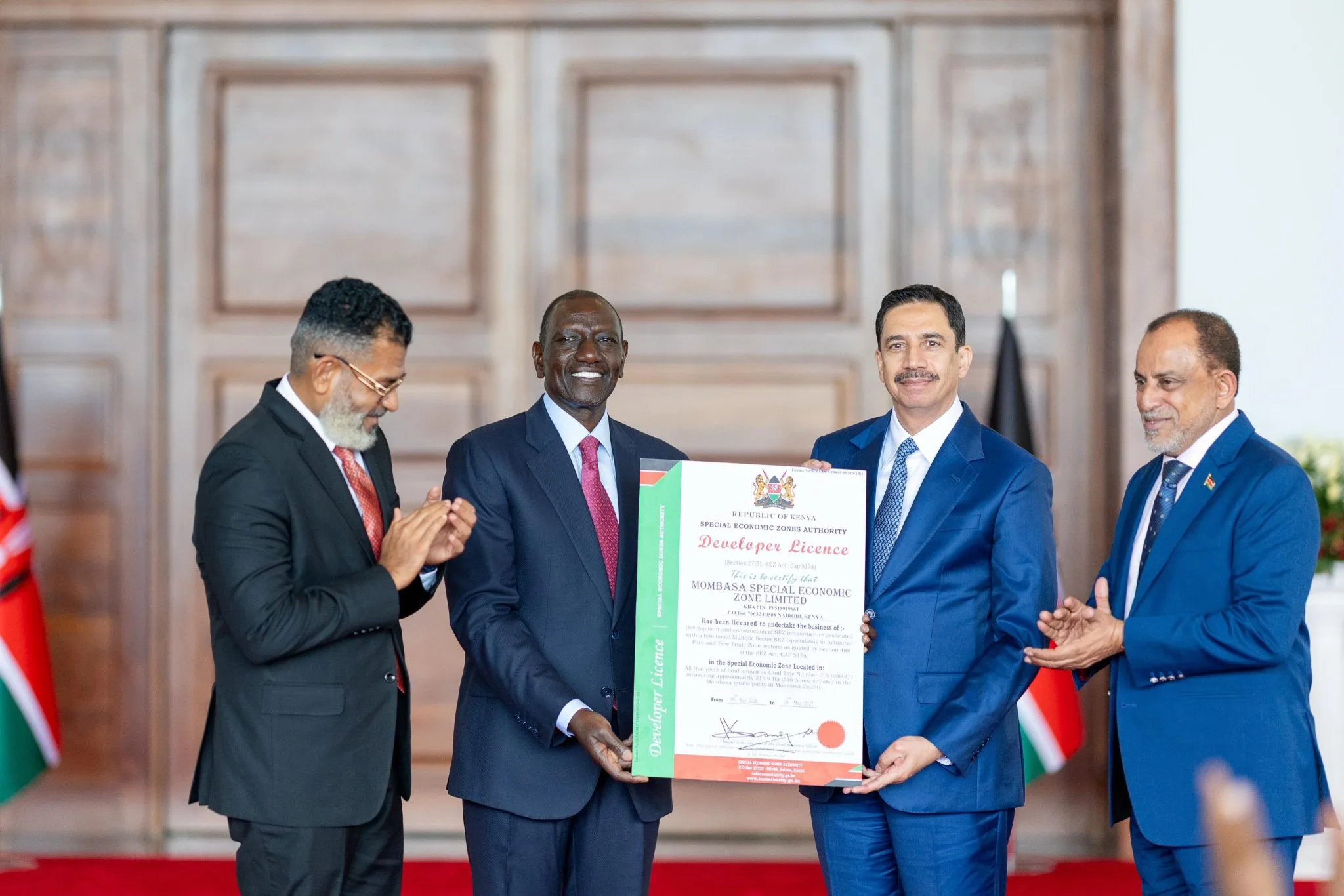
Kenya: Mombasa SEZ DP World Agreement Secures Sh12B Investment
Summary
- A tripartite agreement was signed on September 8 for a Sh12 billion Special Economic Zone (SEZ) in Mombasa, Kenya.
- The 535-acre project in Jomvu involves the County Government of Mombasa, Mombasa Free Zone Ltd, and DP World, witnessed by President William Ruto.
- The SEZ aims to create 10,000 jobs in its first phase and transform Mombasa into a manufacturing and export hub.
- It aligns with Kenya's strategy to shift from raw commodity exports to a production and export-oriented economy, leveraging SEZs for industrial growth.
- The zone will be linked to the Standard Gauge Railway (SGR) and regional transport corridors, serving as a production and distribution center for the East African Community, COMESA, and the broader African market.
Major Investment Boosts Mombasa's Economic Future
The initial phase of this Mombasa SEZ DP World agreement Kenya is projected to generate 10,000 employment opportunities, signaling a robust economic uplift for the region.
A significant tripartite agreement has been finalized to establish a new Special Economic Zone (SEZ) in Mombasa, Kenya, representing a substantial investment of Sh12 billion. This ambitious project, spanning 535 acres in the Jomvu area, aims to fundamentally transform the coastal city from its traditional role as a mere transit gateway into a dynamic manufacturing and export hub. The accord was formally signed on September 8 by the County Government of Mombasa, Mombasa Free Zone Ltd, and DP World, with President William Ruto personally witnessing the proceedings at State House in Nairobi.
The initial phase of this Mombasa SEZ DP World agreement Kenya is projected to generate 10,000 employment opportunities, signaling a robust economic uplift for the region. The development is strategically designed to attract a diverse range of industries, including those focused on manufacturing, processing, assembly, and value addition. This framework will enable goods to be produced within Kenya before being dispatched to both regional and international markets.
This Mombasa Free Zone Ltd investment, alongside its partners, is poised to leverage the city's inherent geographical advantages. The establishment of the SEZ is a direct move to capitalize on Mombasa's strategic location and existing transport infrastructure, extending its utility beyond simply handling goods destined for Kenya and neighboring countries. It represents a concerted effort to foster industrial growth and diversify the local economy.
Kenya's Export-Led Manufacturing Strategy Takes Shape
The new Kenya Special Economic Zone Mombasa is a cornerstone of the nation's broader economic transformation agenda, as articulated by President William Ruto. The President emphasized that the project is pivotal to shifting Kenya's economic reliance away from the export of raw or minimally processed commodities. Instead, the government is committed to fostering a production and export-oriented economy, aiming to capture greater value from its domestic products.
President Ruto underscored the critical role of Special Economic Zones in achieving the Bottom-Up Economic Transformation Agenda. He highlighted their capacity to serve as platforms for industrial development, expanding export capabilities, creating jobs, and forging vital links between farmers, entrepreneurs, and manufacturers within domestic, regional, and global value chains. This strategic direction is central to Kenya's export-led manufacturing strategy.
The national leadership's vision calls for a significant increase in domestic processing and manufacturing activities. The President explicitly stated the imperative to process more of what the country produces, manufacture a greater proportion of what it consumes, and ultimately export competitive, finished products. This policy directive underpins the rationale for substantial investments like the Jomvu SEZ development.
Unlocking Regional Trade and Value Chains
The Mombasa SEZ is strategically positioned to maximize its operational efficiency and market reach through seamless integration with key infrastructure. It will be directly linked to the Standard Gauge Railway (SGR) and other regional transport corridors, providing manufacturers with unparalleled access to Kenya's extensive port infrastructure and facilitating efficient distribution across regional markets. This connectivity is vital for the success of the Kenya Special Economic Zone Mombasa.
Beyond its immediate economic impact, the zone is envisioned to serve as a crucial production and distribution center for the East African Community (EAC), COMESA, and the wider African market. This expanded role will allow Mombasa to become a central node in regional supply chains, enhancing its strategic importance. The development is also expected to provide a robust platform for manufacturers and entrepreneurs to connect with regional and global value chains, simultaneously generating opportunities for local suppliers and service providers.
This initiative reflects the government's ongoing commitment to promoting SEZs as primary vehicles for industrialization. These zones are designed to offer dedicated infrastructure and an attractive investment environment, specifically tailored to draw in businesses engaged in production and export activities. The comprehensive approach aims to create a conducive ecosystem for sustained economic growth and regional trade integration.
Practical Implications
Lawyers and compliance officers should note the establishment of this significant new Special Economic Zone in Mombasa, as it presents new investment opportunities and requires understanding the specific legal, regulatory, and incentive frameworks for businesses looking to operate within it.
Source
How does this affect you?
Get an AI analysis of this article grounded in your jurisdictions, practice areas, and any policy documents you've uploaded to Wansom.
Finish Reading the Full Story and the Expert Analysis.
Wansom is AI and can make mistakes.