
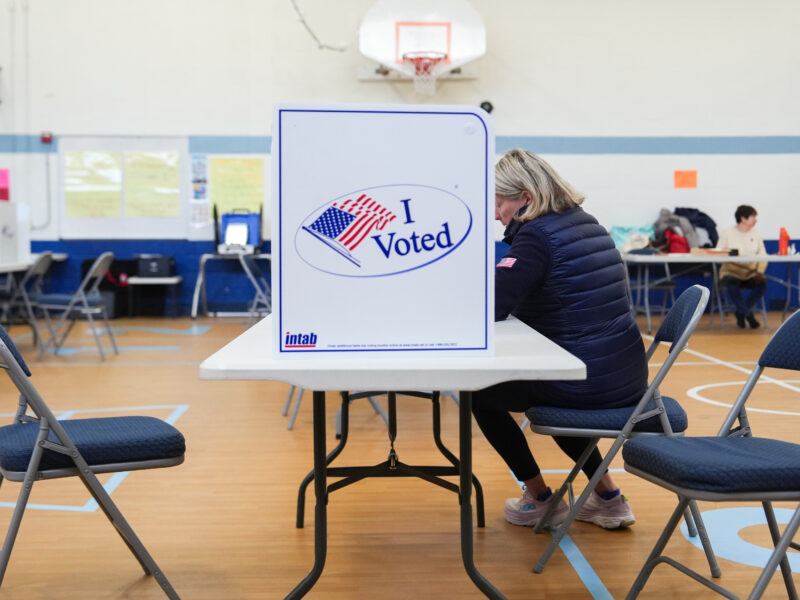
Minnesota Supreme Court: Oak Grove Seeks Paper Voter Rosters
Summary
- The Minnesota Supreme Court recently heard arguments concerning the City of Oak Grove's attempt to revert to paper voter rosters for statewide elections.
- Oak Grove, which adopted electronic voter books in 2018, passed a resolution in 2024 to return to paper, citing concerns about electronic system failures and election security.
- The Minnesota Office of the Secretary of State rejected Oak Grove's decision, prompting the city to file a petition to reverse the state's rejection.
- The core legal dispute centers on whether municipalities retain statutory authority to choose their Minnesota election poll book format or if county and state officials have final say for statewide elections.
- Justices questioned the state's argument for uniformity, noting the lack of clear legislative mandate for county auditors to dictate poll book formats.
What Happened
This pivotal case will clarify the precise division of authority between Minnesota municipalities and county or state officials concerning election administration, particularly regarding voter roster formats.
The Minnesota Supreme Court recently heard arguments in a significant case that could redefine the scope of municipal election authority in the state. At the heart of the dispute is the City of Oak Grove's attempt to revert to using paper voter rosters for upcoming statewide elections, a decision that has been challenged by state and Anoka County officials. This legal battle began after the Oak Grove City Council unanimously passed a resolution in 2024, signaling its intent to abandon the electronic voter books it had adopted in 2018 following a contract with Anoka County.
The city's move to return to traditional paper poll books was subsequently rejected by the Minnesota Office of the Secretary of State earlier this year. In response, Oak Grove filed a petition in May, seeking to overturn the state's decision. The city emphasizes concerns about potential failures of electronic poll book systems and community apprehension regarding election security and transparency as key motivations for its desired return to paper formats. The central question before the high court is whether individual municipalities like Oak Grove possess the statutory power to determine their Minnesota election poll book format for statewide contests, or if county and state directives for electronic uniformity take precedence over local choices.
Legal Framework and Disputed Authority
Oak Grove asserts that its primary responsibility for operating polling places within its precincts grants it the ultimate authority over voter roster formats. The city points to Minnesota law, which generally empowers municipalities to manage their own polling sites and explicitly states that a county, municipality, or school district “may use electronic voter rosters or paper voter rosters in any election.” This language, Oak Grove argues, unequivocally preserves a city's right to choose paper rosters, reinforcing its municipal election authority Minnesota. Furthermore, the city highlights its broad statutory powers over local elections, which include establishing polling places, hiring election judges, and defining precinct boundaries.
Conversely, state and Anoka County officials contend that authority for federal, state, and countywide elections rests with the county auditor. Assistant Anoka County Attorney Jason Stover clarified this distinction, stating that while Oak Grove's position might be valid for city elections drawing voters from a single city, for statewide elections where voters are drawn from the entire county, the county's head elections official makes such decisions. Assistant Attorney General Allen Cook Barr, representing the Secretary of State, further elaborated that county auditors are considered the head election officials for these broader elections because they are responsible for providing rosters to polling places, receiving election returns, and overseeing the canvassing of results by county boards. From this perspective, a city lacks the power to override a county auditor's determination regarding the Minnesota election poll book format.
Judicial Scrutiny and Broader Implications
During the Supreme Court hearing, justices expressed skepticism regarding the clarity of the legislative intent behind the state and county's position. Justice Theodora Gaïtas questioned why the Legislature had not made it more explicit that the county auditor serves as the definitive election official for statewide and federal elections, a point to which state officials could only respond that the statute's overall structure implies this authority. The state and county also advanced an argument for uniformity as a key reason to prevent cities from independently determining voter roster formats.
However, this uniformity argument faced significant pushback from the bench. Chief Justice Natalie Hudson observed that while uniformity might be desirable, it did not appear to be the Legislature's explicit choice. Justice Karl Procaccini echoed this sentiment, noting that without clear statutory guidance, a county official could arbitrarily decide to use electronic books in one area and paper in another, undermining the very idea of consistent application. He suggested that the state's argument leaned more towards collaboration and coordination rather than a clear statutory mandate. This pivotal case will clarify the precise division of authority between Minnesota municipalities and county or state officials concerning election administration, particularly regarding voter roster formats, and will impact the scope of statewide election local control, including the use of Oak Grove electronic voter books versus traditional paper systems and the role of Anoka County voter rosters in this debate.
Practical Implications
This case will clarify the division of authority between Minnesota municipalities and county/state officials regarding election administration, particularly concerning voter roster formats. Lawyers advising local governments or election bodies should monitor the ruling for its impact on operational autonomy and compliance requirements for election procedures.
Source
How does this affect you?
Get an AI analysis of this article grounded in your jurisdictions, practice areas, and any policy documents you've uploaded to Wansom.
Finish Reading the Full Story and the Expert Analysis.
Wansom is AI and can make mistakes.