
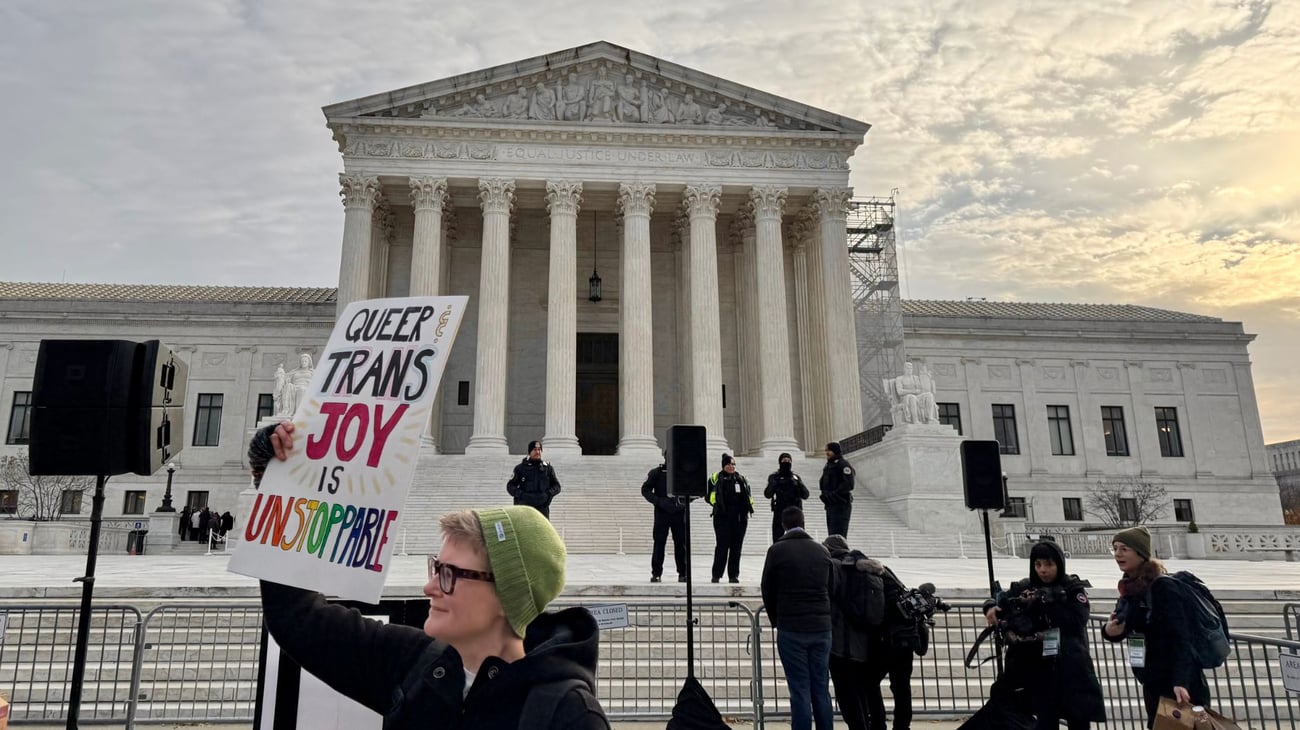
Minnesota Conversion Therapy Ban Challenge: Counselors Seek Injunction
Summary
- The Christian Counselors Freedom Alliance is challenging Minnesota's conversion therapy ban, seeking a preliminary injunction.
- The alliance argues the 2023 Minnesota law, which prohibits conversion therapy for minors and vulnerable adults, restricts speech and discriminates against faith-based counselors.
- A recent U.S. Supreme Court ruling in `Chiles v. Salazar` established that verbal conversion therapy is protected speech subject to strict scrutiny, influencing the current challenge.
- U.S. District Judge Katherine Menendez expressed significant skepticism about Minnesota's ban, suggesting it constitutes viewpoint discrimination under the `Chiles` precedent.
- Minnesota defends its law by arguing it regulates conduct, not speech, and is justified by scientific evidence of harm, despite the judge's concerns about its constitutionality.
Legal Challenge to Minnesota's Ban
It is very hard for me to imagine any court reading Chiles and not thinking you cannot have a discriminatory statute.
A coalition of Christian-affiliated counselors has initiated legal action, urging a federal judge to protect its members from Minnesota's state-level prohibition on conversion therapy. The Christian Counselors Freedom Alliance (CCFA) recently sought a preliminary injunction, contending that the Minnesota statute infringes upon free speech and unfairly targets faith-based practitioners who aim to offer talk therapy aligned with their religious convictions. This legal challenge forms the core of a lawsuit originally filed by the alliance in August.
The Minnesota law, enacted in 2023, specifically prohibits mental health professionals from engaging in conversion therapy with minors or vulnerable adults. This restriction applies to practices, including talk therapy, that seek to alter an individual's gender identity or sexual orientation. Non-compliance with this statute can result in professional disciplinary actions, potentially including the revocation of a practitioner's license. However, the law explicitly permits exploratory discussions concerning gender, sexual orientation, or religious beliefs, indicating a specific focus on practices intended to change identity or orientation.
Impact of Supreme Court Precedent
The legal landscape surrounding such bans significantly shifted following the U.S. Supreme Court's landmark decision in March concerning Colorado's conversion therapy ban, `Chiles v. Salazar`. This ruling, which largely left Minnesota's law unchallenged until now, established that restrictions on conversion therapy regulate speech based on viewpoint. The Supreme Court, in an 8-1 decision, affirmed that purely verbal talk therapy constitutes "protected speech" and must therefore be evaluated under strict scrutiny, the most rigorous constitutional standard.
In light of `Chiles`, the Christian Counselors Freedom Alliance asserts that Minnesota's law is "materially indistinguishable" from the Colorado statute and should consequently be invalidated. Minnesota's legal counsel, Margaret Jacot, countered this argument by asserting that the state's restriction governs the "conduct" of counseling rather than speech itself. Jacot further argued that while the statute indeed takes a stance against a particular viewpoint, this position is justified given the substantial harms associated with conversion therapy in a clinical setting, emphasizing that "It would be a massive change to say ‘here’s one area of law where science no longer matters.’"
Judicial Skepticism and Viewpoint Discrimination
U.S. District Judge Katherine Menendez expressed considerable doubt regarding the Minnesota ban's long-term viability after the `Chiles` decision. The judge, a Joe Biden appointee, noted that the Supreme Court's ruling fundamentally reshaped the judicial approach to evaluating state-imposed speech restrictions. She articulated her concerns, stating, "It is very hard for me to imagine any court reading Chiles and not thinking you cannot have a discriminatory statute." Judge Menendez further emphasized her view that, under the `Chiles` precedent, it is challenging to interpret the Minnesota law as anything other than viewpoint discrimination.
Despite her skepticism regarding the ban's legality, Judge Menendez acknowledged the extensive expert opinions and medical data presented by Minnesota throughout the court proceedings. These materials strongly support a decision grounded in scientific and factual evidence. Organizations such as the American Psychological Association, alongside 13 other mental health and medical professional bodies, maintain that conversion therapy does not meet the criteria for legitimate therapeutic treatment and is linked to severe adverse mental health outcomes, including depression, anxiety, and suicide attempts, particularly among minors.
Timing of the Injunction Request
While appearing generally skeptical of Minnesota's ban, Judge Menendez also raised questions about the timing of the Christian Counselors Freedom Alliance's request for a preliminary injunction, noting that it came three years after the law's enactment. She suggested that this delay might indicate a less urgent level of harm, remarking, "Chiles didn’t do anything to change what your clients are experiencing." The judge added, "If this met that heightened standard for irreparable harm, you would have tried anyway."
Douglas Wardlow, the attorney representing the alliance, defended the delay, explaining that the legal foundation at the time of the law's enforcement was "very shaky." He argued that it was strategically prudent for the group to await the outcomes of other relevant cases. Wardlow stated that "The pathway to relief wasn’t clear, and I think it was reasonable to wait for the Supreme Court to make its decision," implying that the `Chiles` ruling provided the necessary clarity for their current legal challenge.
Practical Implications
Lawyers and compliance officers should note the increasing vulnerability of state-level conversion therapy bans, particularly those regulating speech, following the Supreme Court's Chiles v. Salazar decision. This ruling establishes a higher bar for such restrictions, requiring strict scrutiny for viewpoint-discriminatory speech regulations, which may lead to successful challenges against similar laws in other jurisdictions or the eventual invalidation of Minnesota's ban.
Source
How does this affect you?
Get an AI analysis of this article grounded in your jurisdictions, practice areas, and any policy documents you've uploaded to Wansom.
Finish Reading the Full Story and the Expert Analysis.
Get the latest legal & regulatory intelligence in United States
Wansom is AI and can make mistakes.