
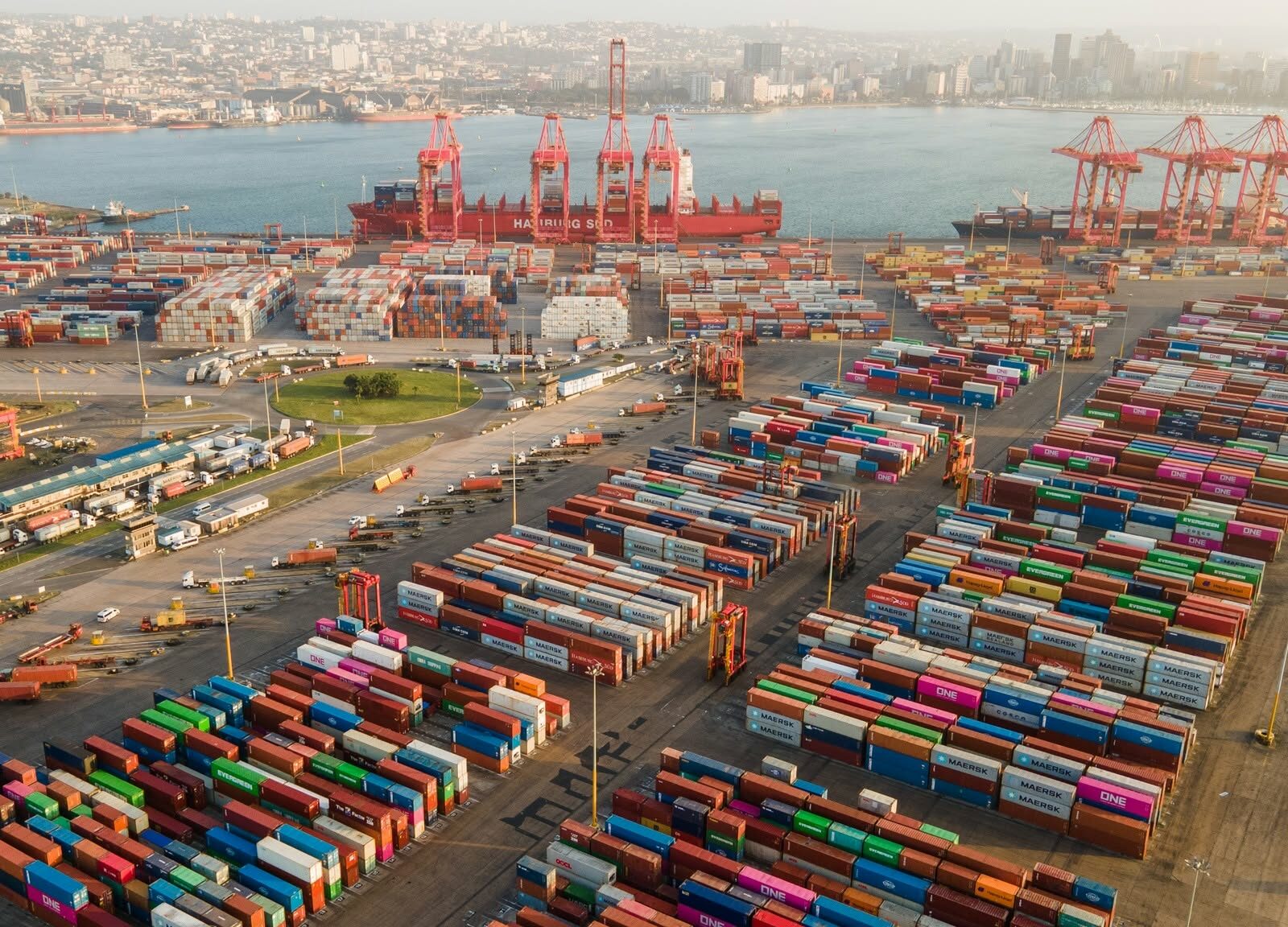
Metair: Considers Force Majeure Over Durban Port Crisis
Summary
- Automotive component manufacturer Metair faces severe financial strain due to 14-20 day vessel delays at Durban Gateway Terminal.
- Metair's shares plunged over 35% after warning it may invoke force majeure in supply contracts.
- Industry bodies and the Durban Chamber of Commerce and Industry are calling for urgent intervention and a port recovery plan.
- DGT management, under ICTSI, acknowledges the disruptions and is engaging with affected automotive sector stakeholders.
- The current crisis threatens to undermine Durban port's efforts to improve its global performance rankings.
Escalating Crisis at Durban Port
The company has indicated it may be forced to invoke force majeure clauses within its supply contracts as the Durban port crisis reaches critical levels.
The Durban Gateway Terminal (DGT), home to the nation's largest container facility, Durban Container Terminal Pier 2, is currently experiencing severe operational disruptions, leading to significant vessel delays. Ships are now spending between 14 and 20 days at anchorage awaiting unloading, a marked deterioration from delays that began in July. This ongoing crisis is placing immense pressure on businesses reliant on the port for their supply chains.
Automotive component manufacturer Metair has publicly stated that it cannot indefinitely absorb the escalating costs stemming from these prolonged delays. Paul O'Flaherty, Metair's CEO, indicated that there is "no end in sight" to the current situation. To prevent disruptions to customer production lines, Metair has been compelled to utilize expensive air freight and implement extensive overtime, resulting in substantial financial strain.
O'Flaherty emphasized that while the company can endure a certain level of difficulty, it cannot sustain these additional costs indefinitely, asserting there is "no open cheque book" for such expenses. Following this warning, Metair's shares experienced a sharp decline of over 35% on Friday. The company has indicated it may be forced to invoke force majeure clauses within its supply contracts as the Durban port crisis reaches critical levels.
Historical Context and Economic Impact
The current operational challenges at the Durban port are not unprecedented, echoing similar disruptions experienced in 2023 when backlogs and adverse weather conditions led to vessel unloading delays of up to three weeks. These past issues contributed to Durban's ranking as the last port in the World Bank and S&P Global's 2024 Container Port Performance Index. While the port did show the largest improvement among those assessed in the 2025 index, the present crisis threatens to undermine these gains and hinder its efforts to climb global rankings.
This persistent supply chain disruption in South Africa carries significant economic implications, potentially deterring private sector investment crucial for restoring port performance. The ongoing delays at the Durban port, a vital trade artery, create uncertainty and increase operational costs for numerous industries beyond the automotive sector, impacting the broader national economy.
Industry Outcry and Management's Response
Metair's concerns are widely shared across the industry, with various bodies advocating for a comprehensive port recovery plan featuring measurable milestones since August. Logistics operators have privately expressed fears that the current state of affairs could jeopardize government initiatives aimed at attracting private investment to enhance port efficiency. The Southern African Association of Freight Forwarders has declared the situation "unacceptable," demanding intervention proportionate to its scale, urgency, and national economic consequences.
Palesa Phili, CEO of the Durban Chamber of Commerce and Industry, recently highlighted the sharp decline in DGT's performance over recent months. She noted that while Transnet CEO Michelle Phillips and her team had stabilized the port over the past two and a half years, "everything has gone south" in the last two months, with vessels now waiting for days outside the port. Phili further urged the transfer of Transnet's R150 billion debt to the National Treasury, arguing this would alleviate the crippling interest burden impeding the state-owned logistics group's recovery efforts.
DGT's operations and management were partially privatized in January 2026, when Filipino ports giant International Container Terminal Services Inc (ICTSI) assumed control under a 25-year partnership, with Transnet retaining a 51% stake. Javier Lancha, CEO of DGT, acknowledged the concerns raised by Metair and other terminal users, stating that the pressure on manufacturers, particularly in the automotive sector, is understood and taken seriously. He confirmed that DGT does not dispute customer disruptions and is engaging directly with affected parties. DGT is scheduled to meet with the National Association of Automotive Component and Allied Manufacturers this week to detail the current situation, outline its recovery plan, and present its capital investment program. Lancha affirmed that since assuming operational control, management has been working with stakeholders to restore terminal fluidity, strengthen planning, and invest in equipment and systems, forming the basis for managing higher volumes and typical summer weather disruptions.
The Force Majeure Dilemma
The potential invocation of a force majeure clause by Metair underscores the severe contractual implications arising from the Durban port crisis. Such a declaration would signal that the company is unable to fulfill its contractual obligations due to unforeseen circumstances beyond its control, directly impacting its supply agreements. This legal maneuver highlights the critical need for businesses to review their existing contracts for relevant clauses and assess their exposure to such significant supply chain disruptions.
For companies like Metair, the financial strain of maintaining production amidst these delays is immense. The necessity of resorting to costly alternatives, such as air freight, and incurring substantial overtime expenses, demonstrates the direct economic consequences of the port's operational failures. The "no open cheque book" stance articulated by Metair's CEO reflects a limit to how much additional cost can be absorbed, making the force majeure invocation a last resort to mitigate further financial damage and manage contractual liabilities. This situation serves as a stark reminder of the fragility of global supply chains and the profound impact local infrastructure failures can have on international trade and manufacturing.
Practical Implications
Lawyers should advise clients on the contractual implications of the ongoing Durban port crisis, particularly regarding the invocation or defense against force majeure clauses in supply chain agreements. Compliance officers must assess their clients' exposure to supply chain disruptions and review existing contracts for relevant clauses and potential liabilities.
Source
Source: Original reporting via Moneyweb
How does this affect you?
Get an AI analysis of this article grounded in your jurisdictions, practice areas, and any policy documents you've uploaded to Wansom.
Finish Reading the Full Story and the Expert Analysis.
Get the latest legal & regulatory intelligence in South Africa
Wansom is AI and can make mistakes.