
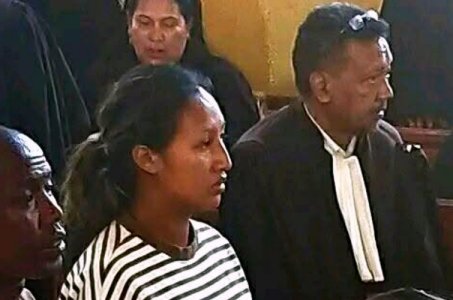
Mendrika Nasandratriniony: Granted Autorisation Sortie Escorte for Infant Visit
Summary
- Mendrika Nasandratriniony, involved in the Ambohimalaza poisoning case, received authorization for an escorted release on November 23.
- This humanitarian measure allowed her to visit her hospitalized baby.
- The authorization came after the Ordinary Criminal Court's president had rejected her request for provisional liberty.
- She was accompanied by a penitentiary escort during her temporary release.
- The decision highlights the judiciary's discretionary power for humanitarian considerations in Madagascar's legal system.
What Happened
The decision highlights the discretionary power available within Madagascar's criminal justice system to grant temporary, escorted releases for compelling humanitarian reasons, even when provisional liberty is denied.
Mendrika Nasandratriniony, an individual implicated in the high-profile fatal poisoning case in Ambohimalaza, recently secured a temporary release from custody. This development occurred on Monday, November 23, when she was granted an autorisation sortie escorte, allowing her to visit her hospitalized infant.
This specific authorization for an escorted release came shortly after a significant legal setback for Nasandratriniony. The President of the Ordinary Criminal Court had previously rejected her request for provisional liberty, indicating the court's initial stance on her continued detention. Despite this denial, the subsequent decision to permit a supervised visit to her child underscores a distinct, humanitarian consideration within the ongoing legal proceedings.
Legal Context in Madagascar
The decision by the Malagasy Ordinary Criminal Court to permit Mendrika Nasandratriniony an escorted release, even after denying her provisional liberty, highlights a nuanced application of droit pénal Madagascar. Provisional liberty, often sought by accused individuals, allows for temporary release from detention pending trial. Its rejection in this instance by the President of the Court meant Nasandratriniony was to remain incarcerated.
However, the subsequent approval for a supervised outing, specifically a Mendrika Nasandratriniony autorisation sortie escorte, demonstrates the judiciary's capacity to exercise discretionary power for humanitarian reasons. This measure, involving a penitentiary escort, is distinct from a full provisional release and is typically granted under exceptional circumstances, such as a severe family emergency. The contrast between the rejected provisional liberty and the granted humanitarian release is a key aspect of this case.
Significance of the Decision
The authorization for Mendrika Nasandratriniony to leave detention under escort, particularly given the context of the Affaire Ambohimalaza procès empoisonnement, represents a notable judicial action. It underscores that even in serious criminal proceedings, avenues exist for compassionate consideration, separate from the standard provisional liberty protocols. The decision highlights the discretionary power available within Madagascar's criminal justice system to grant temporary, escorted releases for compelling humanitarian reasons, even when provisional liberty is denied.
This particular outcome, where a request for full provisional liberty was rejected but a limited, escorted humanitarian release was approved, has prompted broader discussions. It has raised questions regarding the interplay between the Ministry of Justice and societal expectations, particularly concerning the balance between punitive measures and humanistic considerations in high-profile cases before the Madagascar Cour criminelle Mendrika.
Implications for Legal Practice
For legal practitioners in Madagascar, this case provides a valuable precedent regarding the potential for humanitarian interventions within the criminal justice system. The distinction between a denied request for provisional liberty and a granted autorisation sortie escorte for an urgent family matter is crucial. Lawyers representing clients in similar sensitive criminal proceedings, especially those involving the Madagascar Cour criminelle Mendrika, can leverage this example.
It demonstrates that even when a full release is deemed inappropriate by the court, arguments for temporary, supervised outings based on compelling humanitarian grounds, such as a hospitalized child, may still find favor. This nuanced approach to temporary release, where a liberté provisoire rejetée sortie humanitaire is still possible, offers an additional strategic consideration for defense counsel navigating the complexities of droit pénal Madagascar.
Practical Implications
This case highlights the Malagasy criminal court's discretionary power to grant humanitarian escorted release, even when provisional liberty is denied. Lawyers should note this precedent for potential arguments in similar sensitive criminal proceedings involving accused individuals with urgent family circumstances.
Source
How does this affect you?
Get an AI analysis of this article grounded in your jurisdictions, practice areas, and any policy documents you've uploaded to Wansom.
Finish Reading the Full Story and the Expert Analysis.
Get the latest legal & regulatory intelligence in Madagascar
Wansom is AI and can make mistakes.