
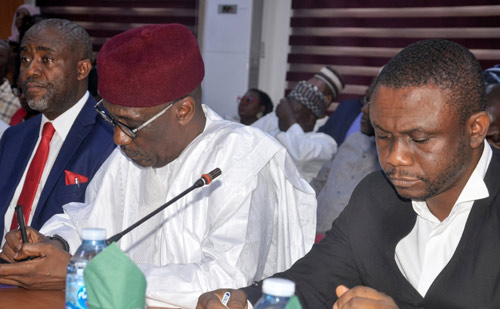
Mele Kyari: "Bookkeeping Issues, Not Financial Losses" for NNPCL N210 Trillion
Summary
- Mele Kyari, former GCEO of NNPCL, denied allegations of ₦210 trillion missing from company accounts.
- He clarified that the disputed figures represent accounting entries, not actual financial losses.
- Kyari made this statement while appearing before a Senate Committee on November 10, 2026.
What Happened
By asserting that "They Are Bookkeeping Issues, Not Financial Losses," Kyari sought to manage expectations and guide the Senate Committee towards a more technical understanding of the audit findings, emphasizing procedural rectifications over punitive measures for alleged embezzlement.
Mele Kyari, who previously served as the Group Chief Executive Officer of the Nigerian National Petroleum Company Limited (NNPCL), recently addressed significant financial queries. He appeared before a Senate Committee on Tuesday, November 10, 2026, to clarify allegations concerning the company's accounts. The former GCEO was responding to claims that a staggering ₦210 trillion was unaccounted for within the NNPCL's financial records.
Clarifying the Financial Discrepancy
Kyari's core argument centered on a crucial distinction between bookkeeping discrepancies and outright financial misappropriation. He emphasized that the ₦210 trillion in question pertained to internal accounting processes and record-keeping, rather than indicating a deficit of funds from the company's coffers. This perspective suggests that the issue lies within the methodology or recording of financial transactions, rather than the physical absence of money.
The former NNPCL head stressed that such figures, while substantial, are often the result of how transactions are logged and reconciled within a complex financial system. He aimed to reframe the public and senatorial understanding of the audit queries, moving the focus from alleged theft to administrative or procedural inconsistencies in financial documentation.
Context of the Senate Inquiry
The appearance of a former high-ranking official like Kyari before a Senate Committee underscores the parliamentary oversight function in Nigeria, particularly concerning state-owned enterprises. Such committees are tasked with scrutinizing public funds and ensuring accountability, especially when large sums are involved. The queries regarding the ₦210 trillion highlight the ongoing public and governmental interest in the financial integrity of the NNPCL, a critical national asset.
Kyari's testimony was a direct response to the serious nature of the allegations, which, if left unaddressed, could significantly impact public trust and the reputation of the national oil company. His clarification was therefore essential to provide the legislative body with a detailed explanation of the audit findings from the NNPCL's perspective.
Implications of the Distinction
The distinction Kyari drew between "bookkeeping issues" and "financial losses" carries significant implications for how the public and policymakers perceive the NNPCL's financial health and management. If the figures indeed represent mere accounting entries, it suggests a need for improved financial reporting and internal controls, rather than a crisis of corruption or outright theft. This differentiation is vital for accurate assessment of the company's operational integrity.
Understanding this nuance is crucial for avoiding misinterpretations that could lead to undue alarm or misdirected policy responses. By asserting that "They Are Bookkeeping Issues, Not Financial Losses," Kyari sought to manage expectations and guide the Senate Committee towards a more technical understanding of the audit findings, emphasizing procedural rectifications over punitive measures for alleged embezzlement.
Source
How does this affect you?
Get an AI analysis of this article grounded in your jurisdictions, practice areas, and any policy documents you've uploaded to Wansom.
Finish Reading the Full Story and the Expert Analysis.
Get the latest legal & regulatory intelligence in Nigeria
Wansom is AI and can make mistakes.