
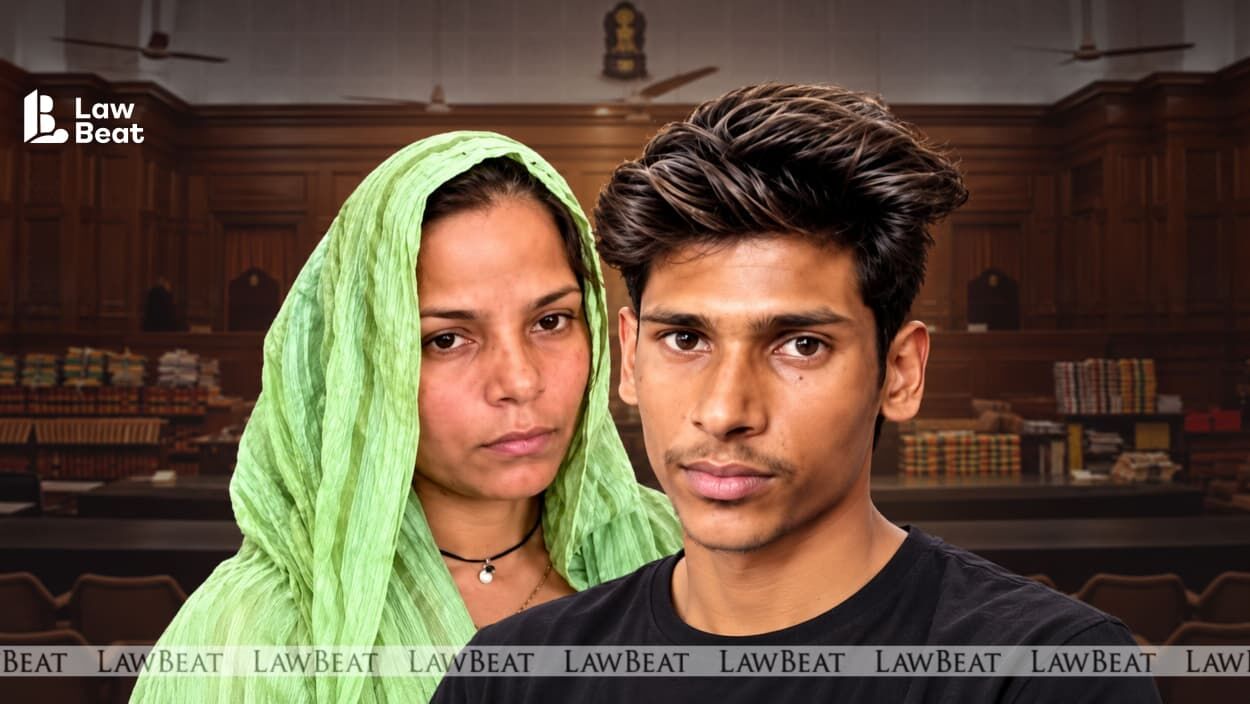
Meerut Sessions Court: Death Sentence for Fake Snakebite Murder Plot
Summary
- A Meerut Sessions Court sentenced Amardeep and Ravita to death for strangling Ravita's husband, Amit Kashyap.
- The couple attempted to conceal the murder by placing a live snake next to the victim's body, faking a snakebite death.
- Convictions were secured under Bharatiya Nyaya Sanhita Sections 103(1), 3(5), and 238, based on a comprehensive chain of circumstantial evidence.
- The court emphasized the moral gravity of the crime, deeming it an "attack on Indian culture and marital trust" and citing the Mahabharata.
- The death sentence imposed by the Meerut court requires confirmation by the Allahabad High Court.
The Elaborate Deception
If the one meant to protect the home becomes its destroyer and, blinded by her infatuation with her lover, kills her own husband, the entire society would become unsafe.
On April 13, 2025, Amit Kashyap was discovered deceased on his cot at home in Meerut, with a live snake positioned beside his body, creating the impression of a fatal snakebite. However, his elder brother, Monu Kashyap, observed suspicious injuries on Amit's face and neck, prompting a formal complaint. This led to the registration of a First Information Report on April 16, 2025, initiating an investigation into the circumstances of Amit's death.
Monu Kashyap's complaint alleged that Amit's wife, Ravita, maintained an extramarital relationship with Amardeep, a man from the same village who also worked alongside Amit. This illicit affair reportedly fueled disputes between Amit and Ravita, culminating in a significant quarrel on April 12, 2025, the day prior to Amit's death. The prosecution subsequently contended that Ravita and Amardeep had conspired to strangle Amit, then deliberately placed the snake near his body to mislead both his family and law enforcement about the true cause of death.
Judicial Findings and Evidence
The Meerut Sessions Court, presided over by Additional Sessions Judge Jaiveer Singh Nagar, ultimately convicted Amardeep, aged 22, and Ravita, aged 25, for Amit Kashyap's murder. The court's judgment relied heavily on a comprehensive chain of circumstantial evidence, which included establishing a clear motive, analyzing call-detail records, and incorporating last-seen evidence. Crucially, the post-mortem examination contradicted the initial snakebite theory, definitively concluding that Amit had died from strangulation.
Further bolstering the prosecution's case, witness testimonies detailed Amardeep's acquisition of the snake, which was subsequently found at the crime scene. The court addressed challenges regarding the evidence, asserting that the absence of photographic or video documentation for the snake's recovery did not inherently render the evidence doubtful, given the corroborating witness accounts. Similarly, the four-day delay in filing the FIR was deemed acceptable, as the family initially suspected a snakebite and only lodged the complaint after the post-mortem results clarified the cause of death. The court concluded that the snake's placement was a deliberate act designed to create a false impression and mislead investigators.
Legal Framework and Sentencing Rationale
Amardeep and Ravita received a death sentence for the murder, alongside seven years of rigorous imprisonment for their role in causing the disappearance of evidence. Their conviction was secured under Sections 103(1), 3(5), and 238 of the Bharatiya Nyaya Sanhita (BNS), 2023, which correspond to the erstwhile Sections 302, 34, and 201 of the Indian Penal Code, respectively. This Meerut court death sentence fake snakebite case marks a significant application of the new BNS provisions.
In its judgment, the court issued a strong moralistic commentary, describing the murder as more than just the killing of an individual; it was characterized as a profound "attack on Indian culture and marital trust." The court explicitly stated that life imprisonment would be an inadequate punishment under the circumstances, emphasizing that "If the one meant to protect the home becomes its destroyer and, blinded by her infatuation with her lover, kills her own husband, the entire society would become unsafe." The judge also referenced the Mahabharata, specifically the Shanti Parva, 15/3, to underscore the principles guiding punishment. The death sentence imposed by the Meerut Sessions Court judgment is subject to confirmation by the Allahabad High Court.
Implications for Justice
This verdict from the Meerut Sessions Court provides a critical precedent concerning the application of circumstantial evidence in securing a conviction, particularly a death sentence, under the recently enacted Bharatiya Nyaya Sanhita. The case highlights how an elaborate attempt to conceal a murder, such as faking a snakebite death, can be meticulously unraveled through a robust chain of evidence, including call-detail records and last-seen testimonies, leading to a conviction under BNS Sections 103(1).
The court's explicit moralistic pronouncements, framing the crime as an "attack on Indian culture," offer a notable insight into the judicial discretion and considerations that can influence sentencing in capital punishment cases in India. Lawyers and legal scholars will closely examine this judgment for its interpretation of the new BNS provisions and its approach to cases involving premeditated murder with sophisticated concealment strategies, especially as the Allahabad High Court reviews the Amardeep Ravita murder death sentence.
Practical Implications
This case provides a significant precedent on the application of circumstantial evidence under the new Bharatiya Nyaya Sanhita (BNS) for securing a death sentence, especially in cases involving elaborate attempts to conceal the crime. Lawyers should observe the court's strong moralistic commentary influencing sentencing and its potential impact on judicial discretion in future capital punishment cases.
Source
How does this affect you?
Get an AI analysis of this article grounded in your jurisdictions, practice areas, and any policy documents you've uploaded to Wansom.
Finish Reading the Full Story and the Expert Analysis.
Get the latest legal & regulatory intelligence in India
Wansom is AI and can make mistakes.