
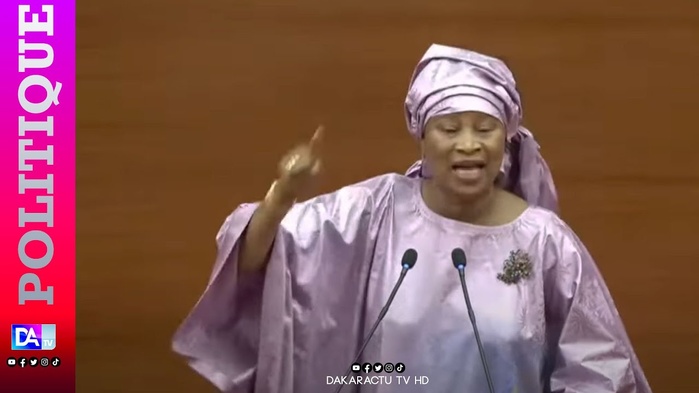
Me Aïssata Tall Sall: Arguments against LFR Rejection in Senegal Assembly
Summary
- The Senegalese parliamentary majority rejected the Loi de finances rectificative (LFR), sparking a dispute.
- Me Aïssata Tall Sall, leader of Takku Wallu Sénégal, criticized the debate conditions and accused Pastef of avoiding discussion.
- She alleged the Assembly President used internal rules to prevent her group from speaking.
- Me Aïssata Tall Sall described the majority's arguments for the LFR rejection as 'far-fetched.'
- Her group plans to issue a public statement in response to these legislative actions and procedural concerns.
Legislative Dispute Erupts Over Finance Law
Me Aïssata Tall Sall characterized the majority's justifications as 'far-fetched,' indicating a deep disagreement with their legislative approach and the rationale behind the rejection of the LFR.
A significant procedural conflict has emerged within the Senegalese National Assembly following the rejection of the Loi de finances rectificative (LFR) by the parliamentary majority. Me Aïssata Tall Sall, who presides over the Takku Wallu Sénégal parliamentary group, voiced strong objections regarding the circumstances surrounding the legislative debate. Her criticisms highlight a growing tension over the conduct of parliamentary proceedings.
Me Aïssata Tall Sall specifically denounced the conditions under which the debate unfolded, suggesting that the ruling party, Pastef, had deliberately avoided engaging in a substantive discussion on the proposed finance law. This accusation points to a breakdown in the expected deliberative process within the legislative body, raising questions about the transparency and fairness of the parliamentary exchange.
The rejection of the Loi de finances rectificative Sénégal by the majority marks a critical moment, underscoring deep divisions on fiscal policy. The parliamentary leader's immediate and vocal reaction indicates the gravity of the situation and the potential for further political contention surrounding legislative actions.
Procedural Concerns and Denied Speech
Beyond the substance of the LFR, Me Aïssata Tall Sall's critique extended to the application of the internal rules, known as the règlement intérieur Assemblée nationale Sénégal. She asserted that the President of the Assembly invoked a specific article from these rules to prevent her parliamentary group, Takku Wallu Sénégal, from exercising their right to speak during the debate. This alleged denial of speech is a serious procedural concern, impacting the democratic function of the legislative body.
Me Aïssata Tall Sall characterized the majority's justifications as 'far-fetched,' indicating a deep disagreement with their legislative approach and the rationale behind the rejection of the LFR. Her strong language, reported by dakaractu, underscores the perceived lack of legitimate grounds for the majority's actions and their procedural maneuvers. The arguments presented by the majority regarding the LFR were, in her view, without solid foundation.
This dispute over the application of internal rules and the perceived suppression of dissenting voices highlights the challenges in maintaining fair and open legislative processes. Such procedural challenges can significantly impact the ability of all parliamentary groups to contribute to lawmaking, potentially undermining the integrity of the legislative process itself.
Political Fallout and Future Steps
The accusations made by Me Aïssata Tall Sall, particularly her assertion that Pastef avoided the LFR debate, suggest a strategic maneuver rather than a genuine legislative disagreement. This stance from the Takku Wallu Sénégal leader indicates a belief that the majority's actions were politically motivated, designed to circumvent thorough scrutiny of the Loi de finances rectificative.
In response to these developments, Me Aïssata Tall Sall announced her group's intention to make a public statement against what she views as an unacceptable situation. This planned public 'sortie' signals a commitment to challenge the legislative majority's conduct and to bring greater public attention to the procedural irregularities and the rejection LFR Assemblée nationale. Such actions are crucial for accountability in the legislative sphere.
This incident underscores the importance of transparent and equitable parliamentary procedures for the stability of lawmaking. Disputes over internal rules and the fairness of debate can have broader implications for the predictability of the regulatory environment, which is a key consideration for businesses and investors. The ongoing monitoring of such legislative procedural challenges is essential to understand potential shifts in the country's governance landscape.
Practical Implications
This development highlights procedural disputes within the Senegalese National Assembly concerning the rejection of a finance law and the application of internal rules. Lawyers should monitor such legislative procedural challenges as they can indicate potential instability in lawmaking processes, impact the timely passage of critical legislation, and affect the predictability of the regulatory environment for businesses and investors.
Source
How does this affect you?
Get an AI analysis of this article grounded in your jurisdictions, practice areas, and any policy documents you've uploaded to Wansom.
Wansom is AI and can make mistakes.