
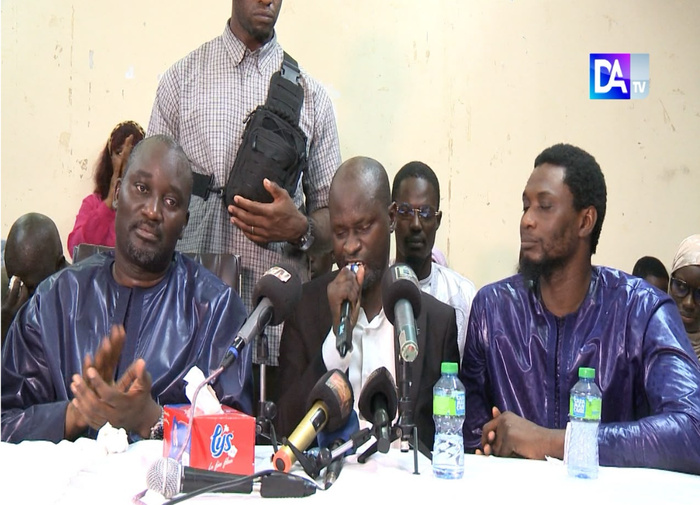
Mbacké Disabled Family Security Grants: LFR Rejection Threatens Vital Aid
Summary
- Members of the Kiiraay association in Mbacké fear the rejection of the "projet de loi de finances rectificative" (LFR) will halt "bourses de sécurité familiale" for disabled persons.
- Initially, 64,000 disabled individuals received grants, but 25,000 were later excluded.
- President Bassirou Diomaye Faye's administration, with Prime Minister Ahmadou Al Aminou Lo, planned to reintegrate excluded beneficiaries and expand the total to 86,000.
- The LFR rejection also threatens over 8 billion CFA francs in local community investments and 3 billion CFA francs in Islamic finance.
- Local leaders, including Cheikh Omar Gueye and presidential advisor Cheikh Saadbou Diouf, are actively advocating for the disabled community in Mbacké.
Concerns Over Disabled Family Security Grants in Mbacké
The recent rejection of the "projet de loi de finances rectificative" poses a direct threat to the continuity and expansion of social support for disabled individuals in Senegal.
In Mbacké, members of the Kiiraay association, representing individuals living with disabilities, have voiced significant apprehension regarding the rejected "projet de loi de finances rectificative" (LFR). Their primary concern centers on the potential for this legislative rejection to prevent thousands of beneficiaries from receiving crucial "bourses de sécurité familiale," or family security grants. This situation has led to regret among participants concerning the stance taken by deputies from the Pastef party.
During their interventions, as reported by Dakaractu, prominent figures such as Abib Diop, Cheikh Saadbou Diouf, and Cheikh Omar Gueye underscored the principle that political disagreements should not be allowed to inflict hardship upon the general populace. The community in Mbacké, particularly those reliant on these vital social welfare provisions, fears that the legislative impasse could directly jeopardize the financial support intended for vulnerable citizens. The "Mbacké disabled family security grants" are seen as essential for the well-being of many families.
Legislative Impasse Threatens Disability Policy
The recent rejection of the "projet de loi de finances rectificative" poses a direct threat to the continuity and expansion of social support for disabled individuals in Senegal. Initially, approximately 64,000 people living with disabilities were recipients of these family security grants. However, a subsequent decision led to the exclusion of 25,000 individuals from this aid program. This reduction caused considerable distress among the affected population.
More recently, President Bassirou Diomaye Faye and his Prime Minister, Ahmadou Al Aminou Lo, had taken steps to address this, deciding to reintegrate the previously excluded beneficiaries and further increase the total number of recipients to 86,000. This expansion of the "bourses de sécurité familiale Sénégal" was a key component of the administration's "Bassirou Diomaye Faye disability policy." The current fear among the "personnes handicapées Mbacké" is that the rejection of the LFR could entirely compromise these promised aids, leaving many without the expected financial assistance.
Broader Financial Repercussions of the Blockage
The anxieties expressed by the Kiiraay association in Mbacké are part of a much wider national debate concerning the financial ramifications of the "projet de loi de finances rectificative" rejection. The legislative gridlock extends beyond individual welfare payments, impacting various sectors of the economy and public investment. Local leaders and stakeholders have highlighted substantial financial losses that could materialize if the LFR remains stalled.
For instance, Moussa Bala Fofona in Mbacké estimated that investments exceeding 8 billion CFA francs, earmarked for local communities, are at risk of being forfeited. Similarly, Alioune Dione pointed to a potential shortfall of over 3 billion CFA francs within Islamic finance. Furthermore, Idrissa Samb noted that numerous planned training sessions would not be able to proceed, indicating a broader disruption to capacity building and economic development initiatives. These figures underscore the extensive and varied negative consequences stemming from the legislative delay.
Local Advocacy and Continued Engagement
Amidst these concerns, local organizational efforts continue to advocate for the rights and welfare of disabled individuals. The meeting in Mbacké concluded with the formal installation of Cheikh Omar Gueye as the coordinator for the structure within the Mbacké department, signaling ongoing community leadership and representation. This move aims to strengthen local advocacy for the "Mbacké disabled family security grants" and other related issues.
Earlier on the same day, a delegation led by Cheikh Saadbou Diouf, who serves as a special advisor to the President of the Republic specifically on disability matters, visited the Cheikh Ahmadoul Khadim hospital. There, the delegation met with Mme Bineta Diabel Bâ Mbacké, demonstrating continued engagement from high-level officials with the challenges faced by the disabled community. These actions highlight the persistent efforts to ensure that the needs of "personnes handicapées Mbacké" remain a priority despite the legislative hurdles.
Practical Implications
Lawyers advising NGOs or individuals reliant on social welfare programs in Senegal should monitor the legislative progress of the 'projet de loi de finances rectificative' closely, as its blockage could impact the disbursement of 'bourses de sécurité familiale' and other public funds, potentially requiring legal assistance for affected beneficiaries.
Source
How does this affect you?
Get an AI analysis of this article grounded in your jurisdictions, practice areas, and any policy documents you've uploaded to Wansom.
Finish Reading the Full Story and the Expert Analysis.
Get the latest legal & regulatory intelligence in Senegal
Wansom is AI and can make mistakes.