
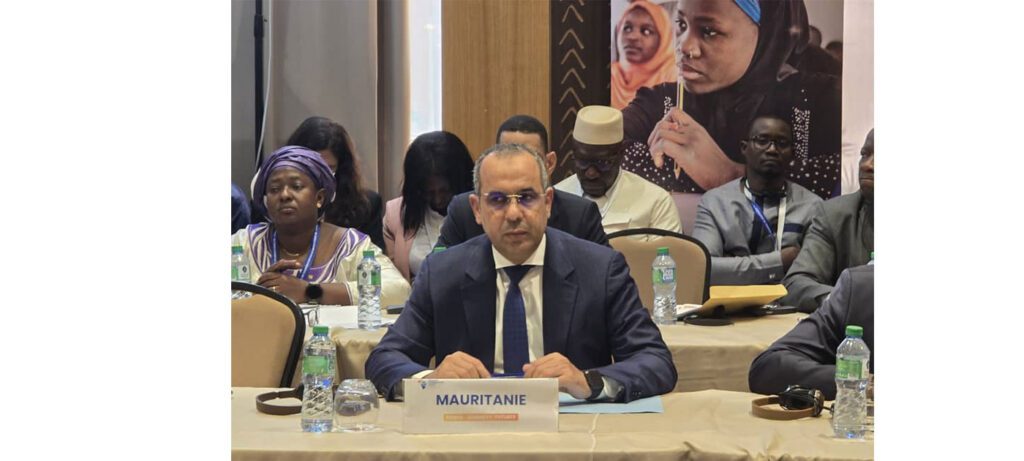
Mauritanie: Un Nouveau Fonds Régional de Migration Proposé
Summary
- A ministerial conference on West African migration governance, attended by fifteen African nations, was held in Dakar from November 18-20.
- Mauritania's delegation, led by Ambassador Daman Hamar, advocated for national sovereignty, data control, and modernized border points.
- Mauritania proposed national action plans for 2027-2028 focusing on migration governance, protection, and regional cooperation.
- A key Mauritanian proposal involved creating a coordination and resource mobilization mechanism, including a dedicated Mauritanie fonds régional migration.
- The initiative emphasizes shared responsibility among countries of origin, transit, destination, and return, alongside regional judicial cooperation.
Advancing Regional Migration Governance in West Africa
Lawyers advising clients on human mobility, cross-border operations, or humanitarian initiatives in West Africa should closely monitor the development of this proposed regional migration fund and coordination mechanism.
A significant ministerial conference on migration governance in West Africa recently convened in Dakar from November 18 to 20, bringing together representatives from fifteen African nations. The discussions centered on fostering enhanced regional cooperation to address the multifaceted challenges of human mobility. During the opening segment, Me Moussa Sarr, Senegal's Minister of Justice, emphasized the historical roots of human movement within West African societies while advocating for a unified regional strategy. He highlighted the necessity for strengthened dialogue and judicial collaboration among states to effectively manage the complexities arising from irregular migration, recognizing that these issues transcend national borders.
The Mauritanian delegation, led by Ambassador Daman Hamar, Secretary General of the Ministry of Foreign Affairs, African Cooperation and Mauritanians Abroad, played a prominent role in shaping the discourse. Mauritania presented a comprehensive set of national priorities aimed at bolstering its approach to migration. These included safeguarding national sovereignty, ensuring domestic control over migratory data, and modernizing critical border crossing points. The delegation also stressed the importance of cross-border cooperation, facilitating orderly mobility, and intensifying efforts to combat document falsification and the networks involved in migrant trafficking.
Mauritania's Proposal for a Regional Funding Mechanism
For the upcoming 2027-2028 roadmap, Mauritania put forward proposals for national action plans focusing on migration governance, the protection of migrants, and broader regional cooperation. The implementation of these plans, it was suggested, should be carefully tailored to respect each state's unique legal frameworks, institutional capacities, and financial resources. A cornerstone of Mauritania's contribution was the advocacy for a new mécanisme coordination ressources migration. This proposed structure aims to coordinate and mobilize resources by engaging states, regional organizations, technical and financial partners, and international institutions.
Central to this initiative is the establishment of a dedicated fund or a broader financement migration Afrique Ouest, specifically a Mauritanie fonds régional migration. This regional migration fund would serve as a crucial instrument for pooling resources and ensuring sustained financial support for shared migration priorities across the region. Ambassador Hamar underscored that such a collaborative approach is vital given Mauritania's strategic geographical position, situated between the Maghreb and Sub-Saharan Africa, making it directly impacted by the dynamics of the Atlantic migratory route in West Africa. He articulated that countries of origin, transit, destination, and return must collectively bear the responsibility for addressing these complex challenges.
Implications for Cross-Border Mobility and Legal Frameworks
The call for regional judicial cooperation, initially voiced at the conference's outset, aligns with the broader objective of developing common responses to cross-border dynamics. Mauritania further proposed the institutionalization of regular consultations among relevant ministers to ensure effective oversight and execution of agreed-upon decisions. The establishment of a Mauritania regional migration fund and a robust coordination mechanism represents a significant step towards a more integrated and harmonized approach to migration management in the region.
Lawyers advising clients on human mobility, cross-border operations, or humanitarian initiatives in West Africa should closely monitor the development of this proposed regional migration fund and coordination mechanism. This initiative could lead to the introduction of new regulatory frameworks, create novel funding opportunities, or impose additional compliance requirements related to migration management. Such changes have the potential to significantly impact businesses and organizations operating within the region, necessitating a proactive understanding of evolving legal and operational landscapes.
Practical Implications
Lawyers advising clients on human mobility, cross-border operations, or humanitarian initiatives in West Africa should monitor the development of this proposed regional migration fund and coordination mechanism. It could lead to new regulatory frameworks, funding opportunities, or compliance requirements related to migration management, potentially impacting businesses and organizations operating in the region.
Source
How does this affect you?
Get an AI analysis of this article grounded in your jurisdictions, practice areas, and any policy documents you've uploaded to Wansom.
Finish Reading the Full Story and the Expert Analysis.
Get the latest legal & regulatory intelligence in Senegal
Wansom is AI and can make mistakes.