
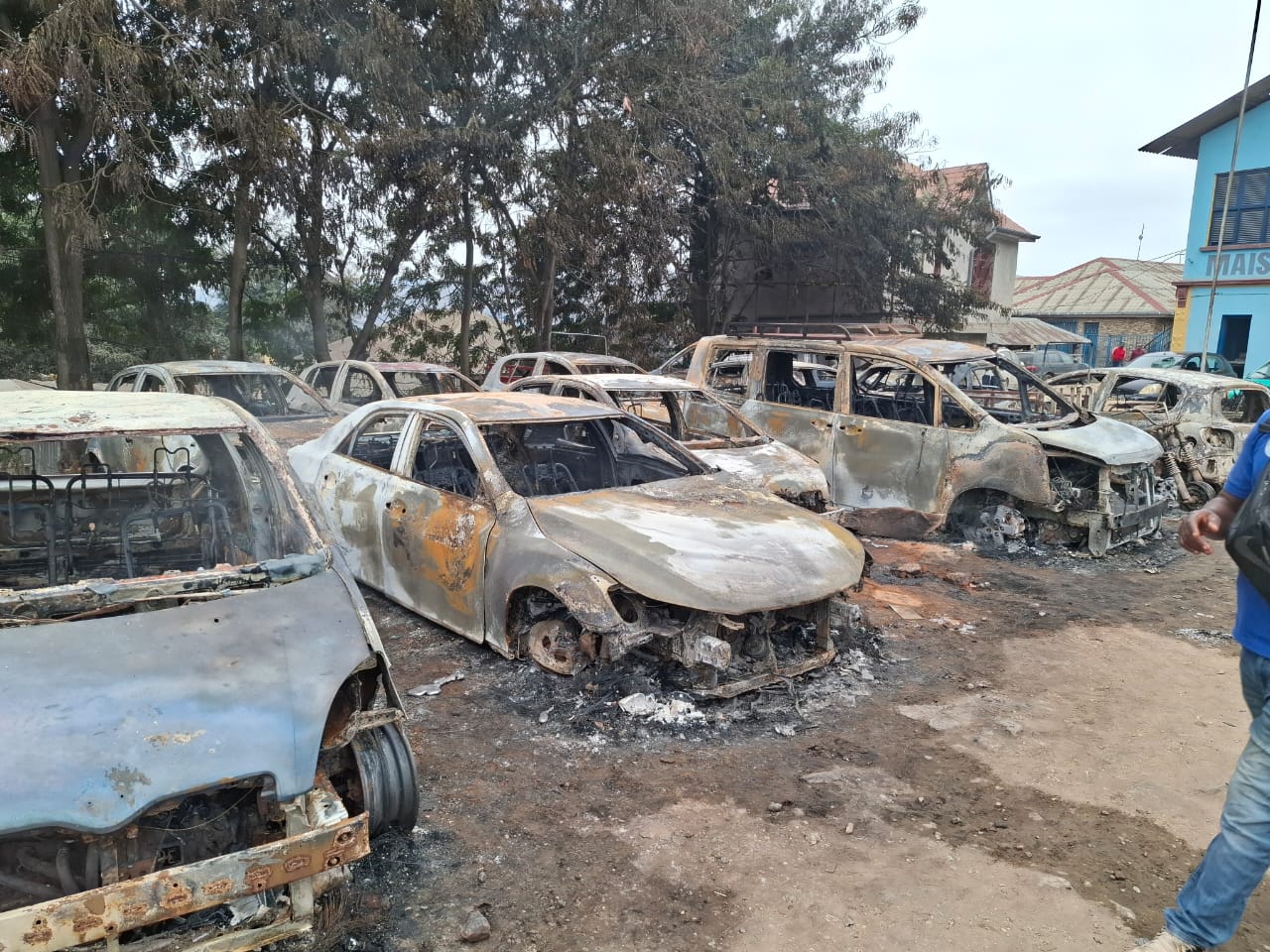
Matadi, CD: Communal House Parking Ban Imposed After Deadly Riot
Summary
- A motorcyclist was fatally shot in Matadi, Kongo-Central, during an altercation with a police officer on the night of September 7-8.
- The death triggered widespread vandalism, with 20 cars, three minibuses, three tricycles, and six motorcycles burned at the Matadi communal house.
- The local motorcyclists' association disavowed the violence, claiming "uncivilized individuals" were responsible.
- Provincial authorities, including the Governor Grâce Nkuanga Bilolo and National Deputy Nzuzi Kasa Aamz'hi, have pledged thorough investigations and accountability for the perpetrators.
- Following the incidents, a new provincial directive bans all vehicle parking in the courtyards of Matadi's communal houses.
Fatal Altercation Triggers Unrest in Matadi
The Matadi communal house parking ban reflects an immediate regulatory consequence stemming from the violent aftermath of the fatal shooting.
A motorcyclist was fatally shot in Matadi, Kongo-Central province, during the early hours of Tuesday, September 8, following an altercation with a police officer. The incident, which occurred around 2 AM on the night of Monday, September 7, resulted in the motorcyclist's immediate death at the scene, according to a report from the local security council. This tragic death quickly escalated tensions across the city, leading to widespread acts of vandalism and property destruction.
Reports indicate that vehicles parked within the compound of the Matadi communal house became primary targets for the unrest. The severity of the situation prompted an urgent meeting of the Provincial Security Council the day after the events to thoroughly assess the extent of the damage. Provincial Interior Minister Jacques Kiazola subsequently confirmed the significant destruction, detailing that 20 cars, three minibuses, three tricycles, and six motorcycles were burned. Additionally, other unspecified properties sustained damage during the violent outbreak.
While the precise instigators of the vandalism remain under investigation, certain sources attributed the vehicle arsons to moto-taxi drivers. These drivers are a crucial component of the city's public transportation network, and their alleged involvement highlights the deep-seated frustration that may have contributed to the rapid escalation of the incident into widespread civil disturbance.
Official Condemnation and Calls for Accountability
Amidst the escalating situation and public outcry, the local motorcyclists' association publicly disassociated itself from the violent acts. Despite initial reports suggesting that the anger of certain motorcyclists fueled the unrest, the association vehemently contended that "uncivilized individuals" had infiltrated the ranks of legitimate demonstrators specifically to commit the acts of damage. A representative from the association explicitly stated that the perpetrators were not genuine motorcyclists but rather external infiltrators exploiting the volatile atmosphere.
In the political sphere, National Deputy Nzuzi Kasa Aamz'hi promptly demanded a comprehensive and transparent investigation into both the precise circumstances surrounding the motorcyclist's death and the subsequent acts of vandalism. He underscored the critical necessity of pursuing independent inquiries until all those responsible for these actions are identified, prosecuted, and brought to justice, emphasizing the importance of a full legal process.
Concurring with the urgent need for accountability, Kongo-Central Governor Grâce Nkuanga Bilolo publicly affirmed that all responsible parties would be identified. The Governor further pledged that appropriate sanctions would be applied to those found to be involved in the violence, signaling a firm stance from the provincial leadership against impunity and disorder.
New Parking Regulations for Matadi Communal Houses
In a direct and immediate response to the destructive events that unfolded, provincial authorities in Kongo-Central announced a significant new policy affecting public spaces in Matadi. This measure specifically prohibits any vehicle from parking within the courtyards of the city's communal houses going forward. The directive represents a tangible regulatory consequence stemming directly from the violent aftermath of the fatal shooting and subsequent vandalism.
The implementation of this Matadi communal house parking ban by the provincial authority aims to mitigate the risk of similar incidents of property destruction in sensitive administrative locations. It underscores a proactive approach to maintaining order and security around government buildings, reflecting the gravity with which the recent unrest is being treated by local governance.
Source
How does this affect you?
Get an AI analysis of this article grounded in your jurisdictions, practice areas, and any policy documents you've uploaded to Wansom.
Finish Reading the Full Story and the Expert Analysis.
Wansom is AI and can make mistakes.