
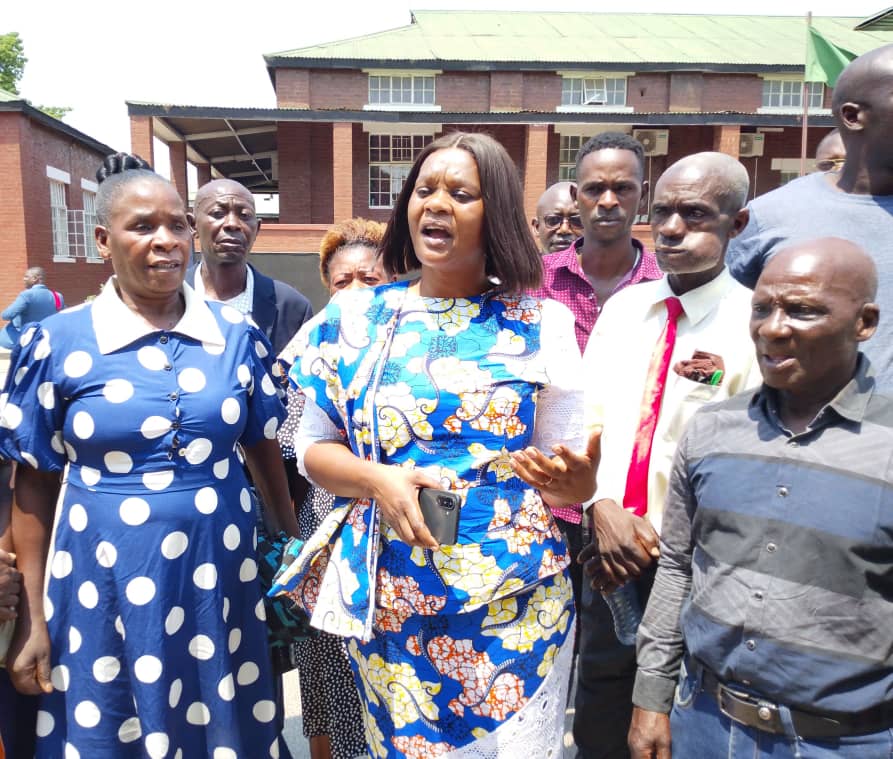
Zambia High Court: Mapatizya UPND Seat Nullified Over Incomplete Vote Tally
Summary
- Lusaka High Court Judge Kazimbe Chenda nullified the election of Emelda Munashabantu as Mapatizya Member of Parliament.
- Munashabantu, a UPND candidate, was declared the winner of the August 13 election based on results from only 64 of 75 polling stations.
- She had polled 14,812 votes in the partially counted results.
- The ruling highlights the strict adherence required to electoral procedures in Zambia.
What Happened
The nullification of the Mapatizya UPND seat by Judge Kazimbe Chenda underscores the rigorous legal framework governing electoral disputes in Zambia.
Lusaka High Court Judge Kazimbe Chenda, presiding from Livingstone, recently issued a significant ruling that saw the election of Emelda Munashabantu as the Member of Parliament for Mapatizya nullified. This decision effectively overturned the outcome of the August 13 elections for the constituency, where Munashabantu, representing the United Party for National Development (UPND), had been declared the victor.
The court's review revealed that the initial declaration of Munashabantu as the winner was based on an incomplete tally of votes. Specifically, the results considered for her victory originated from only 64 out of the 75 polling stations within the Mapatizya constituency. This partial accounting of the electoral process formed a critical element in the subsequent legal challenge.
In the contested results, Emelda Munashabantu had secured a total of 14,812 votes. The discrepancy arising from the uncounted polling stations ultimately led to the successful petition against her election, culminating in the High Court's decision to nullify the Mapatizya UPND seat.
Legal Context of the Nullification
The nullification of the Mapatizya UPND seat by Judge Kazimbe Chenda underscores the rigorous legal framework governing electoral disputes in Zambia. Election petitions are a vital mechanism for upholding the integrity of the democratic process, allowing aggrieved parties to challenge results based on alleged irregularities or non-compliance with electoral laws.
In this instance, the Zambia High Court election petition centered on the incomplete tabulation of votes from the August 13 election results challenge. The fact that 11 polling stations were not included in the final count that declared Emelda Munashabantu the winner suggests a fundamental procedural flaw that could have materially affected the outcome.
Such rulings serve as a critical reminder that electoral victory must not only be achieved through popular vote but also through strict adherence to established legal and administrative procedures. The Kazimbe Chenda Mapatizya ruling reinforces the judiciary's role in ensuring fairness and transparency in electoral processes, setting a precedent for how future challenges to election results might be adjudicated.
Implications for Electoral Integrity
The Emelda Munashabantu election nullification carries substantial implications for political parties and candidates across Zambia, particularly concerning the meticulous management of electoral processes. This judgment highlights the imperative for all stakeholders to ensure that every vote is accounted for and that declarations of winners are based on comprehensive and verifiable data from all designated polling stations.
For political parties, the ruling emphasizes the need for robust legal strategies when engaging in electoral disputes. It provides a clear example of the grounds upon which election results can be challenged and subsequently nullified, informing future legal approaches for addressing electoral irregularities. The Mapatizya UPND seat nullified decision will undoubtedly influence how parties prepare for and respond to election petitions.
Ultimately, this High Court decision reinforces public confidence in the electoral system's ability to correct errors and uphold justice. It signals that procedural lapses, even if seemingly minor, can lead to significant legal consequences, thereby promoting greater diligence among electoral officials and political actors in safeguarding the integrity of Zambia's democratic elections.
Practical Implications
This ruling highlights the grounds upon which election results can be challenged and nullified in Zambia, providing precedent for future election petition cases and informing legal strategy for political parties and candidates regarding electoral disputes.
Source
How does this affect you?
Get an AI analysis of this article grounded in your jurisdictions, practice areas, and any policy documents you've uploaded to Wansom.
Finish Reading the Full Story and the Expert Analysis.
Wansom is AI and can make mistakes.