
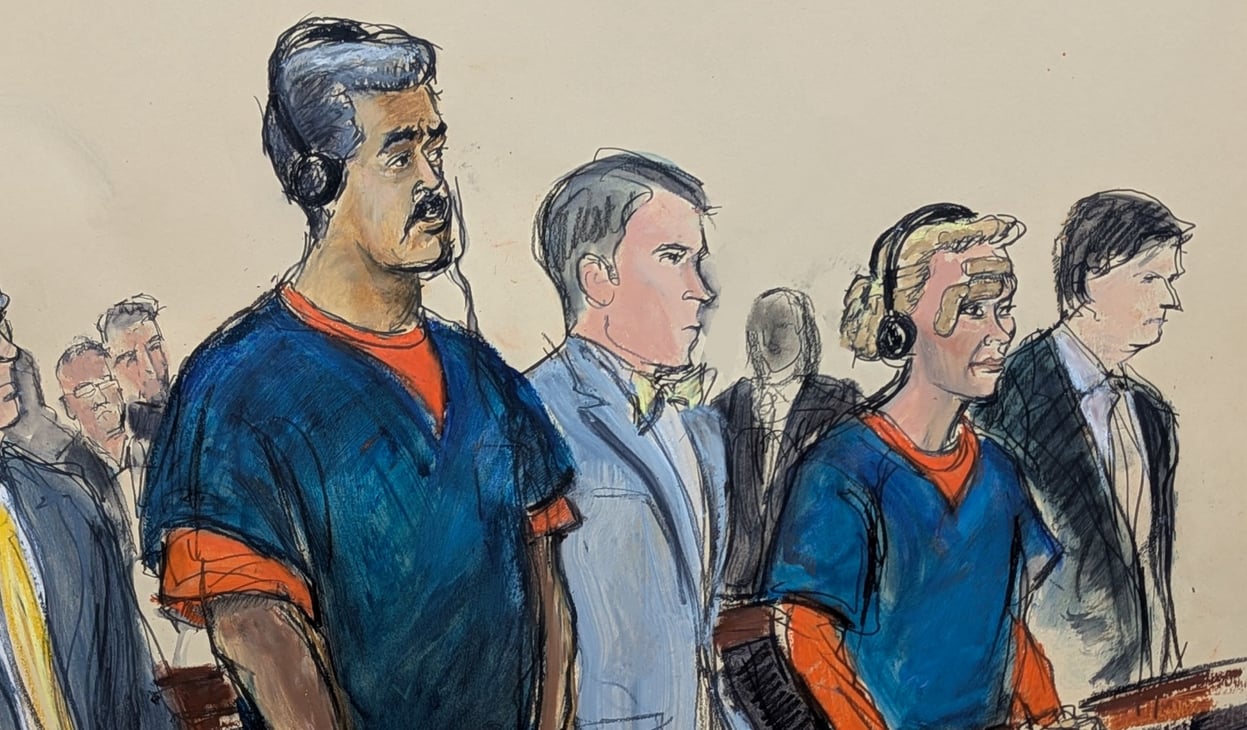
Maduro: New Torture Charge Not Guilty Plea in US Court
Summary
- Former Venezuelan President Nicolás Maduro and his wife, Cilia Flores, pleaded not guilty to a new superseding indictment charging them with conspiracy to commit torture.
- The indictment alleges they directed the torture of at least nine victims, including three U.S. citizens, using methods such as electric shock, rape, and asphyxiation.
- These new torture charges expand an existing narco-terrorism case against the couple, with alleged crimes dating back to 2006.
- A U.S. District Judge agreed to a joint request to delay the trial by two weeks, moving it to June 14, 2027, due to the new allegations.
- Both Maduro and Flores were captured by U.S. authorities and are now facing these charges in a Manhattan federal court.
New Torture Charges and Not Guilty Plea
The detailed allegations of extreme brutality, including electric shock, asphyxiation, and rape, against both Venezuelan political rivals and American citizens, underscore the grave nature of the accusations.
Former Venezuelan President Nicolás Maduro, alongside his wife Cilia Adela Flores de Maduro, recently entered a not guilty plea in Manhattan federal court to a superseding indictment. This new legal action charges Maduro with directing the torture of political opponents and United States citizens. Appearing in beige prison attire and restrained by ankle shackles, Mr. Maduro vociferously rejected the accusations, describing them as "false accusations and false testimony against me." Senior U.S. District Judge Alvin Hellerstein intervened, prompting him to formally enter his plea, to which Mr. Maduro declared, "I reject this document in its entirety.
This court appearance on Thursday marked Mr. Maduro's first in the Manhattan courthouse since July. As he had done in previous proceedings, the former president waved to the gallery as marshals escorted him into the courtroom. The new charge, specifically for conspiracy to commit torture, was unsealed last week during a bail hearing for Ms. Flores, where her request for release due to health concerns was denied. Mr. Maduro was not present at that particular hearing. The trial, originally scheduled for June 1, 2027, has been jointly postponed by the parties to June 14, 2027, to accommodate the newly introduced allegations, a two-week delay that Mr. Maduro’s lawyer, Barry Pollock, characterized as "aggressive" given the gravity of the new charges, though he expressed confidence in meeting the revised timeline. Both Mr. Maduro and Ms. Flores were captured by U.S. authorities.
Expansion of Existing Case and Allegations of Brutality
The recently unsealed superseding indictment significantly expands the existing narco-terrorism case against the former first couple. It now alleges that Mr. Maduro and Ms. Flores orchestrated the torture of at least nine individuals, three of whom are identified as U.S. citizens. Prosecutors detail a horrifying array of torture methods, including electric shock, asphyxiation, rape, forced nudity, prolonged isolation, starvation, confinement in punishment cells, and psychological torment such as threats to harm or kill victims' families, including their children.
The government asserts that these crimes began as early as 2006, when Mr. Maduro and Ms. Flores allegedly instructed members of their security detail to brutalize and kill individuals perceived as undermining their drug trafficking operations. As diplomatic relations between Venezuela and the U.S. deteriorated in recent years, the violence reportedly extended to American citizens. One documented instance from 2022 describes Venezuelan officers detaining a visiting U.S. citizen, falsely accusing him of attempting to assassinate Mr. Maduro. During his detention, officers allegedly punched him, covered his face, poured a noxious liquid over him, and forced him to consume his own vomit. He was also subjected to electrical shocks on his genitals and forcibly injected with a substance that induced seizures, spending over eight months in custody before being returned to the U.S. This individual is one of three U.S. citizens, with another captured as recently as 2025, identified as victims in the new indictment. The charges also include the torture of disloyal Venezuelan officials, such as a 2010 incident where an official was detained and severely beaten in a military trailer by Bolivarian National Guard members, suffering extensive injuries including to his genitalia from being shot, kicked, and raped with a broomstick.
Significance of the Charges
This development represents a substantial expansion of the legal grounds for prosecuting foreign leaders for human rights abuses, particularly when U.S. citizens are involved. The conspiracy to commit torture charge against Nicolas Maduro and Cilia Flores, building upon the existing narco-terrorism case, signals an aggressive stance by U.S. federal prosecutors in holding high-ranking foreign officials accountable for severe human rights violations. The detailed allegations of extreme brutality, including electric shock, asphyxiation, and rape, against both Venezuelan political rivals and American citizens, underscore the grave nature of the accusations.
The inclusion of Venezuela torture US citizens as direct victims in the superseding indictment highlights the extraterritorial reach of U.S. law in addressing such crimes. This case could establish a significant precedent for international criminal law, demonstrating the U.S. government's commitment to pursuing justice for its citizens and others subjected to state-sponsored torture, irrespective of the perpetrators' former political status or geographic location. The prosecution of a former head of state on such charges, particularly for actions dating back nearly two decades, emphasizes the long arm of justice in cases involving egregious human rights violations.
Practical Implications
This development expands the legal grounds for prosecuting foreign leaders for human rights abuses, particularly torture involving US citizens, indicating an aggressive stance by US federal prosecutors. Lawyers specializing in international criminal law, human rights, or advising clients with operations in politically unstable regions should note this precedent for potential extraterritorial application of such charges and its implications for international risk assessments.
Source
How does this affect you?
Get an AI analysis of this article grounded in your jurisdictions, practice areas, and any policy documents you've uploaded to Wansom.
Finish Reading the Full Story and the Expert Analysis.
Get the latest legal & regulatory intelligence in United States
Wansom is AI and can make mistakes.