
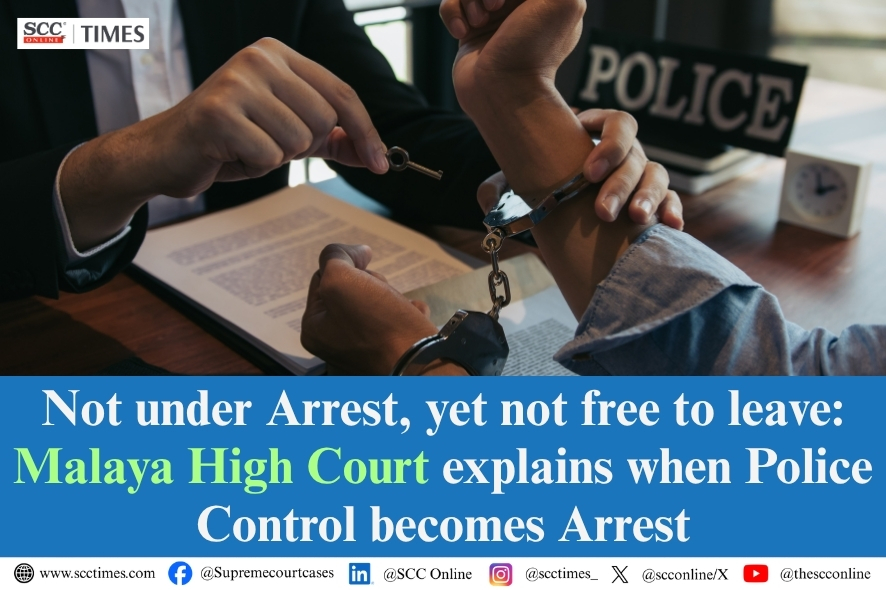
Malaya High Court: Police Control Amounts to Arrest in India
Summary
- A candlelight vigil at Dataran Merdeka turned into a detention incident when participants were ordered by police officers to accompany them to Dang Wangi District Police Headquarters.
- The Malaya High Court ruled that police control can amount to arrest, clarifying the distinction between the two.
- Under Malaysian law, detention requires specific procedures and safeguards, but the court's decision will likely have implications for lawyers and their clients.
What Happened
By clarifying when police control amounts to arrest, the court is ensuring that individuals are protected from arbitrary detention and abuse of power.
A recent case in Malaysia has sparked debate over the limits of police control and detention. In a candlelight vigil at Dataran Merdeka, participants were ordered by police officers to accompany them to Dang Wangi District Police Headquarters. The police maintained that the individuals were not under arrest, but they were transported in police vehicles, detained for several hours, and later issued compounds before being released.
The incident has raised questions about when police control amounts to arrest, a distinction that is crucial in understanding individual rights and freedoms.
Legal Context
Under Malaysian law, detention by the police requires specific procedures and safeguards. The Criminal Procedure Code (CPC) outlines the circumstances under which individuals can be detained, including during investigations or to prevent them from fleeing. However, the law also emphasizes that detention should not be used as a substitute for arrest.
The Malaya High Court's ruling in this case is significant because it clarifies when police control crosses the threshold into arrest. The court's decision will likely have implications for lawyers and their clients, who must navigate complex laws and regulations to protect individual rights.
Why It Matters
The Malaya High Court's ruling has far-reaching implications for individuals and society as a whole. By clarifying when police control amounts to arrest, the court is ensuring that individuals are protected from arbitrary detention and abuse of power.
Lawyers should take note of this ruling and its potential impact on client rights and compliance exposures. As police continue to exercise control over individuals, potentially amounting to de facto arrest, lawyers must be vigilant in protecting their clients' interests and ensuring that the law is upheld.
Practical Implications
Lawyers should watch for this ruling's implications on client rights and potential compliance exposures when police exercise control over individuals, potentially amounting to de facto arrest.
Source
Source: Original reporting via SCC Times
How does this affect you?
Get an AI analysis of this article grounded in your jurisdictions, practice areas, and any policy documents you've uploaded to Wansom.
Wansom is AI and can make mistakes.