
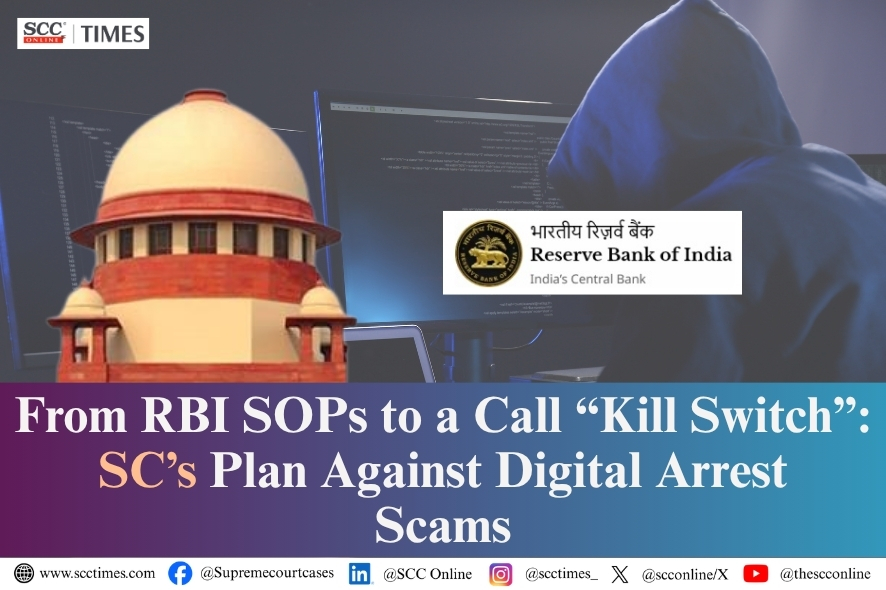
Supreme Court: Interim Directions on Digital Arrest Scams in India
Summary
- The Supreme Court has issued interim directions aimed at tackling digital arrest scams in India.
- Despite a decrease in reported losses, the Court emphasized that continued monitoring is essential to prevent these scams from escalating further.
- The Supreme Court has directed the RBI to formally adopt and circulate a new SOP for banks to help prevent digital arrest scams.
- Lawyers should take note of the Supreme Court's interim directions as they may have implications for their clients' digital transactions and compliance with evolving regulations.
What Happened
Despite a significant decrease in reported amounts defrauded, the Court emphasized that continued monitoring is essential to prevent these scams from escalating further.
The Supreme Court of India has issued interim directions aimed at tackling digital arrest scams, which have been a growing concern in the country. Despite a significant decrease in reported amounts defrauded, the Court emphasized that continued monitoring is essential to prevent these scams from escalating further.
In its recent order, the Court noted that while the trend of decreasing reported losses is encouraging, it cannot be taken as an indication that the problem has been fully addressed. The Court's interim directions are intended to provide a more effective framework for dealing with digital arrest scams and preventing them from causing significant financial losses to individuals and businesses.
The Supreme Court's move comes in response to growing concerns about the rise of digital arrest scams, which involve scammers posing as law enforcement officials or other authorities to extort money from victims. These scams have been reported across various states in India, with some cases involving substantial amounts of money.
Legal Context
The Supreme Court's interim directions on digital arrest scams are significant because they reflect the Court's commitment to protecting citizens from cybercrime and ensuring that law enforcement agencies are equipped to tackle these crimes effectively. The Court's order is also notable for its emphasis on the need for continued monitoring and vigilance in preventing digital arrest scams.
The Supreme Court has directed the RBI to formally adopt and circulate a new Standard Operating Procedure (SOP) within four weeks for banks to deal with mule accounts and cyber fraud, building upon existing guidelines and providing a more comprehensive framework for addressing this issue. The Court's order is also likely to have implications for the development of cybercrime laws in India, which are still evolving.
The RBI has been working closely with law enforcement agencies and other stakeholders to develop effective strategies for preventing digital arrest scams, and its Deputy Governor has confirmed a draft SOP has been submitted to the Supreme Court for fine-tuning. However, the Supreme Court's interim directions highlight the need for a more coordinated effort to tackle this issue, involving not just law enforcement agencies but also financial institutions, technology companies, and civil society organizations.
Why It Matters
The Supreme Court's interim directions on digital arrest scams are crucial because they have significant implications for individuals and businesses in India. The rise of digital arrest scams has caused substantial financial losses to many people, and the Court's order is intended to provide a more effective framework for preventing these scams.
Lawyers should take note of the Supreme Court's interim directions as they may have implications for their clients' digital transactions and compliance with evolving regulations. The Court's emphasis on continued monitoring and vigilance highlights the need for proactive steps to be taken by lawyers, financial institutions, and technology companies to prevent digital arrest scams.
The Supreme Court's order is also likely to have broader implications for India's cybercrime laws and regulatory framework. As the country continues to grapple with the challenges of cybercrime, the Supreme Court's interim directions provide a timely reminder of the need for a more coordinated effort to tackle this issue.
Practical Implications
Lawyers should watch for the potential implications of these interim directions on their clients' digital transactions and take proactive steps to ensure compliance with evolving regulations.
Source
Source: Original reporting via SCC Times
How does this affect you?
Get an AI analysis of this article grounded in your jurisdictions, practice areas, and any policy documents you've uploaded to Wansom.
Wansom is AI and can make mistakes.