
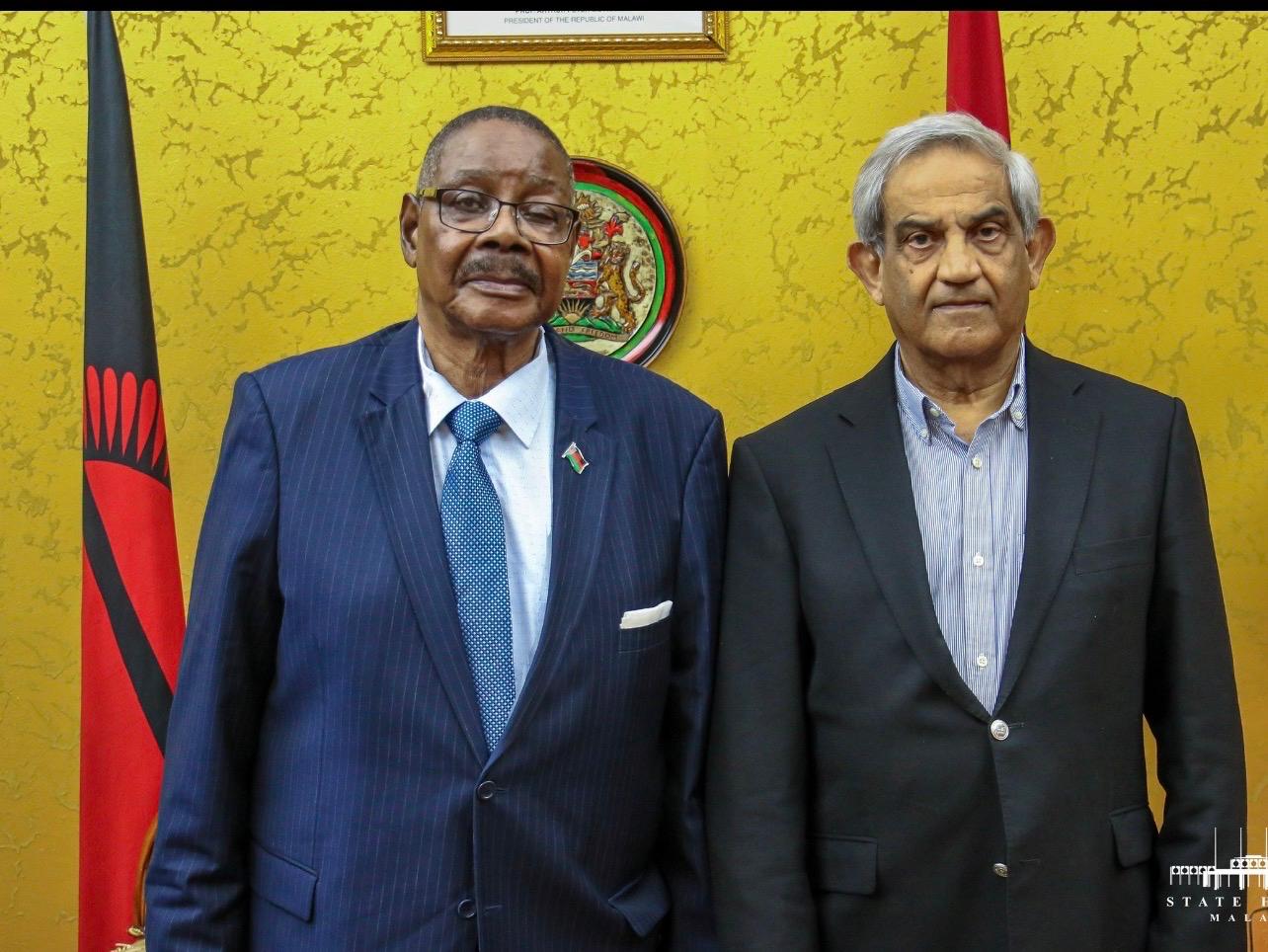
Dassu: Malawi Vice President Constitutional Status Affirmed
Summary
- Dassu asserts that the Malawi Vice-Presidency holds a constitutional status, distinct from being a political party's asset.
- The Constitution of the Republic of Malawi is identified as the supreme law governing the office's status and authority.
- There are recurring debates concerning the Vice-Presidency's status, authority, and security of tenure.
- This interpretation is crucial for understanding executive authority and the legal framework of high office in Malawi.
- The assertion is made within the context of Malawi's hard-fought-for constitutional democracy.
The Vice-Presidency's Constitutional Mandate
The assertion underscores a fundamental principle: the Vice-Presidency derives its legitimacy and operational framework directly from the nation's supreme law, not from the shifting dynamics or mandates of political organizations.
A prominent assertion has been made regarding the fundamental nature of the Malawi Vice Presidency, emphasizing its constitutional status. This declaration, attributed to Dassu, posits that the office is not merely an asset of a political party but rather an independent entity established by the nation's supreme legal framework. This perspective is crucial amidst ongoing public and legal discussions concerning the role, authority, and security of tenure associated with this high office within Malawi's governance structure.
The assertion underscores a fundamental principle: the Vice-Presidency derives its legitimacy and operational framework directly from the nation's supreme law, not from the shifting dynamics or mandates of political organizations. This distinction is vital for understanding the office's place in the executive branch, framing it as a cornerstone of the nation's constitutional architecture rather than a partisan appointment subject to political whims. The ongoing debates highlight a critical need for clarity on this matter.
Interpreting Malawi's Supreme Law
At the heart of this discussion lies the Constitution of the Republic of Malawi, which stands as the supreme law of the land. Its provisions are the ultimate arbiter in defining the constitutional status of the Vice-Presidency, dictating its powers, responsibilities, and the conditions of its tenure. The interpretation of this foundational document is paramount for ensuring that the office operates independently of transient political affiliations and partisan pressures.
This emphasis on the constitutional grounding of the Malawi Vice Presidency is a key aspect of Malawi public law. It ensures that the functions and authority of the Vice-President are derived directly from the nation's legal bedrock, providing stability and independence to the office. Such an interpretation is essential for establishing clear boundaries of executive authority and for upholding the legal framework that governs all high offices within the Malawian state.
Upholding Democratic Principles and Tenure Security
The discourse surrounding the Dassu Malawi Vice President constitutional status is particularly significant given Malawi's history as a hard-fought-for constitutional democracy. The integrity and stability of its institutions are paramount, and the Vice-Presidency plays a critical role in the nation's executive authority. Recurring debates over the Malawi Vice Presidency tenure, its inherent authority, and the security afforded to its occupant underscore the importance of a clear constitutional interpretation.
Viewing the office as constitutionally entrenched, rather than a political party's possession, is vital for maintaining the integrity of Malawi's executive authority debate and upholding the broader principles of constitutional democracy. This interpretation ensures that the office holder can perform their duties without undue political interference, thereby contributing to the stability and legitimacy of the nation's governance and reinforcing the rule of law.
Practical Implications
This analysis of the Malawian Vice-Presidency's constitutional status provides critical insight for public law practitioners and governance advisors. It clarifies the office's independence from political party influence, which is essential for advising on executive powers, potential challenges to appointments, or the legal framework governing high office in Malawi.
Source
How does this affect you?
Get an AI analysis of this article grounded in your jurisdictions, practice areas, and any policy documents you've uploaded to Wansom.
Finish Reading the Full Story and the Expert Analysis.
Get the latest legal & regulatory intelligence in Malawi
Wansom is AI and can make mistakes.