
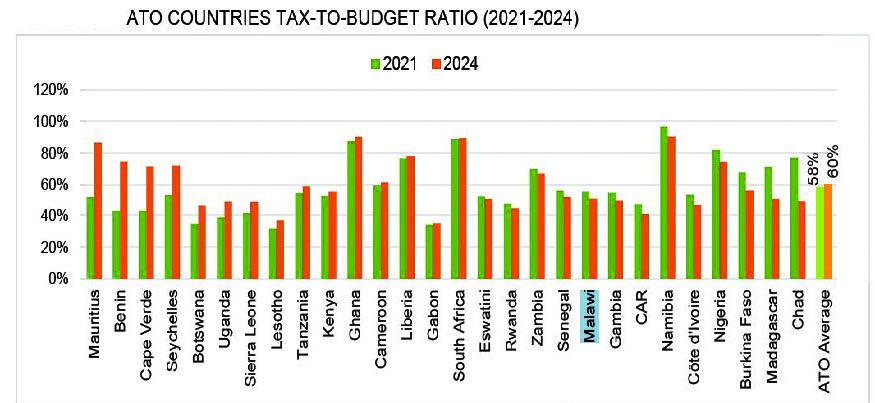
Malawi: Tax-to-Budget Ratio Declines 5% by 2024, per ATAF Data
Summary
- Malawi's ability to finance its national budget through tax revenue has weakened between 2021 and 2024.
- Data from the African Tax Administration Forum's 2025 African Tax Outlook confirms this trend.
- The country's tax-to-budget ratio decreased from approximately 55 percent in 2021 to 50 percent in 2024.
- This decline indicates increased pressure on the government to enhance tax collection or introduce new revenue measures.
Malawi's Fiscal Strain Deepens
The declining tax-to-budget ratio in Malawi suggests increased pressure on the government to enhance tax collection or introduce new revenue measures.
Malawi's capacity to finance its national budget through internal tax revenue has demonstrably weakened, according to recent data. This concerning trend, which saw the contribution of tax collections decline between 2021 and 2024, highlights significant challenges for the nation's fiscal autonomy. The diminishing proportion of the budget covered by tax receipts indicates a growing strain on public finances and potentially greater reliance on other funding avenues.
The authoritative data, sourced from the African Tax Administration Forum (Ataf) and presented in its 2025 African Tax Outlook, provides a clear picture of this fiscal erosion. These findings are crucial for understanding the current state of Malawi's financial health and the pressures it faces in meeting its expenditure commitments. The report underscores a critical period for Malawi's national budget financing, as the country grapples with its ability to generate sufficient domestic resources.
A Declining Tax-to-Budget Ratio
A key metric illustrating this fiscal challenge is Malawi's tax-to-budget ratio, which experienced a notable fall over the period in question. In 2021, approximately 55 percent of the national budget was financed by tax revenues. However, by 2024, this figure had decreased to 50 percent, representing a five-percentage-point reduction. This decline directly reflects a reduced ability of the tax system to support governmental expenditures.
This consistent downward shift in the tax-to-budget ratio, as detailed in the African Tax Outlook Malawi data, suggests that the growth in tax collections has not kept pace with the country's budgetary requirements. The Malawi tax revenue fall in 2024, as part of this broader trend, indicates that the government's financial planning must contend with a shrinking share of self-generated funds for its operations. This situation places increased pressure on fiscal authorities to identify and implement effective revenue-enhancing strategies.
Implications for Policy and Compliance
The sustained decline in Malawi's tax-to-budget ratio carries significant implications for both government policy and the broader economic landscape. A reduced reliance on internal tax revenues for funding government operations can lead to increased fiscal vulnerability, potentially necessitating greater borrowing or a scaling back of public programs. This situation underscores the urgency for policymakers to address the underlying causes of the weakening tax contribution and to consider measures that could broaden the tax base or improve collection efficiency.
For businesses and individuals operating within Malawi, this trend suggests that the government may intensify efforts to enhance tax collection or introduce new revenue measures. Lawyers and compliance officers should therefore advise clients to anticipate potential changes in tax policy, increased enforcement, or new tax legislation aimed at improving compliance. Reviewing current tax strategies will be crucial in light of these potential shifts, as the government seeks to mitigate the Malawi national budget financing challenges. The declining tax-to-budget ratio in Malawi suggests increased pressure on the government to enhance tax collection or introduce new revenue measures.
Practical Implications
The declining tax-to-budget ratio in Malawi suggests increased pressure on the government to enhance tax collection or introduce new revenue measures. Lawyers and compliance officers should advise clients to anticipate potential changes in tax policy, increased enforcement, or new tax legislation aimed at broadening the tax base or improving compliance, and to review their current tax strategies accordingly.
Source
How does this affect you?
Get an AI analysis of this article grounded in your jurisdictions, practice areas, and any policy documents you've uploaded to Wansom.
Finish Reading the Full Story and the Expert Analysis.
Get the latest legal & regulatory intelligence in Malawi
Wansom is AI and can make mistakes.