
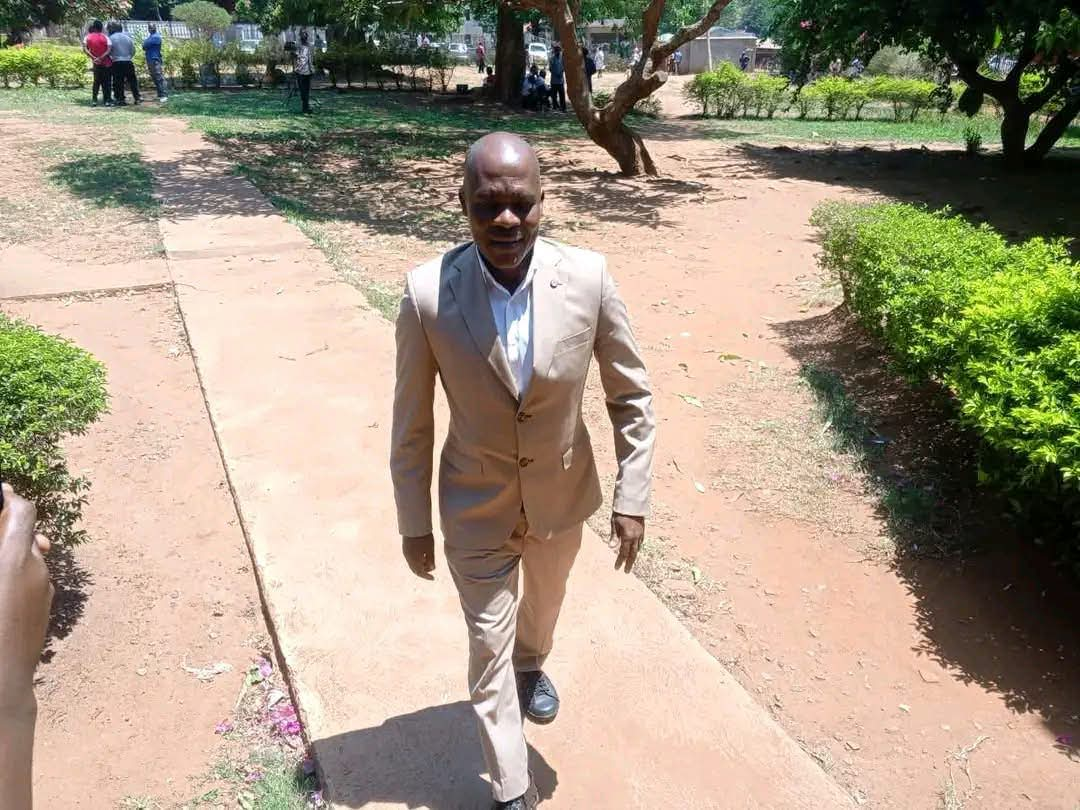
Malawi State: Namiwa Treason Case Centers on Luntha TV Interview
Summary
- Sylvester Namiwa, Executive Director of CDEDI, faces a treason charge in Malawi.
- The state's case primarily relies on a televised interview Namiwa gave on Luntha TV.
- In the interview, Namiwa suggested Malawi would have a new President within two months.
- The High Court in Lilongwe recently heard the matter on a Tuesday.
- The prosecution called police investigations officer Gospel as its first witness.
What Happened
The state's accusation of treason against Sylvester Namiwa, the Executive Director of the Centre for Democracy and Economic Development Initiatives (CDEDI), appears to hinge significantly on comments he made during a televised interview on Luntha TV.
The Malawian state has initiated a treason case against Sylvester Namiwa, who serves as the Executive Director for the Centre for Democracy and Economic Development Initiatives (CDEDI). This serious legal challenge largely stems from a televised interview Namiwa conducted, which the prosecution contends forms the core of their allegations. The activist's remarks during this broadcast are central to the state's argument that he committed treason, setting the stage for a significant legal confrontation.
During the interview, which aired on Luntha TV, Namiwa made a specific assertion that Malawi would experience a change in its presidential leadership within a two-month timeframe. This statement has been singled out by the authorities as the primary piece of evidence supporting the treason charge, suggesting that his public comments crossed a line into seditious territory. The legal proceedings recently advanced when the matter was brought before the High Court in Lilongwe, indicating the official progression of this high-profile case.
The Allegations
The state's accusation of treason against Sylvester Namiwa, the Executive Director of the Centre for Democracy and Economic Development Initiatives (CDEDI), appears to hinge significantly on comments he made during a televised interview on Luntha TV. The prosecution's case posits that Namiwa's suggestion of an impending change in the country's presidency, specifically within two months, constitutes an act of treason. This allegation carries profound implications for national stability and the rule of law, placing Namiwa at the center of a high-stakes legal battle and drawing considerable public attention to the intersection of free speech and national security.
The gravity of a treason charge in any jurisdiction underscores the seriousness with which the Malawian authorities are pursuing this case. By focusing on Namiwa's public statements, particularly those broadcast on a widely accessible platform like Luntha TV, the state is attempting to establish a direct link between his words and an alleged intent to undermine the constitutional order. The specific timeframe mentioned by Namiwa—a new President within two months—is a critical element the prosecution is using to build its argument, suggesting a perceived threat to the established government.
Court Proceedings
The legal process for this significant case recently saw developments at the High Court in Lilongwe. On a recent Tuesday, the court convened to hear the matter, marking a crucial step in the ongoing proceedings and signaling the formal commencement of the trial phase. During this session, the prosecution began to present its evidence, calling its first witness to testify and outline the initial aspects of their case against Namiwa.
The initial witness summoned by the state was police investigations officer Gospel. The testimony of this officer is expected to lay the groundwork for the prosecution's case, providing foundational details and evidence related to the charges against Sylvester Namiwa. The introduction of the first witness signifies the formal commencement of the evidentiary phase in this high-profile treason trial, with the state aiming to substantiate its claims through the judicial process and establish the factual basis for the allegations. The case has since been adjourned to January 12, 2027.
Source
How does this affect you?
Get an AI analysis of this article grounded in your jurisdictions, practice areas, and any policy documents you've uploaded to Wansom.
Finish Reading the Full Story and the Expert Analysis.
Get the latest legal & regulatory intelligence in Malawi
Wansom is AI and can make mistakes.