
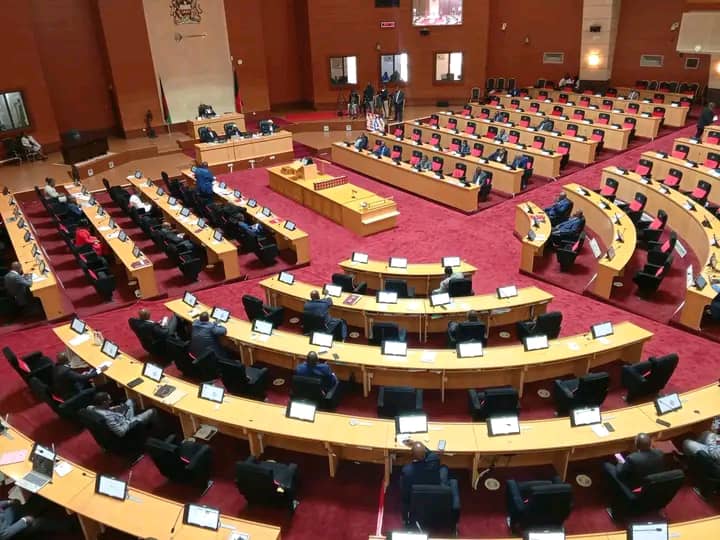
Malawi Parliamentary Legal Affairs Committee Proposes Chichewa as Dominant Language
The Parliamentary Legal Affairs Committee in Malawi has proposed introducing Chichewa as the dominant communication language within the Malawi National Assembly, a move that has sparked debate regarding its implications for the nation's linguistic diversity. This proposal aims to elevate Chichewa, despite Malawi being a richly pluralistic society with at least 16 distinct local languages, raising concerns about inclusivity and representation within the legislative process.
This proposal carries profound legal and constitutional significance for Malawi. Elevating one language to dominance in the national legislature could be perceived as undermining the constitutional principles of equality, non-discrimination, and the protection of cultural and linguistic diversity. It raises critical questions about the accessibility of parliamentary proceedings for non-Chichewa speakers, their ability to fully participate in the democratic process, and the potential for marginalization of other linguistic groups. Such a policy could be challenged on human rights grounds, specifically concerning language rights and the right to cultural expression, which are often enshrined or implied in national constitutions and international conventions.
Legally, any such reform would need to be carefully scrutinized against Malawi's constitutional framework, which, while not explicitly designating an official language, generally promotes national unity and respect for diverse cultures. The Parliamentary Legal Affairs Committee's role is to advise on legal matters, but their proposals are subject to the broader legislative process, including debate and approval by the full National Assembly. Potential legal challenges could arise from civil society organizations or minority language groups, arguing that the proposal infringes upon their rights or creates an unequal playing field within the democratic sphere. Relevant legal frameworks would include constitutional law, human rights law, and parliamentary procedural rules.
Key parties in this matter include the Parliamentary Legal Affairs Committee, the Malawi National Assembly, and the various linguistic communities across Malawi whose languages and representation could be affected. For legal practitioners, particularly those specializing in constitutional law, human rights, or public administration, this development necessitates close monitoring. Attorneys should be prepared to advise civil society organizations, linguistic minority groups, or even individual parliamentarians on the potential legal ramifications, advocacy strategies, or avenues for challenging such a proposal if it progresses. The debate underscores the critical importance of language policy in a diverse nation and the need for legislative reforms to be meticulously balanced against constitutional guarantees and international human rights standards. The outcome of this proposal is not yet reported.
How does this affect you?
Get an AI analysis of this article grounded in your jurisdictions, practice areas, and any policy documents you've uploaded to Wansom.
Finish Reading the Full Story and the Expert Analysis.
Get the latest legal & regulatory intelligence in Malawi
Wansom is AI and can make mistakes.