
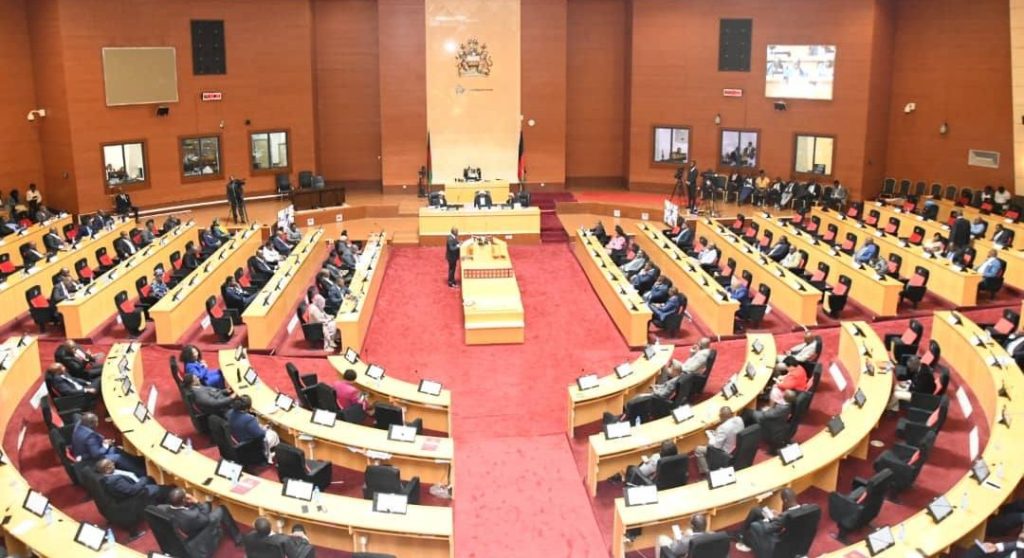
Malawi Parliament Postponement: Mutharika Directs Session Delay
Summary
- President Peter Mutharika directed the postponement of a key parliamentary session in Malawi.
- The Fourth Meeting of the 52nd Session of the National Assembly, originally set for November 9 to December 11, 2026, is now delayed until the next Budget Meeting.
- This directive, issued on October 23, 2026, raises significant questions about constitutional prerogative and parliamentary independence.
- The incident prompts a need for dispassionate constitutional analysis regarding the separation of powers.
Executive Intervention in Legislative Scheduling
Lawyers should analyze the constitutional implications of presidential directives on parliamentary scheduling in Malawi, particularly concerning the separation of powers and potential challenges to legislative independence, as this could set a precedent for future executive-legislative relations.
President Peter Mutharika has issued a directive leading to the postponement of a significant parliamentary session in Malawi. The Fourth Meeting of the 52nd Session of the National Assembly, which was initially scheduled to convene from November 9 to December 11, 2026, will now not proceed as planned. This Malawi Parliament postponement Mutharika directive was formally communicated in a letter dated October 23, 2026, originating from the President's office.
The Malawi National Assembly postponement means that the legislative body will remain adjourned until the next Budget Meeting. President Mutharika explicitly
Constitutional Questions and Independence
The President Peter Mutharika parliamentary directive has immediately prompted calls for a thorough and impartial constitutional analysis. At the core of this discussion is the delicate balance of power between the executive and legislative branches, particularly regarding the Malawi constitutional prerogative Parliament holds over its own operational calendar and sittings. The central question revolves around whether a presidential
Implications for Governance and Precedent
For legal professionals and constitutional scholars, this incident presents a crucial opportunity to examine executive-legislative dynamics within Malawi's governance framework. The potential for a presidential directive to unilaterally alter the legislative calendar could establish a significant precedent, influencing future interactions between the President and the National Assembly. Lawyers should analyze the constitutional implications of presidential directives on parliamentary scheduling in Malawi, particularly concerning the separation of powers and potential challenges to legislative independence, as this could set a precedent for future executive-legislative relations.
The broader implications also touch upon the concept of the
Practical Implications
Lawyers should analyze the constitutional implications of presidential directives on parliamentary scheduling in Malawi, particularly concerning the separation of powers and potential challenges to legislative independence, as this could set a precedent for future executive-legislative relations.
Source
How does this affect you?
Get an AI analysis of this article grounded in your jurisdictions, practice areas, and any policy documents you've uploaded to Wansom.
Finish Reading the Full Story and the Expert Analysis.
Wansom is AI and can make mistakes.