
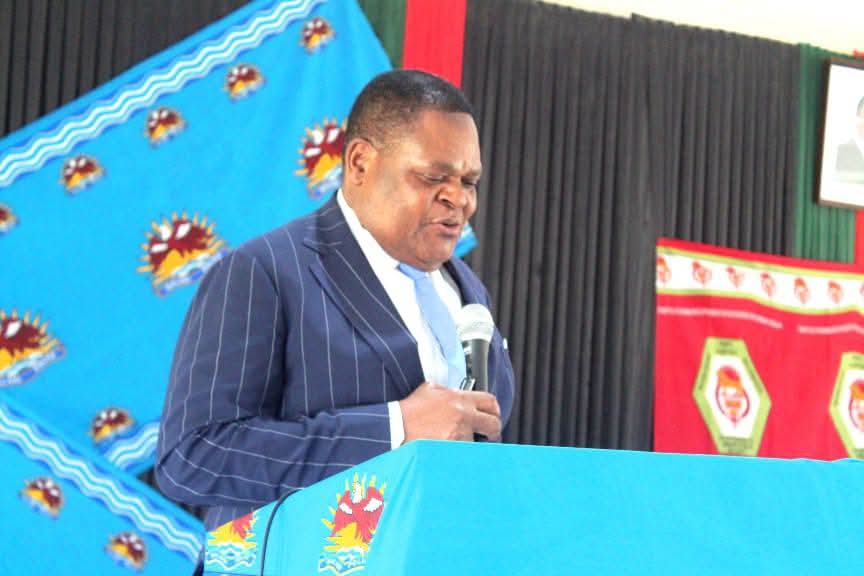
Malawi Mukhito: Corruption In Security A National Security Threat
Summary
- Homeland Security Minister Peter Mukhito declared corruption within Malawi's security institutions a genuine threat to national security.
- The warning specifically targeted the Malawi Police Service, prisons, and immigration services.
- Minister Mukhito delivered this message in Karonga District during a familiarisation tour and meeting with officers.
- He emphasized that the corruption goes far beyond simple misconduct, indicating a systemic issue.
Minister Issues Stern Warning on Security Sector Corruption
Malawi's Homeland Security Minister, Peter Mukhito, has publicly declared that corruption within the nation's critical security institutions poses a direct and serious threat to national security.
Malawi's Homeland Security Minister, Peter Mukhito, has publicly declared that corruption within the nation's critical security institutions poses a direct and serious threat to national security. This strong statement was delivered during a familiarisation tour in Karonga District, where the Minister engaged with officers from the Malawi Police Service and other relevant bodies. His remarks underscore a heightened governmental concern regarding the pervasive nature of illicit activities within these vital sectors.
Mukhito's assertion goes beyond merely acknowledging misconduct, categorizing the corruption as a genuine danger that undermines the very fabric of national safety and stability. The warning specifically highlighted the Malawi Police Service, the country's prison system, and immigration services as areas where such corruption is particularly problematic. This broad indictment suggests a systemic issue rather than isolated incidents, prompting a re-evaluation of internal controls and accountability mechanisms.
Elevated Concern for National Security
The Minister's pronouncement on a Monday, during his engagement with security personnel, signals a significant shift in how the Malawian government perceives and intends to address internal corruption. By framing it as a national security threat, the issue is elevated from a mere administrative problem to a matter of paramount strategic importance. This reclassification implies that the government may be preparing to deploy more robust measures and resources to combat these illicit practices, recognizing their potential to destabilize the nation.
Such a declaration from a high-ranking official like Peter Mukhito, who oversees homeland security, carries substantial weight. It suggests that the government views the integrity of its police, prisons, and immigration services as inextricably linked to the overall security posture of Malawi. Any compromise in these areas, whether through bribery, embezzlement, or other corrupt acts, is now explicitly understood to have far-reaching consequences that could jeopardize the safety and well-being of the entire country.
Implications for Governance and Public Trust
The explicit identification of corruption within the Malawi Police Service, prisons, and immigration as a national security threat has profound implications for governance and public trust. When institutions tasked with upholding law and order, securing borders, and managing correctional facilities are compromised, the state's ability to protect its citizens and maintain stability is severely undermined. This erosion of trust can lead to a breakdown in social cohesion and an increase in criminal activity, as citizens lose faith in the very systems designed to safeguard them.
Furthermore, the Minister's strong language indicates that the government is aware of the deep-seated nature of these issues, acknowledging that the problem extends far beyond simple misconduct. This recognition could pave the way for comprehensive reforms aimed at strengthening institutional integrity, enhancing oversight, and fostering a culture of accountability within these critical sectors. Addressing corruption effectively in these areas is not just about improving efficiency; it is about reinforcing the foundational pillars of national security and ensuring the rule of law prevails across Malawi.
Practical Implications
This statement signals heightened government awareness and potential future enforcement actions against corruption within key security institutions in Malawi. Lawyers and compliance officers should review anti-bribery and corruption policies, particularly for clients interacting with police, prisons, or immigration, to mitigate increased compliance risks.
Source
How does this affect you?
Get an AI analysis of this article grounded in your jurisdictions, practice areas, and any policy documents you've uploaded to Wansom.
Finish Reading the Full Story and the Expert Analysis.
Wansom is AI and can make mistakes.