
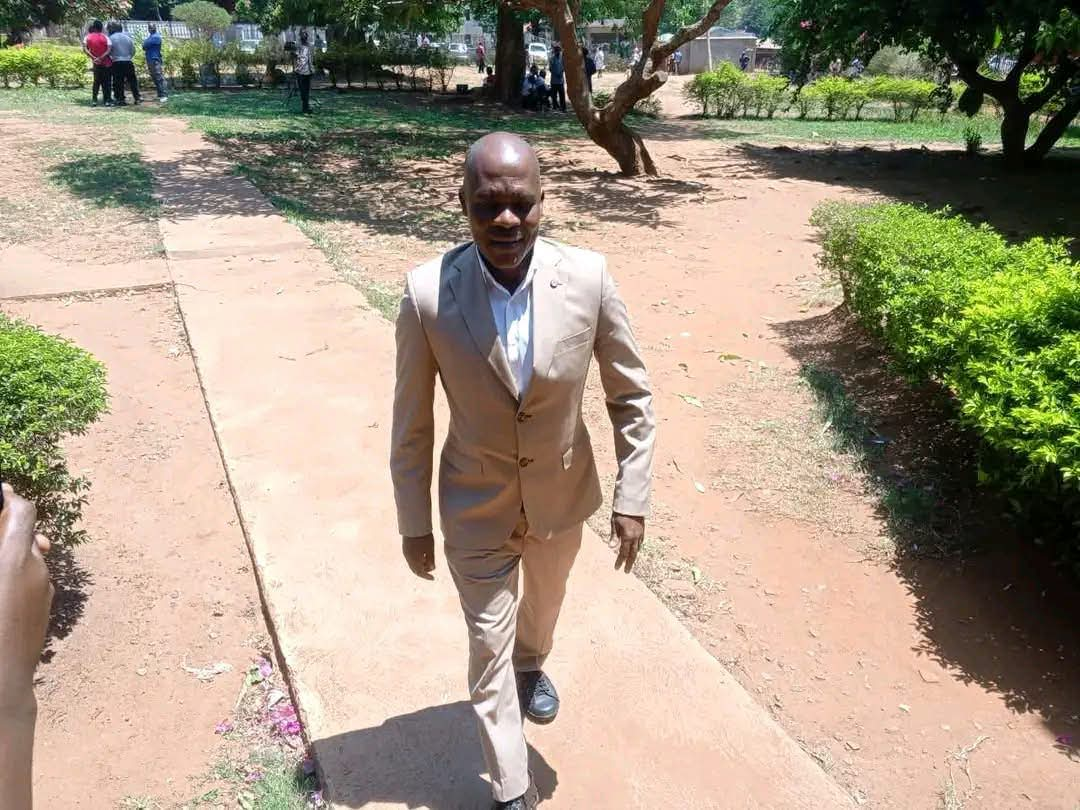
Malawi High Court: Treason Case Against Namiwa Proceeds With Witness Testimony
In Malawi, the State's treason case against CDEDI Executive Director Sylvester Namiwa, which came before the High Court in Lilongwe on Tuesday, appears to hinge primarily on a televised interview where he suggested a new President for Malawi within two months.
The prosecution presented its first witness, a police investigations officer named Gospel, in the High Court in Lilongwe, focusing on Namiwa's statements made during a Luntha TV interview. The core of the State's case, as indicated by the excerpt, is Namiwa's suggestion of a presidential change within a specific timeframe. The specific details of the interview content beyond this suggestion, or the full context of Namiwa's statements, are not provided in the excerpt. The outcome of this matter is not yet reported.
This case highlights the potential for speech, particularly in media, to be interpreted as treasonous under Malawian law, underscoring the delicate balance between freedom of expression and national security concerns. For activists, journalists, and political commentators, the High Court's handling of this matter will set important precedents regarding the threshold for treason charges based on verbal statements. It will clarify the boundaries within which political discourse can operate without attracting severe criminal charges, impacting public debate and media reporting.
Treason is a serious offense under Malawian criminal law, typically defined in the Penal Code (Cap. 7:01 of the Laws of Malawi), which involves acts against the state, such as levying war against the Republic or attempting to overthrow the government by unlawful means. The interpretation of Namiwa's statement, "suggested that Malawi would have a new President within two months," will be critical in determining if it meets the high bar for treason, which usually requires overt acts or clear intent to subvert the constitutional order, not merely political commentary or prediction. The High Court is a superior court of record with original jurisdiction in serious criminal matters.
Attorneys should closely monitor the High Court's interpretation of "treason" in the context of public statements and media interviews, as this case will be vital for understanding the limits of free speech in Malawi. Legal professionals advising clients involved in activism, media, or political commentary must be acutely aware of the potential legal ramifications of public statements, especially those that could be construed as challenging the constitutional order. Businesses and individuals should exercise caution and seek legal counsel when making public pronouncements that could be subject to such interpretations.
How does this affect you?
Get an AI analysis of this article grounded in your jurisdictions, practice areas, and any policy documents you've uploaded to Wansom.
Finish Reading the Full Story and the Expert Analysis.
Get the latest legal & regulatory intelligence in Malawi
Wansom is AI and can make mistakes.