
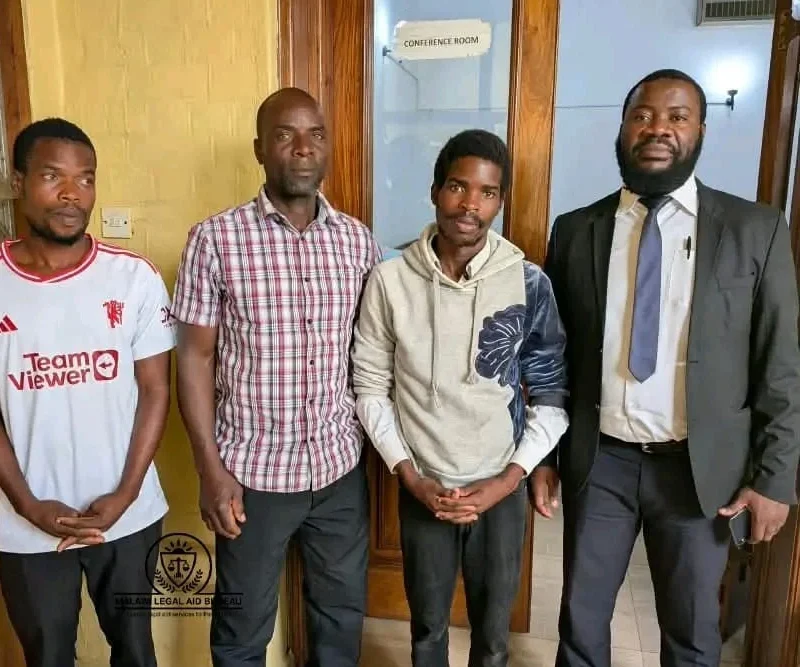
Malawi High Court Overturns Conviction, Frees Man
The High Court in Zomba, Malawi, recently overturned the conviction of Saint Mark Nangwere, who had been imprisoned for two years for sexual offences against a minor. Mr. Nangwere was originally convicted in 2024 under sections 138(1) and 137(1) of the Penal Code, which pertain to sexual offences against a minor and indecent assault, respectively, and had been serving a sentence for these serious charges before his successful appeal.
This development carries significant legal weight for practitioners and the public alike, underscoring the robust appellate mechanisms within the Malawian justice system. It highlights the critical role of higher courts in reviewing lower court decisions, ensuring that due process is followed and that potential miscarriages of justice are rectified. For legal professionals, this case serves as a powerful reminder that a conviction at the trial level is not always the final determination, and that diligent appellate advocacy can lead to the reversal of judgments, even in cases involving grave allegations. The overturning of a conviction after two years of imprisonment also brings into sharp focus the human impact of judicial decisions and the importance of thorough legal representation at all stages of a criminal proceeding.
From a legal context perspective, this matter involves the application of the Penal Code of Malawi, specifically sections 138(1) and 137(1), which are fundamental statutes governing sexual offences and protecting vulnerable individuals. The High Court in Malawi functions as a superior court of record with both original and appellate jurisdiction. In this instance, it exercised its appellate powers, likely reviewing a decision from a subordinate court, such as a Magistrate Court, which typically handles initial criminal proceedings. The Malawian court hierarchy places the High Court above Magistrate Courts, with the Supreme Court of Appeal as the apex court. The decision to overturn the conviction implies that the High Court found a significant legal error, procedural irregularity, or an insufficiency of evidence in the original trial that warranted intervention. The specific grounds for the High Court's decision are not detailed in the excerpt.
The key parties involved in this legal development are Saint Mark Nangwere, the individual whose conviction was successfully appealed; the High Court in Zomba, which rendered the appellate decision; and the original court (whose identity is not specified but was likely a Magistrate Court) that initially convicted and sentenced Mr. Nangwere. The State, represented by the Director of Public Prosecutions, would have been the prosecuting authority in the initial trial and the respondent in the appeal before the High Court. The outcome of the full appeal, beyond the overturning of the conviction, is not reported in the provided excerpt.
Attorneys practicing criminal law in Malawi should closely monitor the full judgment of the High Court in this matter, once it becomes publicly available, to understand the precise legal and factual bases for overturning the conviction. This case reinforces the critical importance of meticulous trial preparation, a comprehensive understanding of appellate procedures, and the potential for successful appeals based on identified errors in law or fact. Practitioners should advise clients that the legal process includes avenues for review and potential reversal of initial judgments, emphasizing the need for persistent and skilled legal representation throughout the judicial process. This also highlights the ongoing need for legal professionals to stay abreast of appellate jurisprudence and its implications for criminal defence strategies.
How does this affect you?
Get an AI analysis of this article grounded in your jurisdictions, practice areas, and any policy documents you've uploaded to Wansom.
Finish Reading the Full Story and the Expert Analysis.
Get the latest legal & regulatory intelligence in Malawi
Wansom is AI and can make mistakes.