
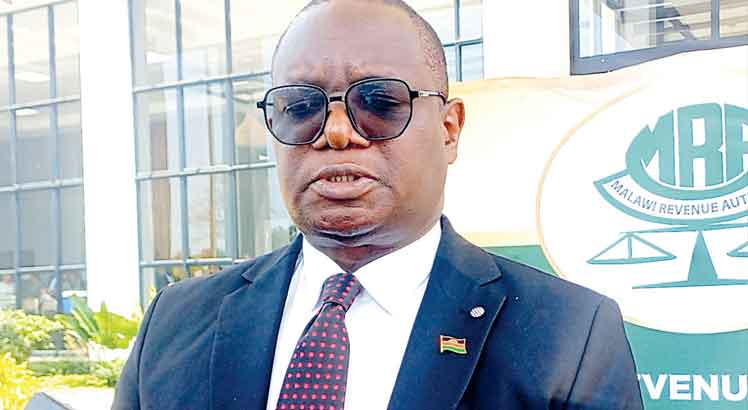
Malawi: PPPC CEO Kabambe Urges Stronger Domestic Tax Mobilisation
Summary
- Patrick Kabambe, Chief Executive Officer for the Public Private Partnership Commission (PPPC), advocated for stronger domestic revenue mobilization.
- He stated that this is crucial for the nation's fiscal sustainability.
- Kabambe also emphasized its importance for achieving economic independence.
- These comments were made on Wednesday in Salima District.
- The occasion was the opening of the 2026 World Customs Organisation for East and Southern Africa.
Government Emphasizes Revenue Growth
A senior government official has underscored the critical need for enhanced domestic revenue mobilization, asserting its fundamental role in securing the nation's financial stability and fostering economic independence.
A senior government official has underscored the critical need for enhanced domestic revenue mobilization, asserting its fundamental role in securing the nation's financial stability and fostering economic independence. Patrick Kabambe, who serves as the Chief Executive Officer for the Public Private Partnership Commission (PPPC), delivered this message during a recent public engagement.
His remarks were made on Wednesday in Salima District, where he participated in a significant regional gathering. The occasion was the opening of the 2026 World Customs Organisation for East and Southern Africa, providing a platform for discussions on fiscal policy and economic strategy among regional stakeholders. Kabambe's address highlighted the government's focus on self-sufficiency through robust internal financial mechanisms.
Foundations of Fiscal Autonomy
The call for strengthening domestic revenue collection is rooted in the government's long-term vision for fiscal sustainability. By increasing the proportion of national expenditure covered by internally generated funds, the country aims to reduce reliance on external aid and borrowing, thereby bolstering its economic resilience against global fluctuations. This approach is seen as a cornerstone for predictable public service delivery and infrastructure development.
Furthermore, the emphasis on economic independence reflects a strategic shift towards greater national control over economic destiny. A strong domestic revenue base empowers the government to implement its development agenda without undue external influence, ensuring that policy decisions are primarily driven by national priorities and the welfare of its citizens. This self-reliance is considered vital for sustained growth and prosperity.
Regional Cooperation and Future Outlook
The setting for Chief Executive Officer Kabambe's address, the opening of the 2026 World Customs Organisation for East and Southern Africa, underscores the interconnectedness of revenue generation with regional trade and customs efficiency. Such forums typically bring together experts and policymakers to discuss best practices, harmonize customs procedures, and combat illicit trade, all of which directly impact a nation's ability to collect taxes and duties effectively.
The government's proactive stance on domestic tax mobilization signals a clear commitment to strengthening its financial architecture. By leveraging regional partnerships and internal policy reforms, the administration aims to create a more robust and equitable tax system that supports national development goals while ensuring the country's long-term economic health and independence.
Source
How does this affect you?
Get an AI analysis of this article grounded in your jurisdictions, practice areas, and any policy documents you've uploaded to Wansom.
Finish Reading the Full Story and the Expert Analysis.
Get the latest legal & regulatory intelligence in Malawi
Wansom is AI and can make mistakes.