
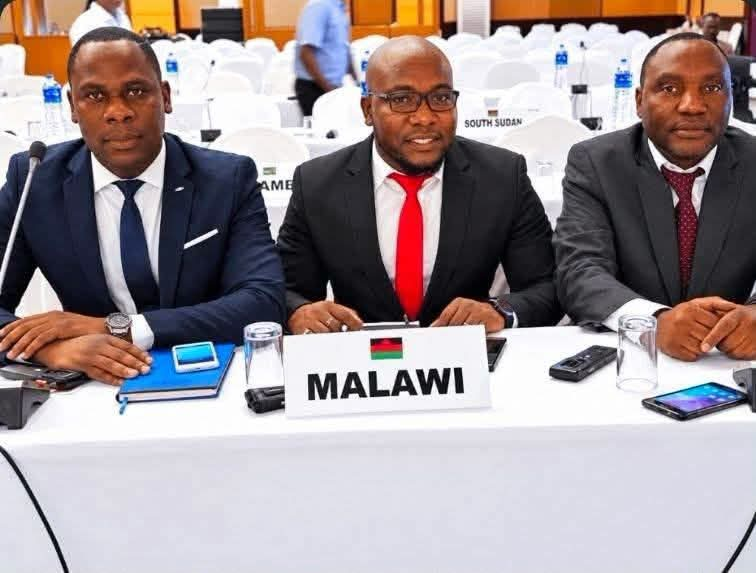
Malawi Court Warrant: Police Seize HRDC Leaders' 6-Year-Old Recordings
Summary
- Malawi police are pursuing former Human Rights Defenders Coalition leaders.
- A warrant was issued by a Lilongwe Second Grade Magistrate’s Court on November 9, 2026.
- The warrant authorizes the seizure of audio and video from a controversial press briefing held over six years ago.
- The action has led to allegations of a political witch-hunt against civil society actors.
Police Action Against Former HRDC Leaders
The intensified police action, particularly its laser focus on a press briefing conducted more than six years ago, has ignited widespread allegations of a political witch-hunt within Malawi.
Malawi police have intensified their pursuit of former leaders associated with the Human Rights Defenders Coalition (HRDC), securing a judicial warrant to confiscate specific media. This court order permits law enforcement to seize audio and video recordings that document a contentious press briefing, an event that transpired more than six years prior to the warrant's issuance. The renewed focus on such historical materials suggests a deliberate effort to scrutinize the past activities of prominent civil society figures who have been influential in the nation's advocacy landscape.
The search warrant, which specifically targets these aged recordings, was formally granted by a Second Grade Magistrate’s Court located in Lilongwe. Dated November 9, 2026, the legal document explicitly authorizes police officers to enter designated premises with the objective of securing the aforementioned footage. This action represents a significant escalation in the ongoing investigation concerning the former HRDC leaders, signaling a deeper probe into their historical engagements.
Legal Scrutiny and Warrant Scope
The issuance of a Malawi court warrant, specifically targeting evidence that dates back over six years, prompts considerable legal scrutiny regarding the underlying motivations and the precise scope of the police investigation. Such a warrant, originating from a Second Grade Magistrate's Court, is typically associated with less severe legal matters, yet in this instance, it is being deployed to pursue materials from a distant past event involving high-profile civil society activists. The explicit authorization for officers to enter premises underscores the significant coercive power being exercised by the state.
The legal implications of seeking such aged evidence against former Human Rights Defenders Coalition Malawi leaders are substantial. While search warrants are standard instruments for law enforcement, their application to events so far removed in time, particularly those concerning public statements made by advocacy groups, can be perceived as an unusual and potentially overreaching measure. This situation necessitates a thorough examination of the legal justification for revisiting such old matters and a detailed understanding of the specific legal framework under which this particular Malawi police search warrant scope was approved, especially given the future date of the warrant itself.
Allegations of Political Motivation and Broader Implications
The intensified police action, particularly its laser focus on a press briefing conducted more than six years ago, has ignited widespread allegations of a political witch-hunt within Malawi. Critics contend that the investigation into former HRDC leaders may be politically motivated, designed to silence or intimidate civil society voices by meticulously examining their historical activities. Both the timing and the specific nature of the warrant contribute significantly to these concerns, as it targets individuals who have consistently been outspoken advocates for human rights and good governance within the country.
This development starkly highlights the potential for law enforcement agencies to seek warrants for historical evidence against civil society actors, thereby raising serious alarms about the perceived independence and impartiality of investigative processes. The pursuit of materials from a controversial press briefing held so long ago, under the authority of a Lilongwe Second Grade Magistrate Court, could readily be interpreted as an attempt to manufacture grounds for charges stemming from past activism, rather than addressing any recent or ongoing transgressions. Such actions carry the risk of creating a chilling effect on fundamental freedoms of expression and association, potentially undermining democratic principles within Malawi. The situation underscores the importance for legal professionals to advise clients on challenging the validity and scope of such warrants, particularly concerning the age and relevance of requested materials, and to prepare for potential defense against charges arising from historical activities.
Practical Implications
This development highlights the potential for politically motivated investigations in Malawi, where law enforcement may seek warrants for historical evidence against civil society actors. Lawyers should advise clients on the legal avenues for challenging the validity and scope of such warrants, particularly concerning the age and relevance of the requested materials, and prepare for potential defense against charges arising from historical activities.
Source
How does this affect you?
Get an AI analysis of this article grounded in your jurisdictions, practice areas, and any policy documents you've uploaded to Wansom.
Finish Reading the Full Story and the Expert Analysis.
Get the latest legal & regulatory intelligence in Malawi
Wansom is AI and can make mistakes.