
Malawi Minister Confirms BWB Funds for Zambia Maize, World Bank Approved
Summary
- Malawi's Minister Shadric Namalomba confirmed $13.9 million (K23.4 billion) from Blantyre Water Board project funds was used for Zambian maize procurement.
- The Minister stated that the project's financier, implicitly the World Bank, approved this reallocation of funds.
- This admission comes amid accusations of the Malawi government diverting funds from financially struggling entities.
- The situation raises questions about the management of Malawi public funds and adherence to international project financing agreements.
- Official confirmation from the World Bank is awaited to clarify the alleged approval of these funds.
What Happened
Compliance officers and legal counsel advising public bodies in Malawi should closely monitor the World Bank's official confirmation regarding the alleged approval of Blantyre Water Board funds for Zambian maize procurement, as this could impact future project financing agreements and raise questions about accountability in public finance management.
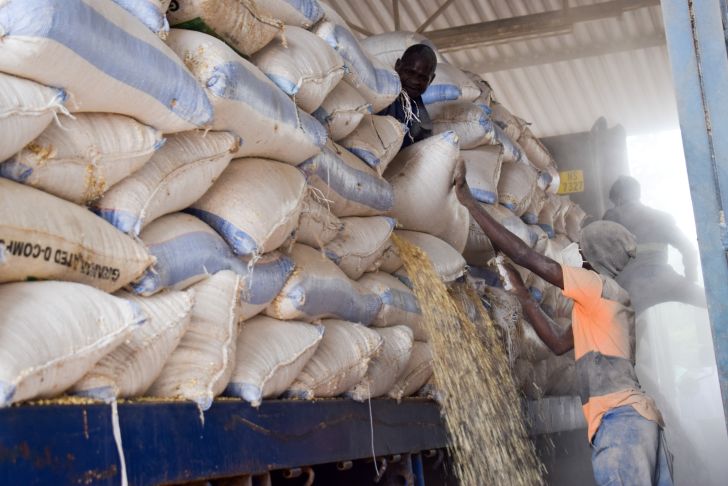
Malawi's Minister of Information and Communications Technology, Shadric Namalomba, recently confirmed that a substantial sum, specifically $13.9 million, originating from Blantyre Water Board (BWB) project funds, was indeed utilized for the procurement of maize from Zambia. This amount translates to approximately K23.4 billion in local currency. The Minister's statement, provided in a written response to a questionnaire from The Nation newspaper, acknowledged the diversion of these funds.
Crucially, Namalomba asserted that this arrangement received approval from the financier of the project. This admission by the Minister comes amidst growing public scrutiny and accusations directed at the Malawi government regarding its handling of public finances.
The accusations specifically allege that the government has been reallocating funds from entities that are already in a financially precarious state. The use of Blantyre Water Board maize procurement funds, therefore, has become a focal point in these broader Malawi public funds misuse allegations, prompting questions about the appropriate management and allocation of resources intended for specific development projects.
Legal and Financial Context
The alleged approval by the financier, understood to be the World Bank, introduces a critical dimension to the use of these Blantyre Water Board maize procurement funds. International development projects, particularly those backed by institutions like the World Bank, typically operate under stringent financial agreements that dictate the precise allocation and expenditure of funds. The $13.9 million (K23.4 billion) in question was designated as BWB project funds, implying a specific purpose related to water infrastructure or services.
Any deviation from the original project scope or budget usually requires formal consent from the funding body. If the World Bank indeed sanctioned the use of these Malawi government World Bank funds for Zambian maize procurement, it would represent an unusual but potentially permissible modification to the project's financial framework. However, the absence of an explicit public statement from the World Bank confirming this approval leaves room for ongoing speculation and reinforces the need for transparency.
Compliance officers and legal counsel advising public bodies in Malawi should closely monitor the World Bank's official confirmation regarding the alleged approval of Blantyre Water Board funds for Zambian maize procurement, as this could impact future project financing agreements and raise questions about accountability in public finance management. This specific case underscores the importance of clear communication and adherence to agreed-upon terms in managing significant public investments.
Why It Matters
The revelation concerning the Malawi BWB funds Zambia maize World Bank arrangement carries significant implications for public finance management and governance within the country. The use of K23.4 billion BWB project funds for an unrelated purpose, even with alleged financier approval, raises concerns about the flexibility and potential vulnerability of designated project budgets. It also fuels the existing narrative around Malawi public funds misuse allegations, demanding greater scrutiny of how government resources are managed.
For the World Bank, a clear and public statement regarding its alleged approval is crucial. Such a confirmation would either validate the Minister's claim, thereby setting a precedent for the adaptability of project funds under certain circumstances, or it would contradict it, intensifying questions about accountability and the integrity of financial reporting. The outcome of this clarification will undoubtedly influence how international partners perceive the reliability and transparency of Malawi's financial administration.
Ultimately, this scenario underscores the critical need for robust oversight mechanisms and transparent reporting in the deployment of both domestic and internationally sourced public funds. The integrity of future project financing and the trust placed in the Malawi government by its citizens and global partners hinge on clear answers and demonstrable accountability in situations such as the Blantyre Water Board maize procurement.
Practical Implications
Compliance officers and legal counsel advising public bodies in Malawi should closely monitor the World Bank's official confirmation regarding the alleged approval of Blantyre Water Board funds for Zambian maize procurement, as this could impact future project financing agreements and raise questions about accountability in public finance management.
Source
How does this affect you?
Get an AI analysis of this article grounded in your jurisdictions, practice areas, and any policy documents you've uploaded to Wansom.
Finish Reading the Full Story and the Expert Analysis.
Get the latest legal & regulatory intelligence in Malawi
Wansom is AI and can make mistakes.