
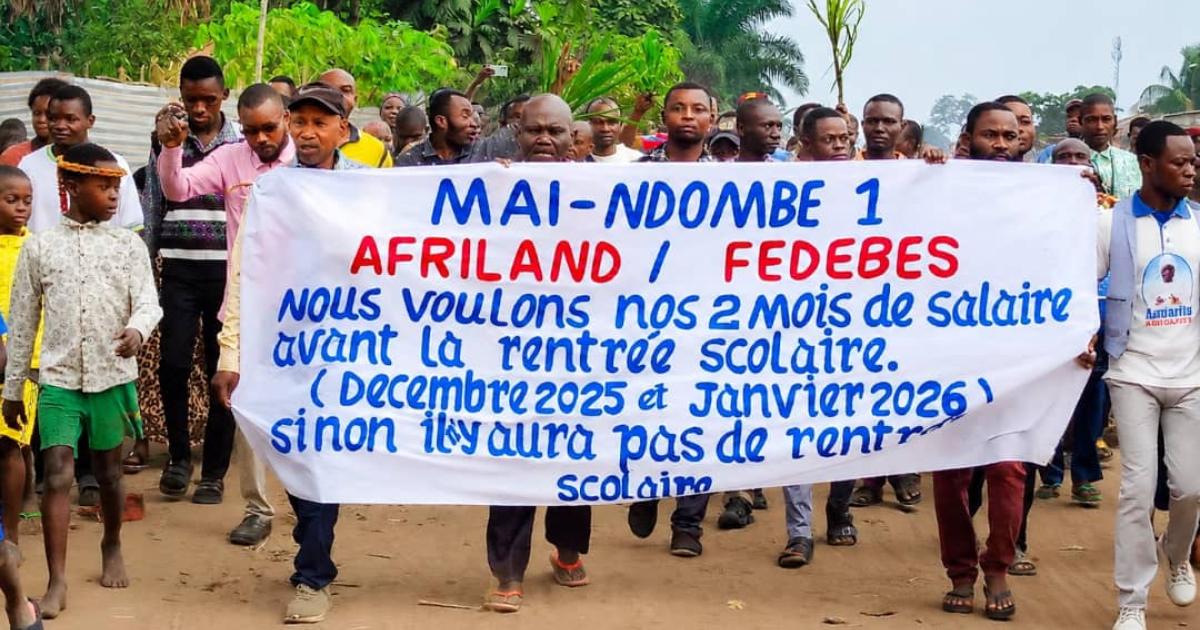
Maï-Ndombe Teachers Strike Salary Arrears: Schools Won't Reopen
Summary
- Teachers in Maï-Ndombe province, specifically Inongo, have announced a "grève sèche" (dry strike).
- Their demand is for two months of outstanding salary arrears to be paid before the school reopening.
- The teachers explicitly stated that if their wages are not settled, schools will not resume operations.
- This ultimatum was conveyed via a banner and reported on August 25, 2026.
What Happened
The Maï-Ndombe teachers strike salary arrears issue has thus escalated into a direct threat to educational continuity.
Teachers in the Maï-Ndombe province have issued a firm ultimatum, declaring that schools will not reopen for the upcoming academic year unless their outstanding salary arrears are settled. The educators, specifically those in Inongo, announced their intention to initiate a "grève sèche," or dry strike, signifying a complete cessation of work. This decisive action was communicated via a prominent banner, clearly articulating their demands.
The central message displayed on the banner left no room for ambiguity: teachers require two months of their unpaid wages before the scheduled school reopening. Failure to meet this condition, they warned, would directly result in the non-commencement of the academic term. This significant development was reported on Tuesday, August 25, 2026, at 18:24, highlighting the immediate pressure on authorities to address the financial grievances of the teaching staff. The Maï-Ndombe teachers strike salary arrears issue has thus escalated into a direct threat to educational continuity.
Labour Dispute and Context
This Maï-Ndombe teachers strike over salary arrears underscores a persistent challenge within the Congolese public sector, where delays in wage payments frequently lead to industrial action. The teachers' demand for two months of outstanding pay is a direct response to what they perceive as a breach of their employment terms, a common trigger for a DRC education labour dispute. The "grève sèche" declared by the Inongo teachers is a particularly impactful form of protest, as it involves a complete withdrawal of services, ensuring maximum disruption to normal operations.
Such actions highlight broader issues of Congolese public sector salary arrears and the imperative for DRC labour law compliance. While the right to strike is a recognized mechanism for workers to advocate for their rights, its frequent invocation in the education sector points to systemic financial management challenges. The teachers' collective stance reflects a deep-seated frustration with recurrent payment issues, compelling them to resort to drastic measures to secure their rightful earnings and ensure adherence to contractual obligations.
Impact on Education and Community
The announced Maï-Ndombe teachers strike salary arrears action carries significant implications for thousands of students and their families across the province, particularly in Inongo. With the school reopening contingent upon the payment of two months' wages, the educational calendar faces immediate disruption and uncertainty. A prolonged "grève sèche enseignants Maï-Ndombe" would mean a substantial loss of learning time, potentially setting back academic progress and exacerbating existing educational disparities.
The ultimatum issued by the teachers places immense pressure on provincial and national authorities to find a swift resolution. Beyond the immediate financial cost of settling the arrears, the long-term stability of the education system in the Democratic Republic of Congo is at stake. Ensuring timely and consistent payment of public sector salaries is crucial not only for teacher morale and welfare but also for maintaining the integrity and functionality of essential services like education. The current standoff threatens to undermine the foundational right to education for children in the region.
Source
How does this affect you?
Get an AI analysis of this article grounded in your jurisdictions, practice areas, and any policy documents you've uploaded to Wansom.
Wansom is AI and can make mistakes.