
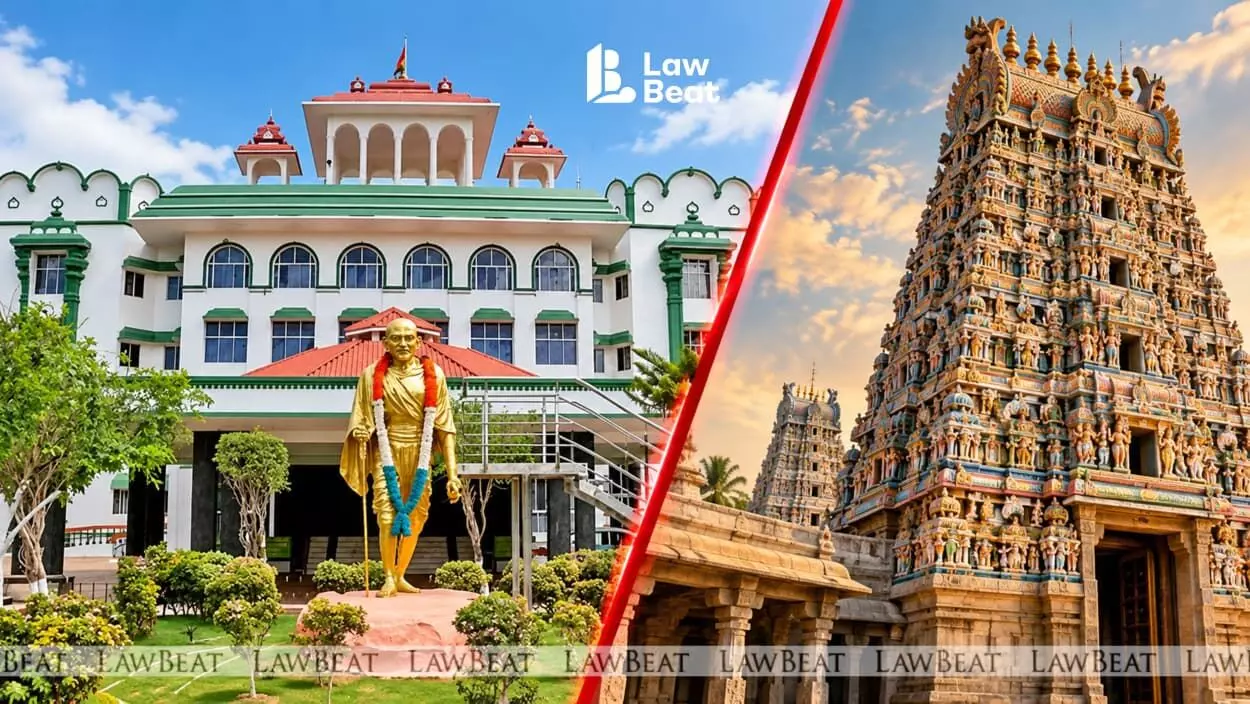
Madras High Court: Non-Hindus Agamic Temples Entry Conditions Set
Summary
- The Madras High Court ruled that non-Hindus displaying religious markers cannot enter Agamic temple premises without affirming faith in the deity.
- This decision, by Justices G.R. Swaminathan and P. Murugan, aims to preserve temple sanctity and relies on the Tamil Nadu Temple Entry Authorisation Act, 1947.
- The court affirmed that temple authorities can require an undertaking of faith and adherence to customs from non-Hindus seeking entry, based on a 2024 precedent.
- Trustees of Agamic temples are authorized to prevent non-Hindus without such an undertaking from crossing the flag-pole.
- The ruling also criticized political use of temple visits for optics, while acknowledging an "inclusive approach" for those who affirm reverence.
What Happened
The Madras High Court's decision serves as an authoritative pronouncement on a matter previously considered by single judges, aiming to provide clarity and reinforce the sanctity and traditional practices of Agamic temples in the state.
The Madras High Court recently issued a significant ruling clarifying the conditions under which non-Hindus may enter Agamic temples in Tamil Nadu. The court stipulated that individuals who do not profess faith in the presiding deity and fail to adhere to established temple customs are prohibited from entering the premises, particularly if they display religious markers of other faiths. This directive, handed down by Justice G.R. Swaminathan and Justice P. Murugan, aims to safeguard the sanctity of these sacred sites.
The decision arose from a writ petition filed by Thangam Venkatesh, who sought judicial intervention to compel the Tamil Nadu Hindu Religious and Charitable Endowments (HR&CE) Department to enforce the Tamil Nadu Temple Entry Authorisation Act, 1947, and relevant sections of the HR&CE Act, 1959. Venkatesh's petition specifically requested an investigation into alleged violations and the establishment of committees to prevent non-adherents or those bearing symbols of other religions from accessing restricted areas like sanctums and mandapams within temples.
Legal Context
The court's judgment is firmly rooted in existing legal frameworks, primarily the Tamil Nadu Temple Entry Authorisation Act, 1947, and the HR&CE Act, 1959. The bench specifically referenced a 2024 decision by Justice S. Srimathy in the case of D. Senthilkumar v Government of Tamil Nadu. In that ruling, temple authorities were directed to secure a written undertaking from any non-Hindu wishing to visit a deity, confirming their faith in the deity, their commitment to follow Hindu religious customs and practices, and their adherence to temple-specific traditions. Only upon providing such an undertaking would entry be permitted.
Building upon this precedent, the current bench affirmed that trustees of Agamic temples possess the authority to prevent non-Hindus who do not furnish such an undertaking from proceeding beyond the flag-pole, or Kodimaram. The court also revisited a 1972 judgment by Justice T. Ramaprasada Rao, which had invalidated Rule 4A of the Temple Entry Authorisation Rules. This rule, which had previously allowed non-Hindus into temple premises, was deemed to exceed the legislative scope of the 1947 Act. The present court endorsed this earlier conclusion, underscoring that the original purpose of the 1947 Act was to remove entry restrictions for certain Hindu communities, thereby extending rights to all sections of the Hindu populace, rather than to permit entry for non-Hindus.
Why It Matters
Beyond the immediate legal implications, the Madras High Court's ruling also addressed broader societal and political considerations. The bench critically observed instances of "political sycophancy" and the strategic use of temple visits for "political optics." It highlighted that the long-standing customs and usages of temples should not be compromised for such public displays, citing examples of political figures entering temples with supporters or conspicuously displaying religious marks for perceived "vote value." The court emphasized that these traditions must not yield to such political maneuvering.
However, the court also presented an example of what it termed an "inclusive approach," referencing Tamil Nadu Chief Minister Joseph Vijay, a Christian, who worshipped Goddess Meenakshi after providing the requisite undertaking. The court noted that he was not compelled to convert to Hinduism but merely asked to affirm his reverence for the deity. This distinction, the court suggested, exemplifies a balanced approach. The Madras High Court's decision serves as an authoritative pronouncement on a matter previously considered by single judges, aiming to provide clarity and reinforce the sanctity and traditional practices of Agamic temples in the state.
Practical Implications
Lawyers advising religious institutions or individuals in Tamil Nadu should note this ruling clarifies that non-Hindus displaying religious markers cannot enter Agamic temple premises without affirming faith in the deity and adhering to temple customs. This reinforces the need for temple trusts to enforce these conditions and for individuals to provide an undertaking of faith to gain entry, particularly for Agamic temples.
Source
How does this affect you?
Get an AI analysis of this article grounded in your jurisdictions, practice areas, and any policy documents you've uploaded to Wansom.
Finish Reading the Full Story and the Expert Analysis.
Wansom is AI and can make mistakes.