
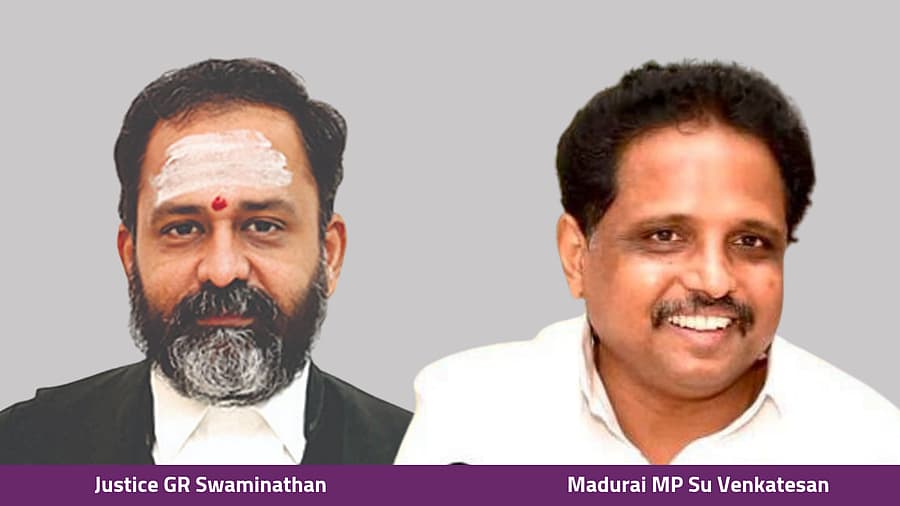
Madras High Court: Justice Swaminathan Criticizes MP During Contempt Hearing
Madras High Court Justice GR Swaminathan on Monday publicly criticised Communist Party of India (Marxist) MP Su Venkatesan for advising him on judicial duties, while simultaneously questioning the parliamentarian's lifestyle, including his use of a Mercedes-Benz car and branded clothing, during a hearing on a contempt petition.
This incident, while not a formal legal ruling, is highly significant as it vividly illustrates the often-tense relationship between the judiciary and other branches of government, particularly when public figures comment on judicial conduct. It underscores the principle of judicial independence and the potential for judges to react strongly to perceived interference or criticism, even in open court. For legal practitioners, it serves as a potent reminder of the decorum and boundaries expected in interactions with the bench, and the potential for extra-judicial comments to influence judicial temperament, though not necessarily the legal outcome of a case.
The legal context for this event touches upon the fundamental principle of judicial independence, a cornerstone of the Indian Constitution, which protects judges from external pressures and ensures their ability to adjudicate impartially. While freedom of speech is a fundamental right, it is balanced against the need to maintain the dignity and authority of the courts, often protected by contempt of court laws. The judge's remarks, though personal in nature, were made within the context of a court proceeding, raising questions about judicial propriety and the appropriate forum for such observations. The specific contempt petition being heard concerned alleged irregularities in the procurement of books for public libraries in Tamil Nadu, not directly the MP's comments on judicial duties. The key parties involved are Madras High Court Justice GR Swaminathan and Communist Party of India (Marxist) MP Su Venkatesan.
Attorneys should be acutely aware of the delicate balance between public discourse and judicial authority. While legitimate criticism of judicial decisions is permissible, comments that are perceived as attempts to influence judicial proceedings or undermine the judiciary's integrity can elicit strong reactions from the bench. This incident highlights that judges, as individuals, may respond to personal criticism, and such responses, even if not directly related to the legal merits of the case, can occur within the courtroom setting. The specific legal outcome of the contempt petition itself is not reported, nor is any formal action taken against the MP for his comments, but the judge's public rebuke is a notable event that underscores the sensitivities involved in such interactions.
How does this affect you?
Get an AI analysis of this article grounded in your jurisdictions, practice areas, and any policy documents you've uploaded to Wansom.
Finish Reading the Full Story and the Expert Analysis.
Get the latest legal & regulatory intelligence in India
Wansom is AI and can make mistakes.