
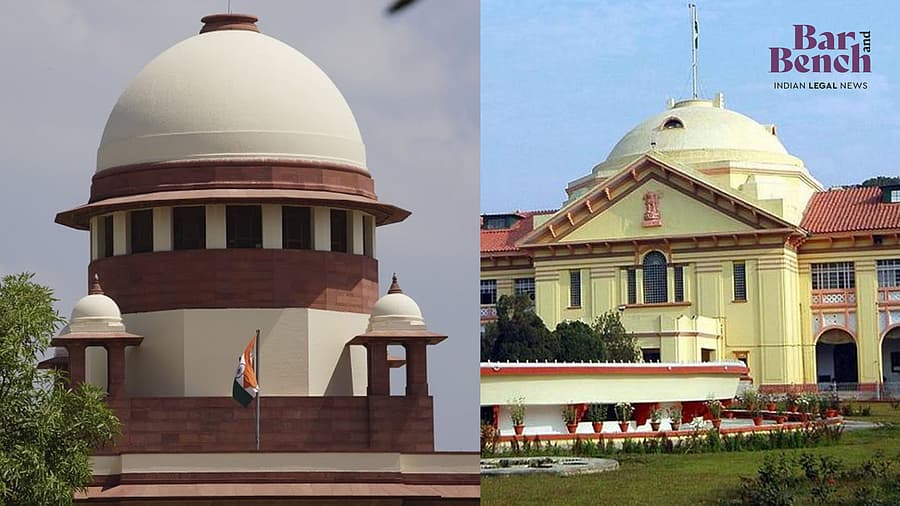
Supreme Court: Orders Scrutiny of Objectionable Remarks on Women
Summary
- The Supreme Court has proposed that State Judicial Academies review High Court judgments to identify objectionable observations concerning women.
- A bench including CJI Surya Kant suggested High Courts could then initiate suo motu proceedings to expunge such remarks.
- This directive arose from a suo motu case concerning a July 9 Patna High Court judgment.
- The Patna High Court had ruled that certain actions by accused Himanshu Pathak amounted to outraging modesty under Section 74 of the Bharatiya Nyaya Sanhita, not attempted rape.
- The Supreme Court's initiative aims to enhance gender sensitivity and ensure appropriate judicial language across the Indian judiciary.
Supreme Court's Landmark Directive
The proposed mechanism for High Courts to expunge judicial remarks through suo motu proceedings underscores the seriousness with which the Supreme Court views the impact of judicial language.
The Supreme Court recently issued a significant directive, proposing that State Judicial Academies undertake a comprehensive review of judgments delivered by their respective High Courts. This initiative is specifically aimed at identifying and scrutinizing objectionable remarks concerning women that may appear within these judicial pronouncements. The directive, issued by a bench comprising Chief Justice of India Surya Kant, Justice Joymalya Bagchi, and Justice V Mohana, marks a pivotal step in addressing judicial language and its impact.
The apex court further suggested a follow-up mechanism: once such remarks are identified through this rigorous Supreme Court scrutiny objectionable remarks women, the High Courts themselves could initiate suo motu proceedings. The ultimate goal of these proceedings would be to formally expunge the problematic observations from their official judgments, ensuring that judicial records reflect appropriate and sensitive language. This proactive approach underscores the judiciary's commitment to upholding dignity and fairness in its pronouncements.
This crucial intervention by the Supreme Court emerged during its hearing of a suo motu case, which itself was triggered by a specific judgment from the Patna High Court. The underlying case, referenced as In Re: Order dated 09.07.2026 passed by the High Court of Judicature at Patna in Criminal Appeal (SJ) No. 775/2013 and Ancillary Issues, brought to light the need for a broader examination of judicial language, particularly in matters involving gender. The Supreme Court's decision to address this issue broadly, rather than just in the specific case, highlights its systemic importance.
The Underlying Patna High Court Judgment
The catalyst for the Supreme Court's directive was a July 9 judgment delivered by the Patna High Court, which contained observations that sparked the apex court's concern. In that particular ruling, the High Court determined that actions involving attempting to remove a woman's salwar and pressing her chest did not constitute an attempt to commit rape. This interpretation, central to the Patna High Court Himanshu Pathak judgment, ultimately led to the setting aside of the accused's conviction for attempted rape.
The case in question dated back to 2008, where the prosecution alleged that Himanshu Pathak had locked a woman inside his photography studio, subsequently attempting to remove her traditional attire and pressing her chest. A trial court had initially found Pathak guilty, convicting him of both attempt to rape and wrongful confinement based on these allegations. However, the High Court's review offered a different legal perspective on the severity and classification of the acts.
Justice Purnendu Singh, presiding over the High Court's decision, concluded that even if the prosecution's allegations were fully accepted as true, the described actions would amount to outraging the woman’s modesty under Section 74 of the Bharatiya Nyaya Sanhita, rather than falling under the more severe charge of attempt to rape. The High Court's reasoning hinged on the absence of any "overt act" that, in its view, unequivocally established a clear intent or attempt to commit rape, thereby providing a specific interpretation of Section 74 of the Bharatiya Nyaya Sanhita in this context.
Advancing Gender Sensitivity in Judiciary
The Supreme Court's call for a comprehensive State Judicial Academies judgment review represents a significant stride towards enhancing gender sensitivity within the Indian judiciary. By tasking these academies with the critical role of identifying and flagging objectionable judicial remarks, the apex court is fostering an environment where judicial language is held to higher standards of respect and impartiality, especially concerning women. This initiative is not merely about correcting past errors but about shaping future judicial discourse.
The proposed mechanism for High Courts to expunge judicial remarks through suo motu proceedings underscores the seriousness with which the Supreme Court views the impact of judicial language. This power to Supreme Court expunge judicial remarks ensures that judgments, which serve as precedents and public records, are free from any observations that could perpetuate stereotypes or undermine the dignity of women. It is a clear signal that the judiciary must lead by example in promoting equitable treatment and understanding.
Ultimately, this directive aims to cultivate a more nuanced and empathetic approach across all levels of the judiciary. By actively scrutinizing and rectifying problematic language, the Supreme Court is reinforcing the importance of gender sensitivity Indian judiciary, ensuring that legal interpretations and pronouncements reflect contemporary societal values and constitutional guarantees of equality. This systematic review is expected to influence how judges frame their observations, leading to more thoughtful and inclusive judgments in the future.
Practical Implications
Lawyers should be aware that the Supreme Court's directive for State Judicial Academies to scrutinize High Court judgments for objectionable remarks concerning women indicates a significant shift towards promoting gender-sensitive judicial language and interpretation. This initiative may lead to the expungement of certain remarks, influence future judicial pronouncements, and necessitate a review of legal arguments and advice in cases involving gender-related issues to align with evolving judicial standards.
Source
How does this affect you?
Get an AI analysis of this article grounded in your jurisdictions, practice areas, and any policy documents you've uploaded to Wansom.
Finish Reading the Full Story and the Expert Analysis.
Get the latest legal & regulatory intelligence in India
Wansom is AI and can make mistakes.