
Madras High Court: Professional Duty vs Loyalty Prioritized Over Public Sentiment
Summary
- The Madras High Court emphasized that lawyers' professional duties must always override political loyalty or public opinion.
- The Court recalled instances of Ram Jethmalani and Pran Nath Lekhi defending unpopular clients despite political pressure.
- An appeal was made to the Kanyakumari Bar Association not to prevent members from representing accused persons, though this was not a judicial directive.
- The ruling stemmed from a writ petition dismissal and addressed a situation where a bar association resolution led to a case transfer.
- The Court referenced the Supreme Court's 2011 A.S.Mohammed Rafi Vs State of Tamil Nadu decision, which cited numerous historical examples of lawyers defending controversial figures.
Judicial Reinforcement of Professional Duty
The ruling reinforces the fundamental principle that the right to legal representation is sacrosanct, irrespective of the accused's perceived unpopularity or the nature of the charges.
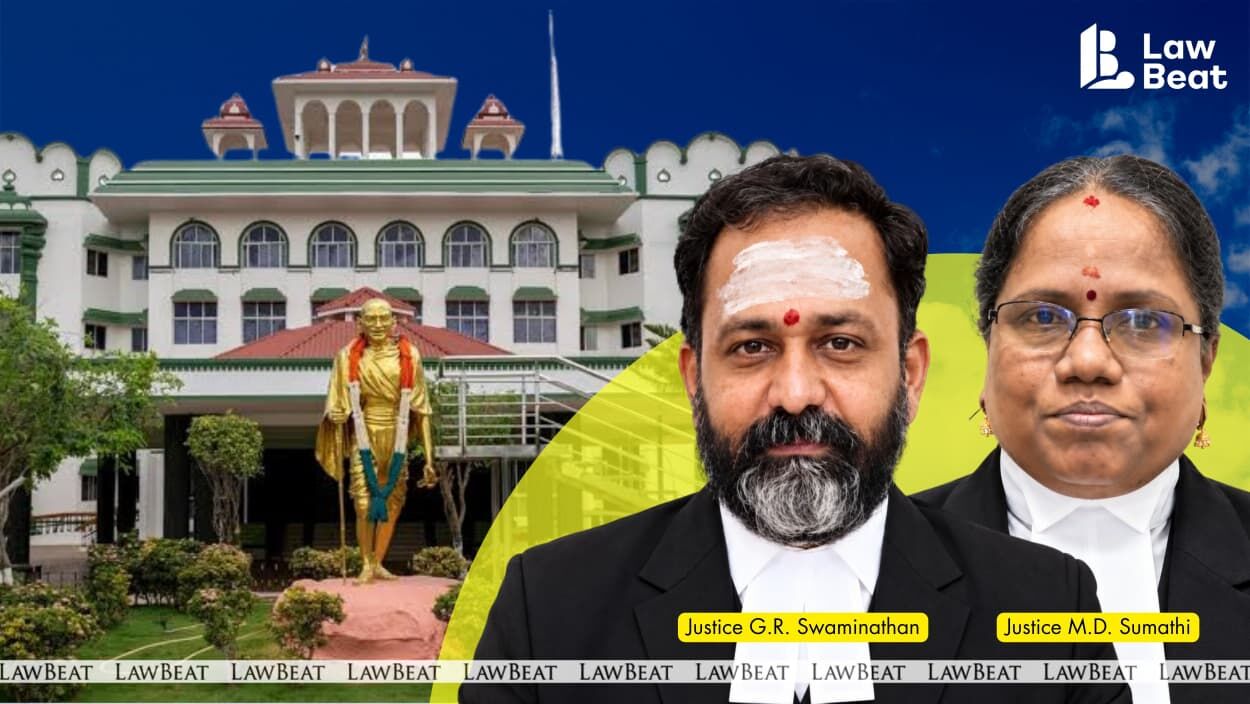
The Madras High Court recently underscored the paramount importance of a lawyer's professional obligations, asserting that these duties must always take precedence over political affiliations or public sentiment. In a significant October 13 order, a Division Bench comprising Justice G.R. Swaminathan and Justice M.D. Sumathi highlighted historical instances where legal practitioners demonstrated unwavering commitment to their clients, even in politically charged circumstances. This judicial stance emerged during the dismissal of a writ petition that sought disciplinary action from the Bar Council of Tamil Nadu and Puducherry against a former Additional Public Prosecutor. The Court determined that the allegations against the prosecutor did not meet the threshold for professional misconduct, thus not warranting intervention by the Bar Council.
Central to the Court's pronouncements was an appeal directed at the Kanyakumari Bar Association. The High Court urged the association to refrain from enacting resolutions that would prohibit its members from representing accused individuals. While making this appeal, the Bench explicitly clarified that its exhortation was aimed at the conscience of the Bar and was not to be construed as a binding judicial directive. The ruling reinforces the fundamental principle that the right to legal representation is sacrosanct, irrespective of the accused's perceived unpopularity or the nature of the charges.
Illustrious Examples of Unwavering Representation
To illustrate its point on Madras HC professional duty vs loyalty, the Madras High Court invoked the legacies of eminent legal figures such as Ram Jethmalani and Pran Nath Lekhi. The Court specifically recalled how Pran Nath Lekhi, despite his association with the BJP, undertook the defense of Satwant Singh, one of the individuals accused in the assassination of former Prime Minister Indira Gandhi. This decision caused considerable discomfort within his political party, which reportedly requested him to withdraw from the case. However, Lekhi chose to prioritize his professional duty, ultimately resigning from the party to continue his representation until the case's conclusion.
Similarly, the Bench cited Ram Jethmalani, who, while serving as the BJP's Vice-President, defended Coomar Narain, the primary accused in a prominent spy scandal during the 1980s. Jethmalani's decision also troubled his political colleagues. Like Lekhi, Jethmalani demonstrated that his commitment to his client superseded political considerations. The Madras High Court further referenced the Supreme Court’s 2011 decision in A.S.Mohammed Rafi Vs State of Tamil Nadu, which itself enumerated numerous historical examples of lawyers defending unpopular accused. These included Thomas Erskine, who defended revolutionary writer Thomas Paine against treason charges in 1792, and Bhulabhai Desai, who represented the accused in the Indian National Army trials. The Supreme Court's judgment also acknowledged lawyers who defended Indian revolutionaries, communists in the Meerut conspiracy case, Sheikh Abdullah, and those accused in the assassinations of Mahatma Gandhi and Indira Gandhi, as well as lawyers who represented Nazi war criminals at the Nuremberg trials, all exemplifying the unwavering commitment to legal representation.
Upholding the Integrity of Legal Representation
The Madras High Court's observations were directly prompted by a situation involving the Kanyakumari Bar Association resolution. This association had passed a resolution explicitly forbidding its members from appearing for the accused in a particular criminal case. The petitioner in the dismissed writ petition, a practicing advocate, was also the de facto complainant in Crime No. 219 of 2021, which was registered at the Asaripallam Police Station. This case had been charge-sheeted and was awaiting trial before the First Additional District and Sessions Judge in Tirunelveli.
Ordinarily, the trial for this case would have taken place within the Kanyakumari district. However, due to the complainant being a lawyer and the local Bar Association's resolution preventing its members from representing the accused, the accused sought and obtained an order from the Supreme Court to transfer the case to Tirunelveli. This sequence of events underscored the critical need for the Madras High Court to reiterate fundamental Madras High Court lawyer ethics principles. The Court's appeal serves as a vital reminder that bar associations cannot impede a lawyer's ethical obligation to provide legal counsel, emphasizing the primacy of professional duty over local pressures or collective sentiments.
Practical Implications
This ruling reinforces the fundamental ethical obligation of lawyers to represent clients, regardless of political or public sentiment, and clarifies that bar associations cannot issue resolutions preventing members from doing so. Lawyers should be aware of this precedent when facing pressure regarding client representation, as it underscores the primacy of professional duty over external loyalties.
Source
How does this affect you?
Get an AI analysis of this article grounded in your jurisdictions, practice areas, and any policy documents you've uploaded to Wansom.
Finish Reading the Full Story and the Expert Analysis.
Wansom is AI and can make mistakes.