
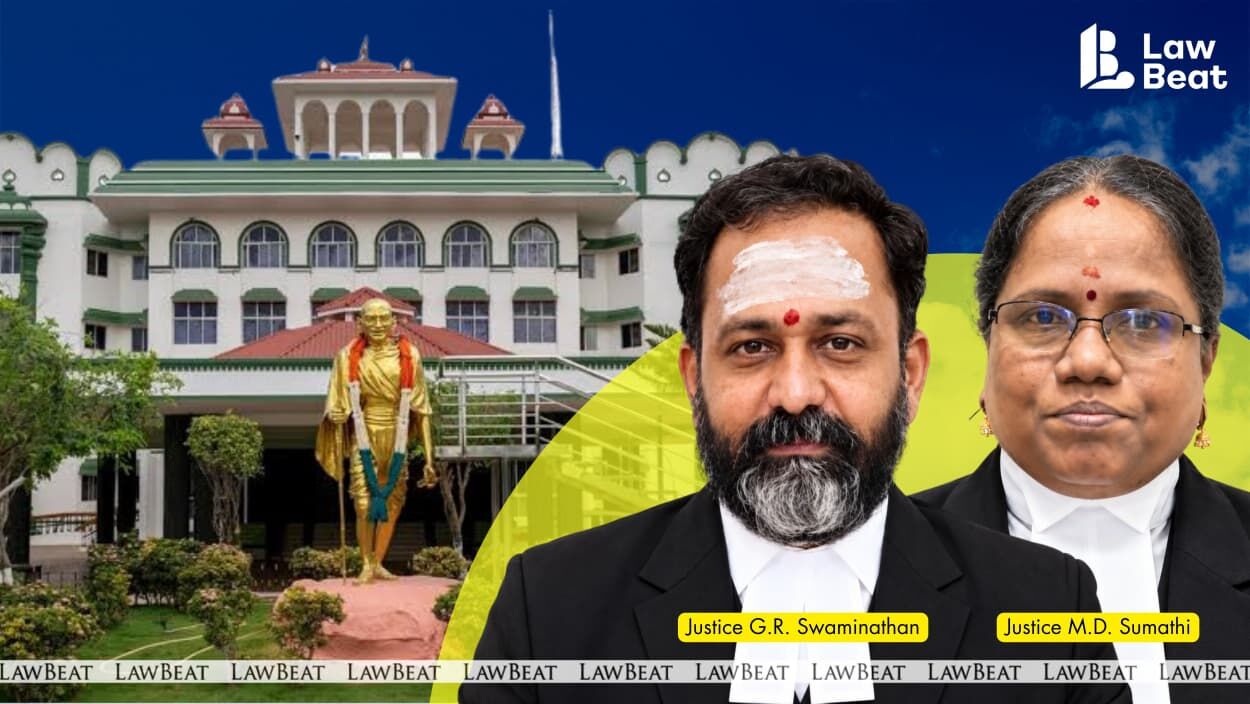
Madras HC: FCRA Zen Trust Disclosure Rejected for Religious Omission
Summary
- The Madras High Court upheld the rejection of an FCRA application from Kanzeon Public Charitable Trust.
- The Trust, which runs a Zen Meditation Centre, failed to accurately disclose its religious nature in its application.
- The court ruled that Zen Buddhism is a religious variant and emphasized the necessity of complete transparency for FCRA registration.
- Justice G.R. Swaminathan and Justice M.D. Sumathi delivered the ruling on October 6.
- The decision highlights that while religious organizations can seek FCRA registration, they must fully reveal their true character.
Court Upholds FCRA Denial for Zen Trust
Applicants seeking registration under the Foreign Contribution (Regulation) Act must make a complete and transparent disclosure of their true nature, as the process is not a game of hide and seek.
The Madras High Court, specifically its Madurai Bench, recently affirmed the rejection of a Foreign Contribution (Regulation) Act, 2010 (FCRA) registration application submitted by the Kanzeon Public Charitable Trust. This organization operates a Zen Meditation Centre in Kodaikanal. The ruling, delivered on October 6 by a Division Bench comprising Justice G.R. Swaminathan and Justice M.D. Sumathi, centered on the Trust's failure to accurately represent its religious character during the application process.
The Kanzeon Public Charitable Trust, established in 2021 and registered under Sections 12AB and 80G of the Income Tax Act, had contended that its activities were not religious. Its legal counsel presented arguments distinguishing its operations from purely religious endeavors, referencing prior judicial pronouncements on the matter. However, the Union Government defended the rejection, citing its policy to regulate the influx of foreign funds that could potentially be used for religious conversion or activities detrimental to India's secular framework.
Further scrutiny by the court revealed that the Trust's founder, described as its "
Legal Framework and Disclosure Requirements
The court's decision hinged on the specific requirements outlined in Rule 9 of the FCRA Rules, 2011, and Form FC-3A. This form mandates applicants to clearly state the nature of their organization, categorizing them as religious, cultural, economic, educational, or social, with additional sub-classifications for religious entities. The Madras High Court observed that the Trust itself acknowledged its adherence to Zen Buddhist philosophy.
While refraining from judging the authenticity of this claim, the Bench concluded that, based on the Trust's own statements, it functioned as a religious organization. The court explicitly stated that Zen Buddhism is recognized as a variant of the Mahayana Buddhist School, thereby falling under the broad umbrella of Buddhism. Consequently, the application's omission to correctly identify the Trust's religious nature provided sufficient grounds for its rejection.
Crucially, the court clarified that being a religious organization does not inherently disqualify an entity from seeking FCRA registration. Section 12 of the FCRA prohibits unregistered religious organizations from accepting foreign contributions, but organizations with defined religious programs are entitled to apply for registration under Sections 11 and 12. The core requirement, however, is complete and transparent disclosure of an organization's true character.
Implications for FCRA Applicants
The Madras High Court's ruling underscores the critical importance of absolute transparency for any entity seeking foreign funding under the Foreign Contribution Regulation Act. Applicants seeking registration under the Foreign Contribution (Regulation) Act must make a complete and transparent disclosure of their true nature, as the process is not a game of hide and seek. The court emphasized that applicants must present all relevant facts without reservation, making a "clean breast of everything."
Beyond the specific case, the court made broader observations regarding religious inclusivity and exclusivity. It noted that, unlike Hinduism, which it characterized as inclusive, Abrahamic religions are inherently exclusive, with devout followers believing their faith represents the "one true and complete revelation." These observations, alongside the founder's background as an ordained Christian priest and the presence of a Christian cross motif above a Buddha statue on the Trust's website, contributed to the court's assessment of the Kanzeon Public Charitable Trust's actual identity.
This judgment serves as a significant reminder for all non-governmental organizations and religious bodies in India that meticulous and honest disclosure of their foundational nature, particularly any religious affiliations, is paramount during the FCRA registration process to avoid application rejection based on misrepresentation.
Practical Implications
Lawyers advising non-governmental organizations (NGOs) or religious entities seeking foreign contributions must ensure meticulous and transparent disclosure of the organization's true nature, especially its religious affiliations, during the FCRA registration process to prevent application rejection based on misrepresentation. This ruling underscores the court's expectation of complete honesty and "clean hands" in such applications.
Source
How does this affect you?
Get an AI analysis of this article grounded in your jurisdictions, practice areas, and any policy documents you've uploaded to Wansom.
Finish Reading the Full Story and the Expert Analysis.
Get the latest legal & regulatory intelligence in India
Wansom is AI and can make mistakes.