
Madras HC: Deity Name Alone in Revenue Records, Excludes Trustees
Summary
- The Madras High Court ruled that only the temple deity's name should appear in revenue records for temple properties.
- Names of managers, trustees, or priests are to be excluded, with a limited exception for cultivating Poojaris in remarks columns.
- The court invoked its parens patriae jurisdiction, considering the deity as a minor requiring protection.
- The classification 'Natham Private' was deemed unrecognized, and temple land must be recorded as 'Natham' under the deity's name.
- K. S. Palanisamy, the Secretary of Tamil Nadu's Revenue and Disaster Management Department, was directed to issue executive instructions to implement this ruling and correct revenue records.
Court Mandate on Temple Property Records
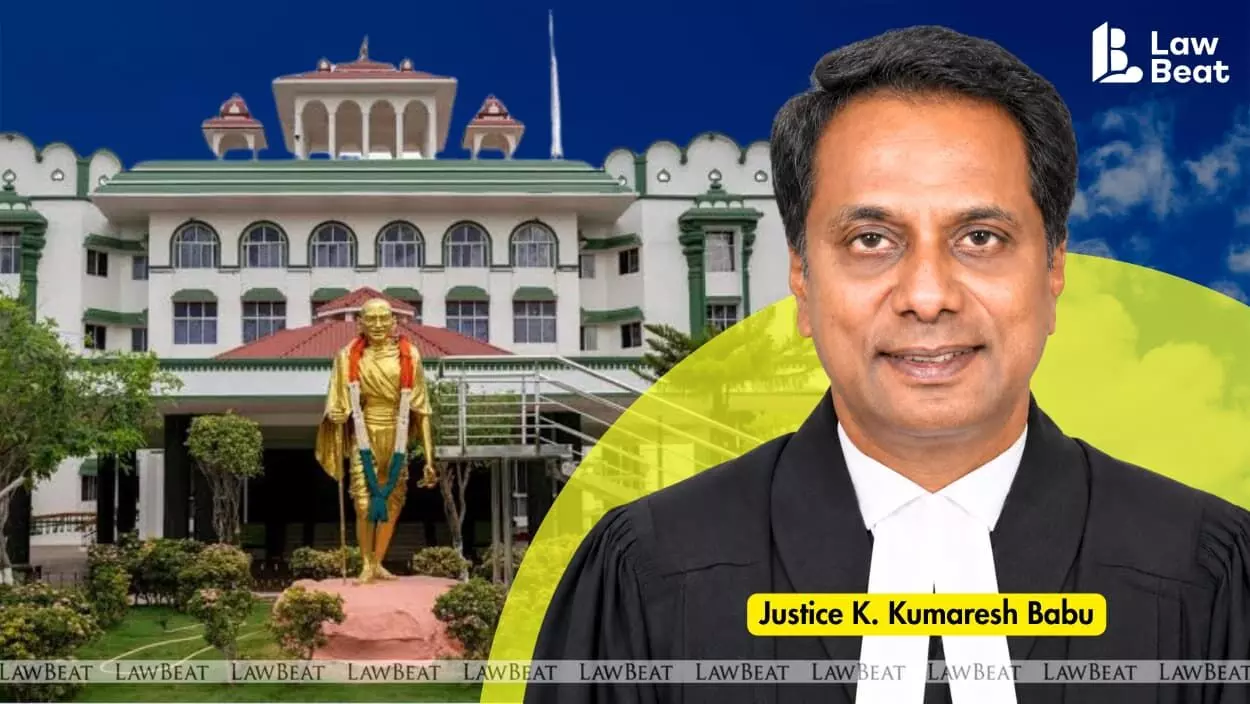
Justice K. Kumaresh Babu ruled that only the name of the temple deity should appear in these records, explicitly excluding the names of any managers, hereditary trustees, or priests associated with the religious institution.
The Madras High Court, specifically its Madurai Bench, has issued a significant directive concerning the recording of temple properties in official revenue documents. Justice K. Kumaresh Babu ruled that only the name of the temple deity should appear in these records, explicitly excluding the names of any managers, hereditary trustees, or priests associated with the religious institution. This decision underscores the legal personhood of the deity as the sole owner of its properties.
A limited exception permits the inclusion of Poojaris' names in the remarks column of the revenue records, but only if they are actively performing religious functions and cultivating the land. This nuanced approach ensures that while the deity's ownership is paramount, practical aspects of land use by those serving the temple are still acknowledged. The Court's order directly set aside a previous instruction from the Commissioner of Land Administration, which had mandated recording the deity's name as represented by its hereditary trustee, deeming this approach inconsistent with established legal principles.
Legal Precedent and Authority
The Madras High Court's judgment was firmly rooted in a precedent set by the Supreme Court of India in the case of State of Madhya Pradesh vs. Pujari Utthan Avam Kalyan Samiti. This higher court ruling unequivocally established that the deity's name alone should be entered in revenue records, rather than those of its human custodians. The Madras High Court further invoked its parens patriae jurisdiction, emphasizing that a deity is consistently regarded as a minor in legal terms, necessitating the court's protective oversight.
The High Court clarified that the Commissioner of the Hindu Religious and Charitable Endowments Department had previously issued a circular aligned with the Supreme Court's directive. Despite this, the Commissioner of Land Administration's subsequent instruction to include the hereditary trustee's representation was found to contradict the law. The court also dismissed arguments that the Supreme Court's ruling could not be implemented without specific executive instructions from the Revenue Department, asserting that a Supreme Court judgment constitutes the law of the land and must be applied universally, irrespective of further administrative directives or amendments to existing statutes and rules.
Addressing Land Classification Irregularities
In a related but distinct aspect of the ruling, the Madras High Court addressed the classification of temple lands. The court declared that the designation 'Natham Private' is not a recognized category under the prevailing Revenue Standing Order. This finding is critical for ensuring the accurate and legally sound categorization of properties belonging to religious institutions.
Consequently, the High Court mandated that the land in question, specifically belonging to Sree Narguna Sundara Vinayagar Balasubramaniar, must be reclassified simply as 'Natham' and recorded under the deity's name. This directive aims to rectify improper land classifications that could obscure the true ownership status of temple properties, reinforcing the deity's exclusive legal claim.
Implementation and Case Context
To ensure the comprehensive implementation of its directives, the Madras High Court instructed K. S. Palanisamy, the Secretary of the Revenue and Disaster Management Department in Tamil Nadu, to promptly issue the necessary executive instructions. These instructions are crucial for ensuring that the Supreme Court's ruling is uniformly applied across the state and that all corresponding corrections are made in the relevant revenue records. The case originated from a petition filed by the Executive Officer of Arulmighu Mutharamman Thirukovil, located in Palayamkottai.
The Executive Officer had challenged proceedings dated July 22, 2026, which were issued by the Commissioner of Land Administration. A preliminary objection to the petition's maintainability was raised by S. Kanthiah alias Radhakrishnan, identified as the fifth respondent and hereditary trustee of Sree Narguna Sundara Vinayakar Temple. He questioned why an Executive Officer from a different temple could file such a petition. However, Justice Kumaresh Babu rejected this objection, noting that the petitioner also exercised control and management over Sree Narguna Sundara Vinayagar Balasubramaniar Kovil and was acting as the deity's representative.
Practical Implications
Lawyers advising religious institutions, trustees, or executive officers in Tamil Nadu must ensure that revenue records for temple properties exclusively list the deity's name, not that of managers or trustees, in compliance with this Madras High Court ruling. Furthermore, they should challenge any 'Natham Private' classifications for temple lands, as this classification is deemed unrecognized.
Source
How does this affect you?
Get an AI analysis of this article grounded in your jurisdictions, practice areas, and any policy documents you've uploaded to Wansom.
Finish Reading the Full Story and the Expert Analysis.
Get the latest legal & regulatory intelligence in India
Wansom is AI and can make mistakes.