
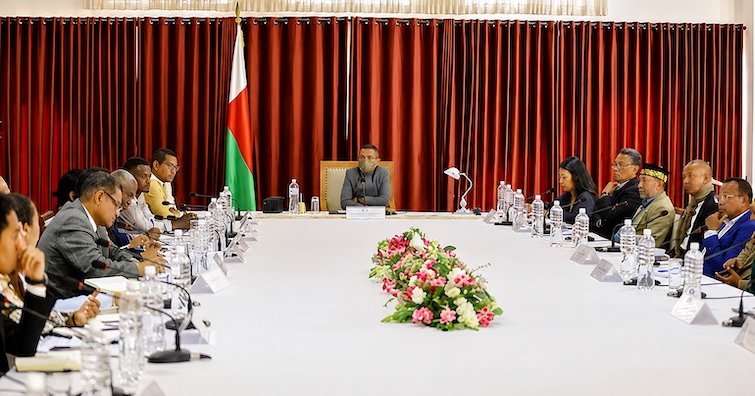
Madagascar: PM Appoints National Consultation Committee
On September 3, 2026, Prime Minister Mamitiana Rajaonarison in Madagascar signed Decree No. 29031/2026 in Antananarivo, officially appointing the members of the Technical Committee for the National Consultation. This executive action marks a concrete step forward in organizing a significant national consultative process, which is part of a broader initiative termed the "Refoundation of the Republic." The decree formalizes the operational structure for this major political and potentially legal undertaking, signaling the government's commitment to advancing this dialogue.
This development carries substantial legal significance for practitioners, businesses, and the public in Madagascar. For legal professionals, the establishment of this Technical Committee indicates the formal commencement of a process that could lead to significant legislative, regulatory, or even constitutional reforms. The "Refoundation of the Republic" is a broad mandate, suggesting that the outcomes of this consultation may impact various sectors, including economic policy, investment frameworks, property rights, and the administration of justice. Businesses operating within or considering investment in Madagascar should closely monitor the scope and recommendations emanating from this consultation, as they could introduce new compliance requirements or alter the legal landscape for commercial activities.
From a legal context perspective, Madagascar operates under a civil law system, heavily influenced by French legal traditions. Decrees (arrêtés) signed by the Prime Minister are executive acts, typically issued under powers granted by the Constitution or specific laws, to implement or detail existing legislation or policy. While the excerpt does not specify the foundational legal instrument for the "Concertation nationale" itself, the appointment of its technical committee via decree falls squarely within the administrative law framework governing the executive branch's powers. The overarching "Refoundation of the Republic" suggests that the consultation may delve into fundamental principles enshrined in the Malagasy Constitution, such as national sovereignty, the separation of powers, and fundamental rights, potentially leading to proposals for constitutional amendments or new organic laws.
The key parties involved in this development are Prime Minister Mamitiana Rajaonarison, who signed the decree, and the newly appointed members of the Technical Committee of the National Consultation. This committee is tasked with organizing the broader "Concertation nationale," which represents a significant governmental initiative. While the specific individuals appointed to the committee are not detailed in the excerpt, their collective role will be pivotal in shaping the agenda, facilitating discussions, and synthesizing the outcomes of this national dialogue. The Malagasy government, through the Prime Minister, is the driving force behind this process.
Practitioners should consider this a critical juncture requiring proactive engagement and monitoring. Attorneys should closely follow the public announcements regarding the Technical Committee's work, its agenda, and any emerging draft documents or proposals. It is imperative to advise clients, particularly those in the corporate and investment sectors, on the potential for shifts in the legal and regulatory environment. Anticipate that the "Refoundation of the Republic" could lead to significant, rather than incremental, changes, necessitating a review of existing legal strategies and compliance frameworks. Opportunities for stakeholder input or participation in the consultation process, if announced, should also be carefully evaluated for clients whose interests may be directly affected.
How does this affect you?
Get an AI analysis of this article grounded in your jurisdictions, practice areas, and any policy documents you've uploaded to Wansom.
Finish Reading the Full Story and the Expert Analysis.
Wansom is AI and can make mistakes.