
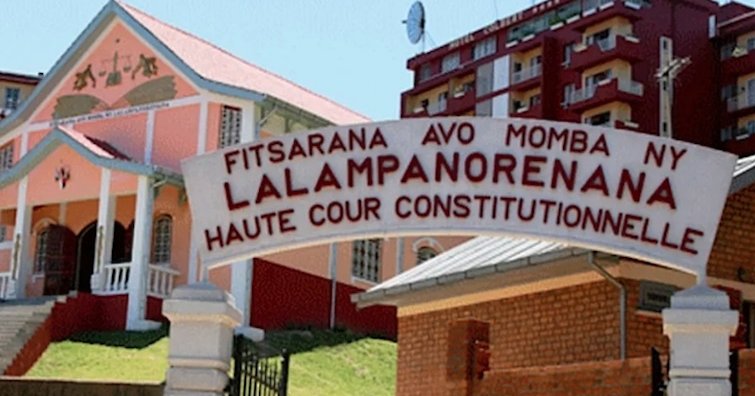
Madagascar HCC: Confirms PAC Jurisdiction Over Rajoelina, Ntsay
Summary
- Madagascar's Haute Cour Constitutionnelle confirmed the Pôle Anti-corruption's jurisdiction over high-level officials.
- This ruling applies to former President Andry Rajoelina, former Prime Minister Christian Ntsay, and several former ministers.
- The decision concerns three judicial cases involving allegations of corruption and related offenses.
- The HCC's confirmation reinforces the PAC's authority to prosecute even former heads of state and government.
- This development signals a heightened risk of prosecution for corruption across all levels of Malagasy government.
Key Ruling on Anti-Corruption Authority
The HCC's confirmation reinforces the Pôle Anti-corruption's authority to prosecute high-level officials, including former presidents and prime ministers, thereby expanding the reach of accountability mechanisms within the Malagasy legal system.
The Haute Cour Constitutionnelle (HCC) in Madagascar recently affirmed the Pôle Anti-corruption's (PAC) jurisdiction to adjudicate cases involving high-ranking officials, including former President Andry Rajoelina and former Prime Minister Christian Ntsay. This pivotal decision, rendered yesterday, specifically addresses three distinct judicial files where these former leaders, alongside several former ministers, face allegations of corruption and related illicit activities. The ruling clarifies the scope of the PAC's powers, signaling a significant development in the nation's efforts to combat graft at the highest echelons of government.
This confirmation by Madagascar's highest constitutional body underscores the legal framework empowering the PAC to pursue accountability regardless of an individual's past political stature. The cases in question involve serious accusations, and the HCC's pronouncement ensures that the specialized anti-corruption court possesses the necessary legal mandate to proceed with investigations and potential prosecutions against such prominent figures. This move is widely seen as a reinforcement of the institutional mechanisms designed to uphold integrity within public service.
Legal Framework and Precedent
The decision by the Haute Cour Constitutionnelle Madagascar is crucial for establishing clear legal precedent regarding the Pôle Anti-corruption Madagascar's operational reach. By explicitly confirming the HCC PAC jurisdiction Rajoelina Ntsay and other former ministers, the court has effectively removed any ambiguity that might have previously existed concerning the PAC's authority over individuals who once held the nation's most powerful offices. This ruling solidifies the principle that no one is above the law, even those who have served as head of state or government.
This judicial affirmation is particularly impactful given the nature of the charges, which encompass corruption and associated offenses. It empowers the PAC to fully exercise its mandate, ensuring that investigations into alleged misconduct by former high-level officials can advance without jurisdictional challenges. The confirmation by the HCC strengthens the independent functioning of the anti-corruption body, providing it with the legal backing required to tackle complex cases involving political elites.
Implications for Governance and Accountability
The recent ruling from the HCC carries profound implications for governance and the fight against corruption in Madagascar. The HCC's confirmation reinforces the Pôle Anti-corruption's authority to prosecute high-level officials, including former presidents and prime ministers, thereby expanding the reach of accountability mechanisms within the Malagasy legal system. This development suggests a heightened commitment to addressing corruption at all levels, from the highest political offices down through the administrative ranks.
For legal practitioners and their clients, this decision signals a critical shift. Lawyers should now advise clients on the heightened risk of prosecution for corruption-related offenses in Madagascar, emphasizing the PAC's expanded reach and the potential for accountability across all levels of government. The prospect of Andry Rajoelina corruption charges and a Christian Ntsay corruption trial, alongside those of other former ministers, highlights that past immunity or political influence may no longer shield individuals from judicial scrutiny. This strengthens the Madagascar anti-corruption court authority and sets a new standard for public integrity.
Practical Implications
This decision by Madagascar's highest court reinforces the Pôle Anti-corruption's authority to prosecute high-level officials, including former presidents and prime ministers. Lawyers should advise clients on the heightened risk of prosecution for corruption-related offenses in Madagascar, emphasizing the PAC's expanded reach and the potential for accountability across all levels of government.
Source
How does this affect you?
Get an AI analysis of this article grounded in your jurisdictions, practice areas, and any policy documents you've uploaded to Wansom.
Finish Reading the Full Story and the Expert Analysis.
Wansom is AI and can make mistakes.