
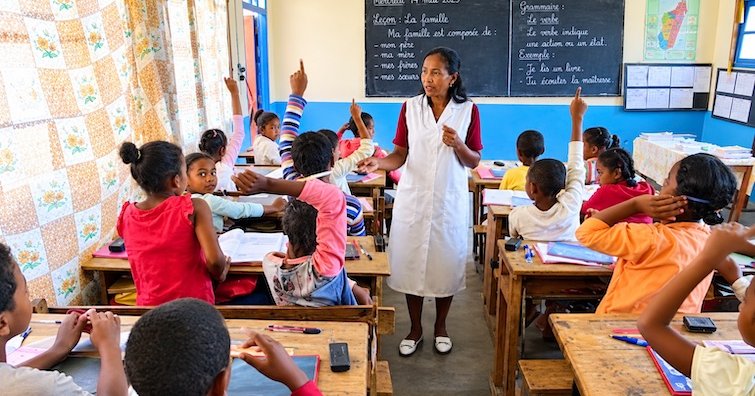
Ministère Éducation Nationale: Madagascar Établissements Privés Ancien Programme 2026 Autorisé
Summary
- Madagascar's Ministry of National Education has authorized private schools to use the old curriculum for the 2026-2027 academic year.
- This authorization is explicitly transitional, indicating a future shift to the new curriculum.
- The decision was announced on Monday, October 12, at the ONEP headquarters.
- New provisions include a single, unified subject for CEPE official examinations, with two distinct subjects for BEPC.
- Private institutions must prepare for the eventual full adoption of the reformed program.
What Happened
Legal advisors to these private schools should emphasize the importance of understanding the precise scope and duration of this transitional allowance.
The Ministry of National Education in Madagascar has recently announced a significant adjustment to its previously declared school curriculum reform. After an initial period where a comprehensive overhaul of the national curriculum was anticipated, the Ministry has now issued a transitional authorization. This directive permits private educational institutions (Madagascar établissements privés ancien programme 2026) to continue applying the former school curriculum, referred to as the "ancien programme scolaire" (PS), specifically for the 2026-2027 academic year. This decision represents a strategic pause in the full implementation of the new educational framework for a segment of the schooling system.
This crucial policy shift was officially communicated on Monday, October 12, during an announcement made at the central offices of the National Office of Private Education (ONEP). The authorization is explicitly temporary, indicating that while private schools are granted a reprieve from immediate curriculum changes, the broader réforme programme scolaire Madagascar remains the ultimate objective. This transitional period is designed to facilitate a smoother adaptation process for the private sector, acknowledging the complexities involved in such a widespread educational transformation.
Regulatory Context
The Ministry's authorization for private schools to continue with the old curriculum for the 2026-2027 academic year is a key regulatory development. This measure, while offering flexibility, is strictly defined as a transitional phase, implying that the full adoption of the new curriculum will eventually be mandatory across all institutions, including the programme scolaire privé Madagascar 2026-2027. The National Office of Private Education (ONEP) serves as the primary body for disseminating and overseeing the implementation of such directives within the private education sector, ensuring compliance and providing necessary guidance.
In conjunction with this curriculum decision, the Ministère Éducation nationale Madagascar has also introduced new provisions regarding official examinations. A notable change stipulates that a single, unified subject will be used for the CEPE (Certificat d'Études Primaires Élémentaires) official assessment, while two distinct subjects will be proposed for the BEPC (Brevet d'Études du Premier Cycle). This move aims to standardize the evaluation process across the nation, irrespective of the curriculum currently being followed by individual institutions during this transitional period. This dual approach—temporary curriculum flexibility alongside standardized examinations—highlights the Ministry's efforts to manage the reform process systematically.
Implications for Institutions
For private educational institutions across Madagascar, this transitional authorization carries significant implications. While it temporarily alleviates the immediate burden of adapting to an entirely new curriculum, it simultaneously underscores the necessity for strategic long-term planning. Schools must leverage this period to prepare for the eventual and full adoption of the reformed program, ensuring that their pedagogical methods, teacher training, and resource allocation align with the future national educational standards. This foresight is crucial for institutions operating under the Madagascar établissements privés ancien programme 2026.
Legal advisors to these private schools should emphasize the importance of understanding the precise scope and duration of this transitional allowance. They must guide their clients in meticulously adhering to the Ministry's directives, particularly concerning the temporary nature of the old curriculum's use and the upcoming unified official exams. This structured transition is vital for upholding the quality of education and ensuring that all students, regardless of their school type, benefit from a coherent and evolving educational framework, thereby reinforcing the broader droit éducation Madagascar.
Practical Implications
Lawyers advising private educational institutions in Madagascar should note this transitional authorization for the 2026-2027 academic year, ensuring their clients comply with the Ministry's directives regarding curriculum choice and preparing for the eventual full adoption of the new program and unified official exams.
Source
How does this affect you?
Get an AI analysis of this article grounded in your jurisdictions, practice areas, and any policy documents you've uploaded to Wansom.
Finish Reading the Full Story and the Expert Analysis.
Get the latest legal & regulatory intelligence in Madagascar
Wansom is AI and can make mistakes.