
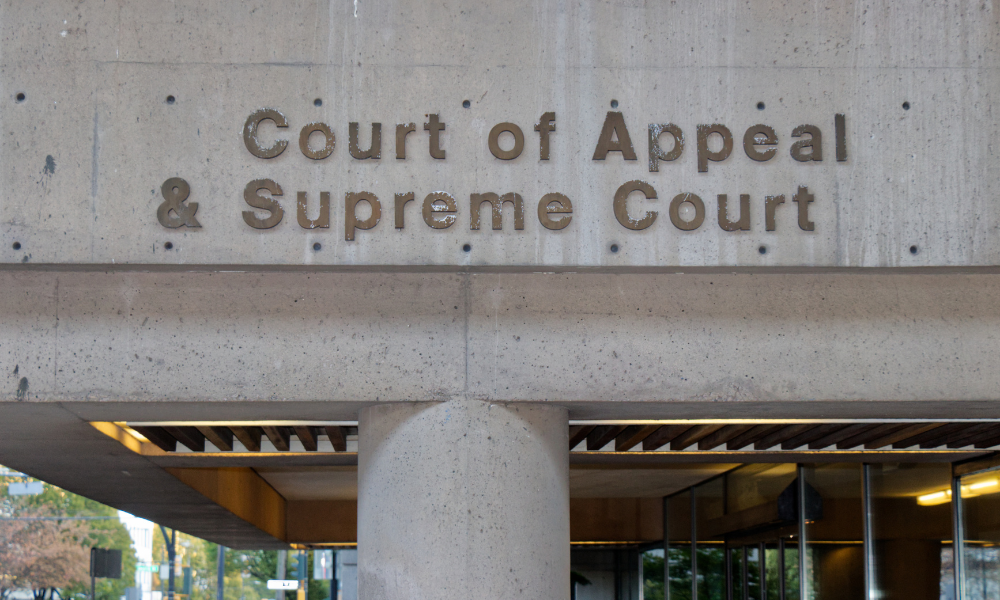
BC Supreme Court: MacRae v Harker MVA Damages Mitigation Reduces Award
Summary
- The British Columbia Supreme Court awarded $1,023,400.33 in total damages in MacRae v Harker, 2026 BCSC 1749, following a February 1, 2017, motor vehicle accident.
- The plaintiff initially sought $1,870,767.33 for various personal injury damages, including lost earning capacity and future care costs.
- ICBC acknowledged the defendant's fault but challenged the extent of injuries and quantum of damages, leading to a defense proposal for significantly lower awards.
- The court reduced the initial damages award of $1,186,066.50 by 10% for future care costs and 15% for all other damage heads due to the plaintiff's failure to mitigate.
- The reduction was based on the court's finding that the plaintiff's progress had plateaued, and her disability was unlikely to improve significantly.
Case Background and Initial Assessment
The court applied distinct percentage reductions to different heads of damages.
The British Columbia Supreme Court recently rendered a significant decision in the case of MacRae v Harker, 2026 BCSC 1749, stemming from a motor vehicle accident (MVA) that occurred in Richmond, BC, on February 1, 2017. The plaintiff initiated legal action seeking compensation for personal injuries sustained in the collision, originally claiming $1,870,767.33 in damages. This comprehensive claim encompassed various categories, including non-pecuniary damages, past income loss, diminished future earning capacity, future care costs, special damages, lost housekeeping capacity, and an in-trust claim. The plaintiff reported being unable to work since one year post-accident due to the injuries.
While the Insurance Corporation of British Columbia (ICBC) acknowledged the defendant driver's responsibility for the MVA, it contested the nature and severity of the plaintiff's injuries, the resulting financial losses, and consequently, the overall quantum of damages. The defendant proposed a significantly lower range for damages, suggesting an award between $106,116 and $459,980.84, with a further reduction anticipated due to the plaintiff's alleged failure to mitigate her losses. Applying the "but for" test, the court ultimately determined that the MVA was indeed the cause of the plaintiff's various physical, psychiatric, and cognitive issues, a finding supported by the medical opinions of three distinct doctors. These injuries, the court noted, profoundly impacted the lives of the plaintiff, her family, and her friends.
Quantifying Damages Reduction for Failure to Mitigate
In its initial assessment, prior to any adjustments for mitigation, the BC Supreme Court determined the total damages to be $1,186,066.50. However, a central aspect of the MacRae v Harker MVA damages mitigation ruling involved the court's decision to reduce this award due to the plaintiff's failure to mitigate her damages. The court applied distinct percentage reductions to different heads of damages.
Specifically, the award for future care costs was decreased by 10 percent, bringing that component down to $274,388.35. For all other categories of damages, the court imposed a 15 percent reduction, resulting in an award of $749,011.98 for those combined heads. The court's rationale for these reductions was based on its observation that the plaintiff's recovery had reached a plateau, and her disability was deemed unlikely to show significant improvement in the future. After accounting for these reductions, the final total damages awarded to the plaintiff amounted to $1,023,400.33. The parties were also given the opportunity to agree upon or submit arguments regarding costs.
Legal Precedent for Personal Injury Awards
The decision in MacRae v Harker, 2026 BCSC 1749, establishes a crucial British Columbia personal injury precedent, particularly concerning the quantification of damages reduction MVA claims where a plaintiff has failed to mitigate. This case offers valuable guidance for legal practitioners and claimants alike on how the BC Supreme Court failure to mitigate damages can impact a motor vehicle accident personal injury award. The court's detailed application of specific percentage reductions to different damage categories, coupled with its explicit reasoning regarding the plaintiff's plateaued progress, provides a clear framework for future cases.
This ruling underscores the importance of a plaintiff's duty to mitigate losses following an MVA, highlighting that even in cases where fault is acknowledged by entities like ICBC, the final award can be substantially adjusted. The precise reductions applied in this instance serve as a benchmark for how courts may approach ICBC damages challenge mitigation arguments, emphasizing that a plaintiff's proactive steps towards recovery are critical not only for their well-being but also for the ultimate financial outcome of their claim. The judgment reinforces that while injuries may be severe, the expectation of reasonable efforts towards recovery remains a significant factor in determining compensation.
Practical Implications
This case provides a significant precedent for how the BC Supreme Court quantifies damages reductions for a plaintiff's failure to mitigate in motor vehicle accident personal injury claims, offering crucial guidance for lawyers advising clients on their mitigation duties and the potential impact on final awards.
Source
How does this affect you?
Get an AI analysis of this article grounded in your jurisdictions, practice areas, and any policy documents you've uploaded to Wansom.
Finish Reading the Full Story and the Expert Analysis.
Get the latest legal & regulatory intelligence in Canada
Wansom is AI and can make mistakes.