
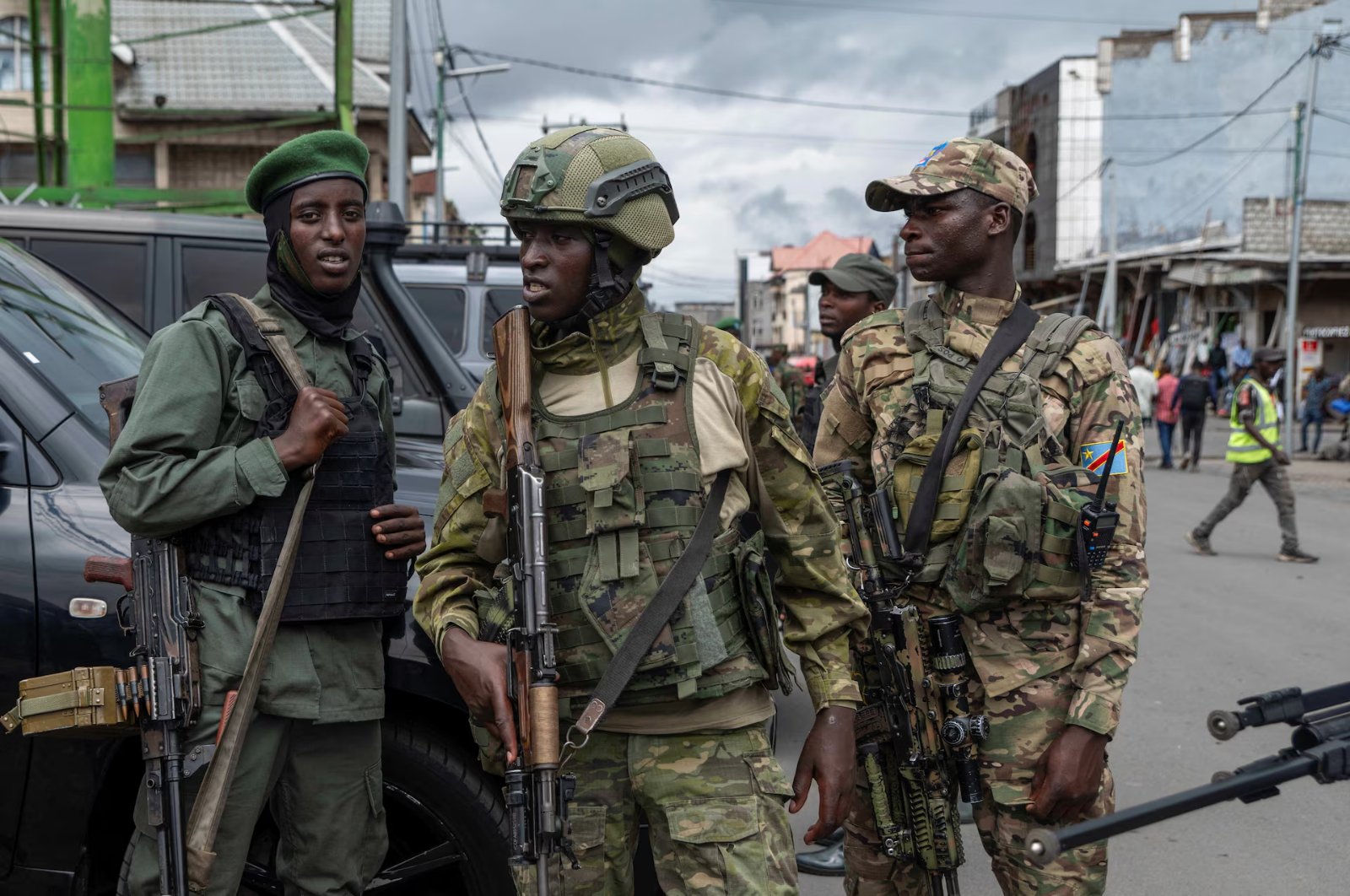
How Rwanda-Backed M23 Rebels Finance Their War in DR Congo
Summary
- The M23 rebel group has established a de facto, illegal parallel administration in eastern DR Congo, controlling vast territories and millions of people.
- Its operations are financed primarily through widespread illegal taxation on local businesses, residents, and humanitarian organizations, as well as the exploitation and smuggling of minerals like gold and coltan.
- Minerals extracted or taxed by the M23 are reportedly smuggled into Rwanda, which is alleged to back the rebel group and has thousands of soldiers on Congolese soil.
- The M23 operates under UN and other international sanctions, yet its "criminal governance" model compels civilians to finance its activities.
- The group's actions contribute to a severely weakened local economy, posing significant supply chain risks for businesses operating in the region due to potential complicity in illicit financing.
M23's Parallel Administration and Financing
Enhanced due diligence is paramount for companies to avoid complicity in this system of 'criminal governance' and to mitigate the potential for breaching international sanctions, underscoring the complex ethical and legal landscape of operating in eastern DR Congo.
The M23 rebel group has established a sophisticated, albeit illegal, parallel administration in the eastern Democratic Republic of Congo, methodically consolidating its control over vast territories. This de facto governance structure, which began its latest insurgency in 2021 and captured key cities like Goma and Bukavu in early 2025, now oversees an area home to millions of people. The group's operational capacity and territorial consolidation are sustained by a robust financing system primarily built on illegal taxation and the exploitation of mineral resources.
Under this M23 parallel administration DR Congo, various economic activities are subject to levies. Local companies, market vendors, transporters, and cross-border businesses all contribute to the rebels' coffers through mandatory payments. Even ordinary residents and humanitarian organizations operating within M23-controlled zones are compelled to pay taxes. This extensive taxation network forms the backbone of the group's financial strategy, funding its fighters and administrative functions.
Beyond taxation, the M23 heavily relies on the lucrative trade in minerals such as gold and coltan. Mining sites and critical transport corridors are either directly exploited or subjected to taxation by the rebel group. While the M23 has attempted to establish its own parallel financial system to enhance autonomy, these efforts have not yet yielded significant success. The revenue generated from these illicit activities is crucial for maintaining the M23's presence and expanding its influence in the region.
Economic Exploitation and Regional Complicity
The M23's economic activities, including M23 illegal taxation DR Congo and DR Congo M23 mineral smuggling, contribute to a broader pattern of exploitation that has plagued the region for decades. A significant portion of the minerals extracted or taxed by the M23 is smuggled across the border into Rwanda, which is alleged to be the group's primary backer. Reports indicate that thousands of Rwandan soldiers are present on Congolese soil, actively fighting alongside and commanding M23 operations.
This flow of minerals and other goods through Rwanda and subsequently onto global markets has intensified international scrutiny regarding potential complicity in the violence and the wider exploitation of Congolese resources. This extractive dynamic, critics argue, echoes historical patterns dating back to Belgian colonial rule and continues under what is described as modern "extractive capitalism." The M23's actions, therefore, are not isolated but are deeply embedded within a complex regional geopolitical and economic landscape.
Sanctions, 'Criminal Governance,' and Broader Ambitions
The M23 rebel group operates under the shadow of UN sanctions M23 financing and other international restrictions, yet its "criminal governance" model forces civilians to inadvertently fund its operations. Zobel Behalal, an expert from the Global Initiative against Transnational Organized Crime and a former member of the UN experts panel on the DR Congo, highlighted how these forms of governance leave local populations with no alternative but to finance the sanctioned group. This system of control extends to every facet of daily life, from trucks paying fees at checkpoints to motorbike taxis and various businesses, including shops, warehouses, and informal traders.
The M23, which is Tutsi-led and represents the latest in a series of Rwanda-backed insurgencies, initially justified its rebellion by claiming the Congolese government failed to uphold a previous peace agreement and to protect local Tutsi communities. While Kigali denies direct support for the M23, it justifies the group's fight by asserting that Hutu genocidaires remain active in eastern DR Congo, a claim critics view as a pretext for territorial expansion and Rwanda M23 economic exploitation. The group has also developed national political ambitions under its wing, the Congo River Alliance (AFC), calling for the removal of Congolese President Félix Tshisekedi and threatening to advance on Kinshasa.
Humanitarian and Supply Chain Risks
Despite the M23's claims of liberation, the economic reality in areas under its control is dire. The war has severely weakened the local economy, leading to disrupted trade, the collapse of formal banking services, and a general lack of financial infrastructure needed for recovery. A shop owner in Goma described the situation as worse than before, noting closed airports, absent banks, shuttered businesses, and a population lacking purchasing power, merely "surviving."
This precarious economic environment, coupled with the M23's illicit financing mechanisms, poses significant Eastern DRC supply chain risk. Businesses operating in or sourcing materials from the region face the critical challenge of ensuring they do not inadvertently contribute to the financing of a sanctioned entity. Enhanced due diligence is paramount for companies to avoid complicity in this system of "criminal governance" and to mitigate the potential for breaching international sanctions, underscoring the complex ethical and legal landscape of operating in eastern DR Congo.
Practical Implications
Lawyers and compliance officers must advise clients operating in or sourcing materials from eastern DR Congo on the significant risks of inadvertently financing the sanctioned M23 rebel group through illegal taxes or mineral extraction. Enhanced due diligence is critical to avoid complicity in 'criminal governance' and potential breaches of international sanctions.
Source
How does this affect you?
Get an AI analysis of this article grounded in your jurisdictions, practice areas, and any policy documents you've uploaded to Wansom.
Finish Reading the Full Story and the Expert Analysis.
Get the latest legal & regulatory intelligence in DR Congo
Wansom is AI and can make mistakes.